Culinary Explorer
A cooking platform built around craft, culture, and the stories behind what we eat.
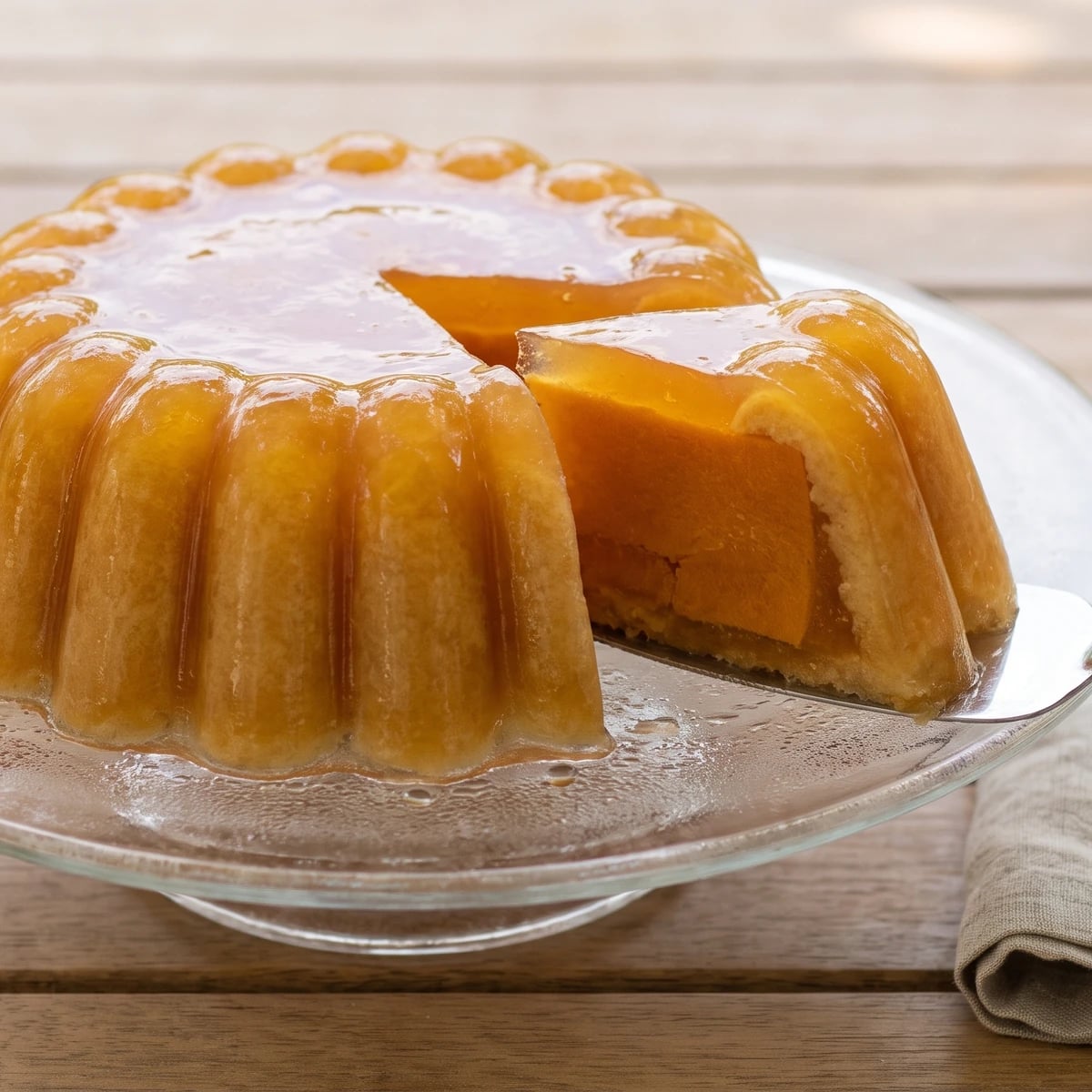
Pains de Fruits
Created by Chef Juliette
A jewel-bright apricot jelly shell around a soft, creamless fruit bavarois: cold, cleanly sliceable, and made ahead, with the old mould-clothing technique scaled to one Charlotte mould and one patient cook.
Pains de fruits (jellied fruit moulds) teach the discipline of two related sets: a firm, gleaming jelly shell and a softer fruit bavarois without cream. The one truth to know before you begin is simple. Warm filling must never meet a fragile gelled shell. Keep the mould cold, bring the filling down until it barely begins to thicken, and the two layers will hold cleanly together.
The original preparation assumed a cold station supplied with broken ice, an entremetier coating rows of Charlotte moulds, and enough hands to keep every jelly at precisely the right point. At home, one metal mould nested in a bowl of ice does the same work. The brigade quantities and repeated service setup are scaffolding, so they go. The thick fruit-jelly clothing and the creamless, lightly gelled centre are the dish, so they stay. One cook, one stove, one evening, then the refrigerator does the waiting.
Turned out, the pain de fruits should stand clear-edged and amber-bright, with a glossy apricot shell around a centre that yields softly beneath the knife. Cool the apricot filling until it clings faintly to the spatula before it enters the mould. That single moment decides the dish.
Ingredients
apricot halves packed in juice
Quantity
2 cans, 15 ounces (425 g) each; about 3 cups drained (720 ml / 480 g)
drained, juice reserved
unsweetened apricot nectar
Quantity
1½ cups (360 ml / 360 g)
divided
granulated sugar
Quantity
½ cup (120 ml / 100 g)
divided
| Ingredient | Quantity |
|---|---|
| apricot halves packed in juicedrained, juice reserved | 2 cans, 15 ounces (425 g) each; about 3 cups drained (720 ml / 480 g) |
| unsweetened apricot nectardivided | 1½ cups (360 ml / 360 g) |
| granulated sugardivided | ½ cup (120 ml / 100 g) |
Where cooking meets culture.
Culinary guides, cultural storytelling, and the editorial depth that makes cooking meaningful.
Discover Culinary Explorer