
Chef Juliette
Various Almond Preparations
Five almond preparations, one discipline: remove the skins cleanly, dry every kernel through, then cut, toast, or cloak it in pale caramel without letting its fragrant oils escape.
A cooking platform built around craft, culture, and the stories behind what we eat.
Created by Chef Juliette
Based on No. 2641, Crème à la Viennoise, Moulée, from Le Guide Culinaire (1907) by Auguste Escoffier
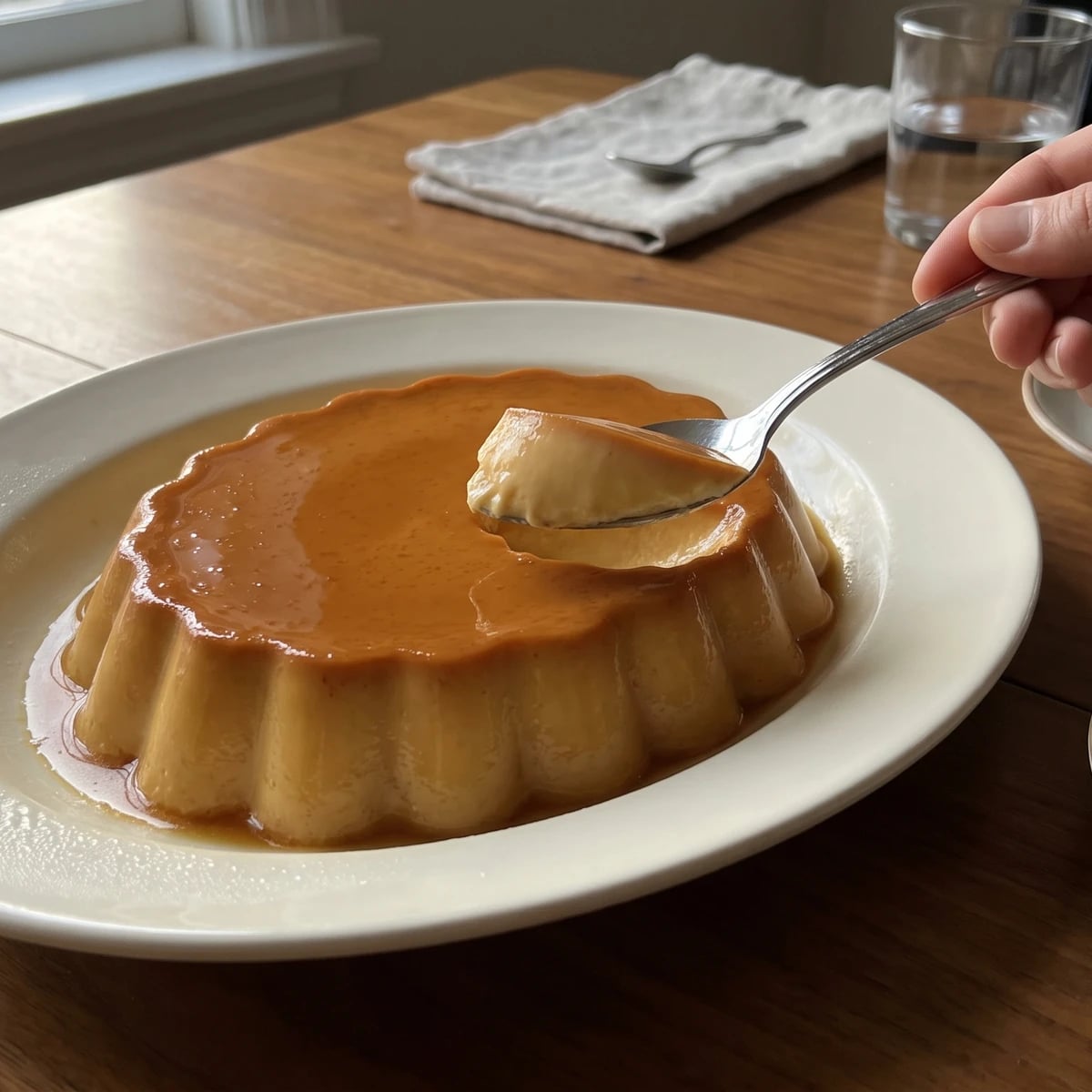
Caramel leaves the mould and enters the milk in this French classical custard, tinting every tender slice amber while preserving a clean, sauce-free turn onto the platter.
Crème à la Viennoise, moulée (moulded Viennese caramel custard), teaches one precise lesson: caramel can flavour the custard itself, not merely wait beneath it as a sauce. Here it dissolves into hot milk, so every slice sets a tawny amber and the turned custard sits cleanly on its platter. Know this before touching the pan: the caramel belongs inside.
The grand kitchen assumed polished decorative moulds, a pastry station poaching several custards at once, and enough hands to watch the caramel while the milk heated beside it. That is brigade scaffolding. At home, one 900 ml metal mould in a roasting tin does the same work for six people. The proportions, straining and gentle bain-marie stay because they are the dish; ranks of moulds and elaborate decoration can go. One cook, one stove, one evening, with the cold doing the final work.
The caramel decides everything. Take it to a clear chestnut amber, not black, then introduce the hot milk cautiously. If the caramel hardens into glass, don't throw it out. Ça se rattrape: return the pan to low heat and stir patiently until every shard dissolves.
Crème à la Viennoise belongs to the French classical entremets repertoire, where à la Viennoise signals a Viennese association filtered through French kitchen vocabulary rather than a claim to one household recipe from Vienna. Its nearest relation is crème au caramel moulée: there the caramel clothes the mould and becomes sauce after turning, while here it dissolves into the milk and colours the custard from edge to centre. The distinction is small on paper and decisive on the plate, which is how the canon preserves technique through names.
Quantity
2 cups (480 ml / 495 g)
Quantity
1/2 bean
split lengthwise
Quantity
1/2 cup (100 g / 120 ml)
Quantity
1/3 cup (65 g / 80 ml)
Quantity
4
Quantity
2
| Ingredient | Quantity |
|---|---|
| whole milk | 2 cups (480 ml / 495 g) |
| vanilla beansplit lengthwise | 1/2 bean |
| granulated sugar for the caramel | 1/2 cup (100 g / 120 ml) |
| granulated sugar for the custard | 1/3 cup (65 g / 80 ml) |
| large eggs | 4 |
| large egg yolks | 2 |
Heat the oven to 150°C/300°F with a rack in the lower-middle position. Set a clean, ungreased 900 ml metal charlotte mould or smooth loaf tin inside a deep roasting tin, and bring a kettle of water almost to the boil. Leave the mould bare: in the source, Another Method of Preparing Aspics de Filets de Soles (No. 916) explains the phrase clothing the mould through a literal coating technique, but this custard is defined by not clothing its mould with caramel.
Put the milk and split vanilla bean in a small saucepan. Heat gently until the milk trembles at the edge but does not boil, then cover and leave it for 10 minutes. Reheat it until quite hot before making the caramel; hot milk dissolves caramel more readily and causes a less violent temperature shock than cold milk.
Spread the 100 g sugar evenly in a clean, light-coloured heavy saucepan. Set it over medium heat and let the edges begin to liquefy, drawing the dry sugar gently toward the melted patches until everything is fluid. Swirl the pan until the caramel reaches a clear chestnut amber, then remove it from the heat. Take out the vanilla bean and add the hot milk in four cautious additions, stirring with a long-handled spoon and keeping your face and hands away from the surge. The caramel will probably seize into hard pieces. Ça se rattrape: return the pan to low heat and stir until every shard has dissolved and the milk is smooth and evenly amber. Let it cool for 5 minutes.
Whisk the eggs, yolks and remaining 65 g sugar only until evenly blended. Don't beat them into a froth, because every trapped bubble becomes a hole in the finished custard. Pour in one-third of the warm caramel milk while whisking, then add the remainder in a steady stream. If a few threads of egg appear, stop worrying and strain them out; only a thick mass of scrambled egg calls for starting again.
Pass the custard through a fine sieve into a jug, let it stand for 3 minutes, then skim away any foam. Pour it into the bare mould. Set the roasting tin in the oven and add enough hot water to reach halfway up the mould, making a bain-marie, or water bath. Lay a small sheet of baking parchment loosely over the mould and bake for 45 to 55 minutes. The edges should be set and the centre should tremble as one piece, not ripple like liquid; a thermometer will read about 80°C/176°F. If the water begins bubbling, replace a cup of it with cool water and lower the oven to 135°C/275°F. Boiling water makes a honeycombed custard.
Lift the mould from the bain-marie and cool it on a rack for about 1 hour. Cover only when it has stopped giving off warmth, then chill for at least 6 hours, preferably overnight. This rest finishes the set and gives the caramel flavour time to settle through the custard. Trying to turn it out while warm is impatience wearing an apron.
Run a thin knife once around the upper edge without digging into the custard. Dip the base and sides of the mould in hot water for 8 seconds, dry the outside, place a chilled platter over it and invert both together with confidence. If it clings, return the mould to the hot water for another 5 seconds; don't shake it into submission. Lift the mould straight up and serve the Crème à la Viennoise cold, without extra caramel sauce or decoration. À table!
1 serving (about 145g)
Culinary guides, cultural storytelling, and the editorial depth that makes cooking meaningful.
Discover Culinary Explorer
Chef Juliette
Five almond preparations, one discipline: remove the skins cleanly, dry every kernel through, then cut, toast, or cloak it in pale caramel without letting its fragrant oils escape.

Chef Juliette
A pastry pantry lesson in one tray: filberts warmed only until their red skins release, rubbed clean, cooled, and chopped into a fragrant mise-en-place for cakes, creams, pralines, and petits fours.

Chef Juliette
The smallest pâtisserie discipline decides whether a cake leaves its mould intact: clarified butter in every corner, followed by the lightest veil of dry flour or fécule.

Chef Juliette
Four whites, one spotless bowl, and a patient change of speed: whisk gently until loosened, then briskly to glossy stiffness, with powdered sugar waiting if the foam begins to granulate.