
Chef Juliette
Ordinary or White Consommé
Beef shin, lean beef, and fowl begin in cold water and rise slowly toward a tremble. Skim before the boil, and you learn the quiet discipline that gives every clear French broth its backbone.
A cooking platform built around craft, culture, and the stories behind what we eat.
Created by Chef Juliette
Based on No. 2613, Cherry Sauce, from Le Guide Culinaire (1907) by Auguste Escoffier
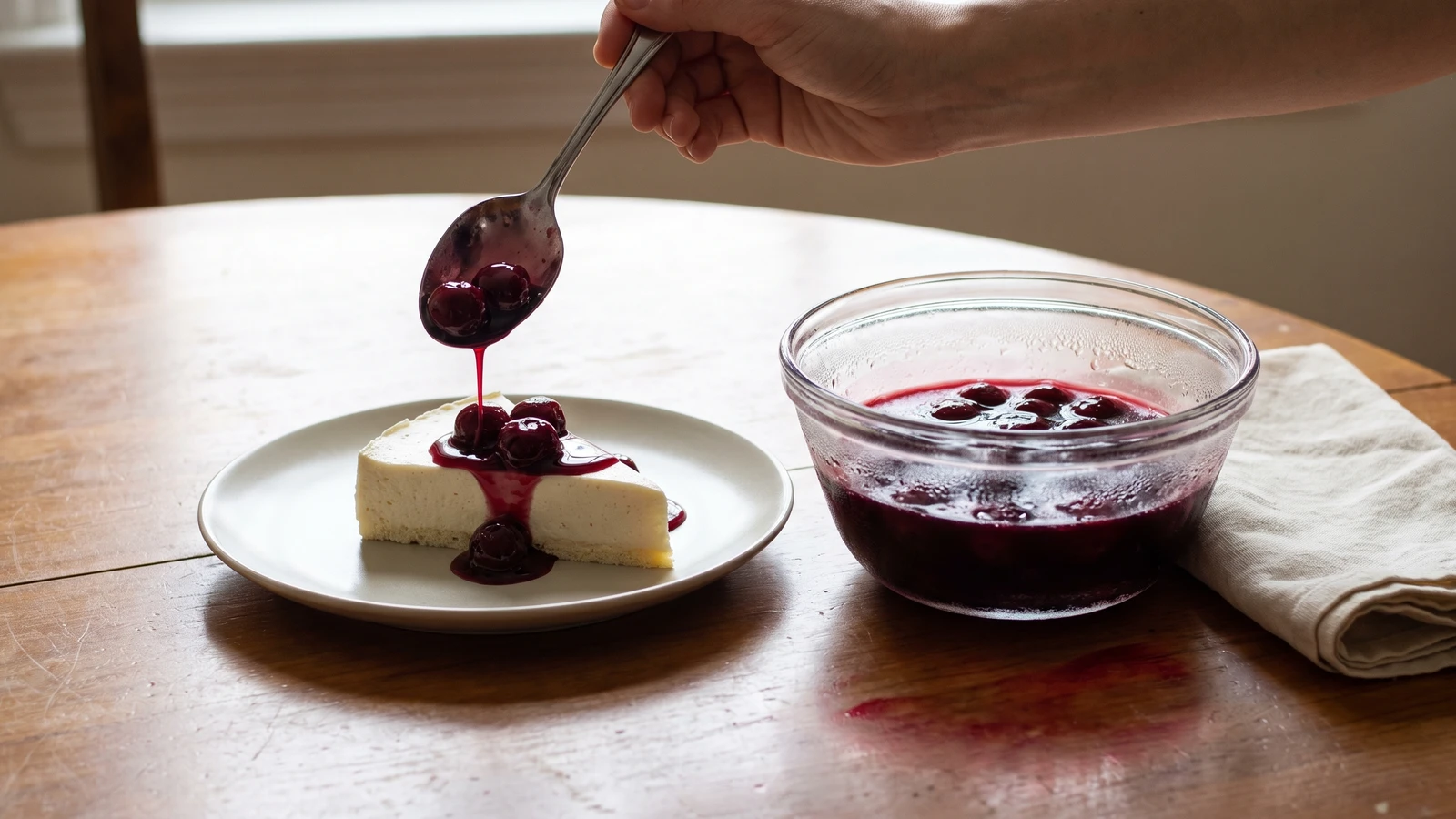
Sauce aux Cerises balances lush cherry sweetness with red currant, blood orange, ginger, and Kirsch. Melt the jelly gently, keep the fruit bright, and the sauce holds its gloss and edge.
Sauce aux Cerises teaches a clean classical lesson: sweet fruit needs an edge. Red currant is not a background flavor here. Its acidity and pectin give the cherries definition, while blood orange sharpens the perfume and powdered ginger leaves a quiet warmth behind. Before you touch the pan, know the one rule: melt the jelly only until it flows. Boiling cooks away the fresh character this sauce is built to preserve.
The classical formula assumed a pastry pantry already holding raspberry-flavored red-currant jelly, freshly pressed cherry juice, half-sugared cherries, and Kirsch syrup. Your home equivalent is a red-currant and seedless raspberry jelly blend, pure cherry juice, and lightly sweetened preserved cherries softened in a small pan of syrup. The formula is scaled as one unit for a generous two-quart make-ahead batch. The separate pantry preparations are brigade scaffolding and can be assembled tonight; the equal weights of jelly and cherry juice, the quarter-weight of cherries, and the original mixing order are the dish itself and must stay.
The finished sauce should be deep garnet, glossy, fluid enough to fall slowly from a spoon, and bright rather than jammy. Add the cold cherry juice gradually to the melted jelly. That joining is the step that matters most, and if the jelly gathers into threads, ça se rattrape.
Sauce aux Cerises belongs to the repertoire of cold sweet sauces developed in the grand kitchens of Paris, where preserved jellies, sugared fruits, and fruit juices allowed the pastry pantry to produce brilliant sauces beyond the brief cherry season. From there it passed naturally to the bourgeois dining table, since a household with a preserving pan could keep nearly every component ready. Despite its name, cherry is not the sauce's sole foundation: red-currant jelly supplies the acidity and body that sweet cherry juice lacks.
Quantity
2 cups (480 ml / 675 g)
combined with the raspberry jelly as the home equivalent for raspberry-flavored red-currant jelly
Quantity
⅔ cup (160 ml / 225 g)
Quantity
3¾ cups (900 ml / 900 g)
freshly pressed or bottled, well chilled
Quantity
4 medium, yielding about ¾ cup (180 ml / 180 g) juice
juiced and strained
Quantity
¼ teaspoon (1.25 ml / 0.5 g)
Quantity
6 drops (about 0.3 ml / 0.3 g)
Quantity
1½ cups (360 ml / 225 g)
pitted and drained
Quantity
½ cup (120 ml / 120 g)
Quantity
¼ cup (60 ml / 50 g)
Quantity
2 tablespoons (30 ml / 28 g)
| Ingredient | Quantity |
|---|---|
| red-currant jellycombined with the raspberry jelly as the home equivalent for raspberry-flavored red-currant jelly | 2 cups (480 ml / 675 g) |
| seedless raspberry jelly | ⅔ cup (160 ml / 225 g) |
| pure unsweetened cherry juicefreshly pressed or bottled, well chilled | 3¾ cups (900 ml / 900 g) |
| blood orangesjuiced and strained | 4 medium, yielding about ¾ cup (180 ml / 180 g) juice |
| powdered ginger | ¼ teaspoon (1.25 ml / 0.5 g) |
| food-grade liquid carmine coloring | 6 drops (about 0.3 ml / 0.3 g) |
| half-sugared cherries or lightly sweetened preserved whole cherriespitted and drained | 1½ cups (360 ml / 225 g) |
| water | ½ cup (120 ml / 120 g) |
| granulated sugar | ¼ cup (60 ml / 50 g) |
| Kirsch | 2 tablespoons (30 ml / 28 g) |
Combine the water and sugar in a small saucepan. Warm gently, stirring only until the sugar disappears, then take the pan off the heat and let the syrup cool to tepid, about 40°C or 104°F. Stir in the Kirsch only after cooling so its cherry perfume stays in the syrup. Add the drained cherries and leave them to soften for 20 minutes while you prepare the sauce.
Combine the red-currant and raspberry jellies in a heavy saucepan and set it over the lowest heat. Stir slowly with a flexible spatula until the blend is smooth and just fluid enough to pour, then remove it immediately. Do not simmer it. A hard boil turns the fresh, pointed flavor into cooked jam and weakens the clean gloss you want.
Pour the melted jelly into a cold, roomy heatproof bowl. Whisk in the chilled cherry juice in four additions, making each one completely smooth before adding the next. The jelly and juice are equal by weight, which is the governing proportion of the sauce: jelly supplies body and currant edge, while juice keeps it unmistakably cherry. If the cold juice makes the jelly gather into translucent threads, don't force it. Set the bowl over a pan of barely warm water and whisk just until smooth, then return it to the cold work surface. Ça se rattrape.
Whisk in the strained blood-orange juice, then the powdered ginger. Add the carmine one drop at a time, stopping after six drops or as soon as the sauce reaches a clear, distinctive garnet. Carmine supplies color, not flavor, so more is not better. Let the mixture stand for five minutes, then stir and taste; the currant should arrive first as brightness, with ginger only at the finish.
Lift the softened cherries from their Kirsch syrup with a slotted spoon and let the excess fall away for a few seconds. Fold them gently into the sauce so they remain whole and suspended rather than crushed into the juice. The Kirsch clinging to the fruit is enough; pouring in all the syrup would loosen the carefully held jelly-to-juice balance.
Cover and chill the Sauce aux Cerises for at least two hours. Stir it slowly from the bottom before serving. It should fall from the spoon in a glossy ribbon with whole cherries following behind. If refrigeration has made it too firm, leave it at room temperature for 15 minutes and whisk gently before adding any liquid. Spoon it over vanilla bavarois, baked custard, rice pudding, or poached pears. À table!
1 serving (about 75g)
Culinary guides, cultural storytelling, and the editorial depth that makes cooking meaningful.
Discover Culinary ExplorerChef Juliette
Beef shin, lean beef, and fowl begin in cold water and rise slowly toward a tremble. Skim before the boil, and you learn the quiet discipline that gives every clear French broth its backbone.

Chef Juliette
Break the veal bones small, then give them eight hours at a bare tremble. This pale, gelatinous fond becomes the quiet foundation beneath velouté, blanquette, and every sauce that must stay light.

Chef Juliette
Sauce Orientale concentrates lobster-rich American Sauce with curry, then folds in cream away from the fire: a glossy, gently spiced derivative made for lobster, crayfish, and firm fish.

Chef Juliette
An old lesson in sauce families: Sauce Allemande takes mushroom liquor, then butter, lemon, and parsley, becoming a glossy Poulette for sheep's trotters, leeks, cauliflower, and anything needing gentle richness with a bright edge.