Culinary Explorer
A cooking platform built around craft, culture, and the stories behind what we eat.
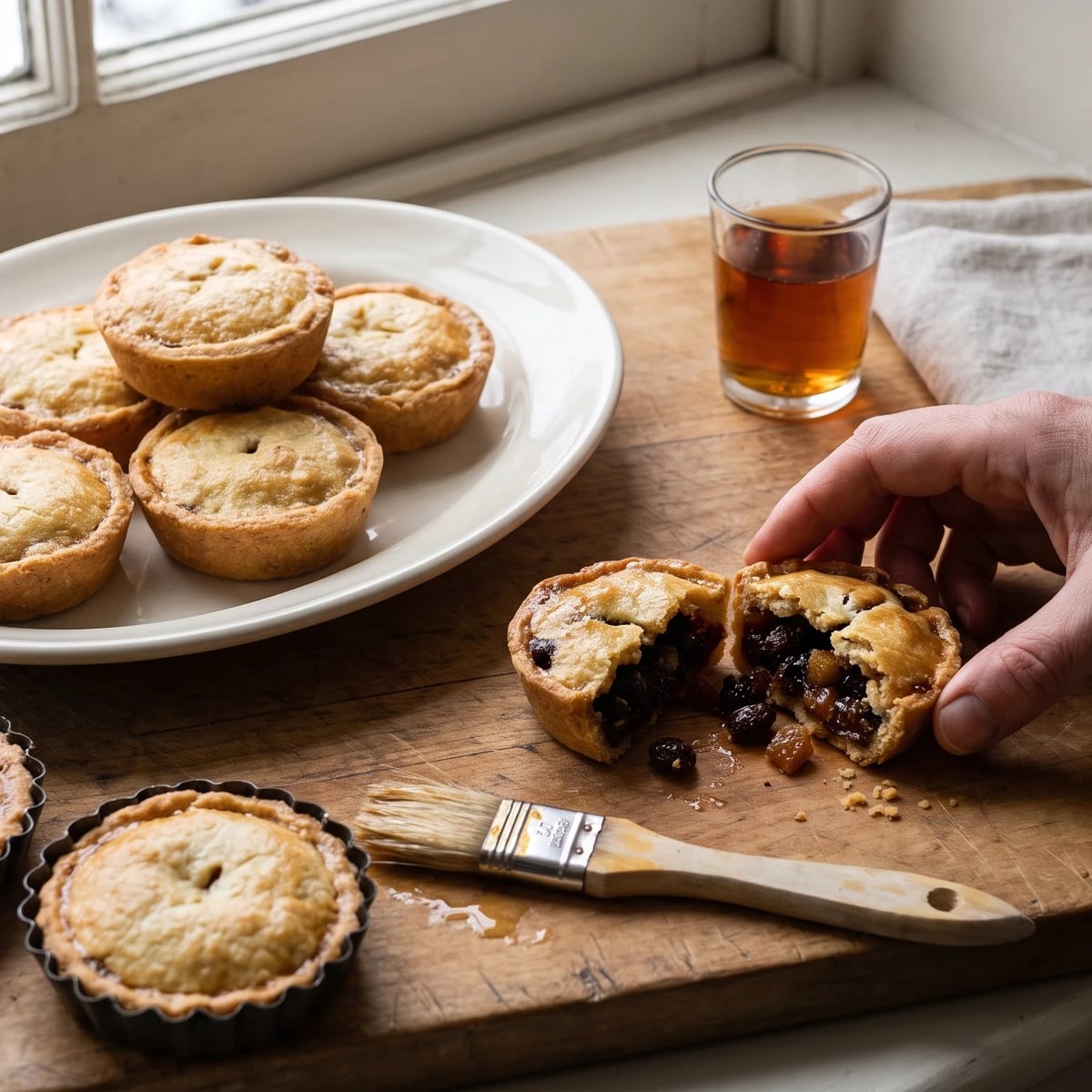
Mince Pies
Created by Chef Juliette
Tartelettes anglaises au mincemeat make patience the principal ingredient: fruit, brandy, Madeira and rum matured for a month, then joined with beef and suet beneath gilded puff-pastry lids.
These tartelettes teach patience before pastry. The one true thing to know is that the month of maceration is the dish: dried fruit, candied rind, apple, orange, allspice, brandy, Madeira and rum must become one dark, fragrant preparation before the oven enters the conversation.
The classical entry assumed brigade quantities, an earthenware crock in a reliably cold larder and a pastry bench with both short paste and puff paste ready. At home, the batch is quartered to twelve deep tartlets, a lidded glass jar replaces the crock, and good all-butter pâte feuilletée replaces hours of lamination. Those are scaffolding. The separate short-paste case, puff lid, beef, suet and full month given to the fruit are the dish, and they stay. One change is deliberate: cooked beef and fresh suet join only for the final overnight rest, because holding them for a month in a domestic refrigerator is not sound practice.
The step that decides the baking is temperature. Fill cold shells, seal them with cold puff lids and put them onto a hot baking sheet. If the pastry softens while you work, stop and chill it. Then the lids rise in crisp layers, the short paste holds firm and the mincemeat glistens darkly through its little vent.
Ingredients
seedless black raisins
Quantity
3/4 cup (180 ml / 115 g)
dried currants
Quantity
3/4 cup (180 ml / 115 g)
sultanas
Quantity
3/4 cup (180 ml / 115 g)
| Ingredient | Quantity |
|---|---|
| seedless black raisins | 3/4 cup (180 ml / 115 g) |
| dried currants | 3/4 cup (180 ml / 115 g) |
| sultanas | 3/4 cup (180 ml / 115 g) |
Where cooking meets culture.
Culinary guides, cultural storytelling, and the editorial depth that makes cooking meaningful.
Discover Culinary Explorer