Culinary Explorer
A cooking platform built around craft, culture, and the stories behind what we eat.
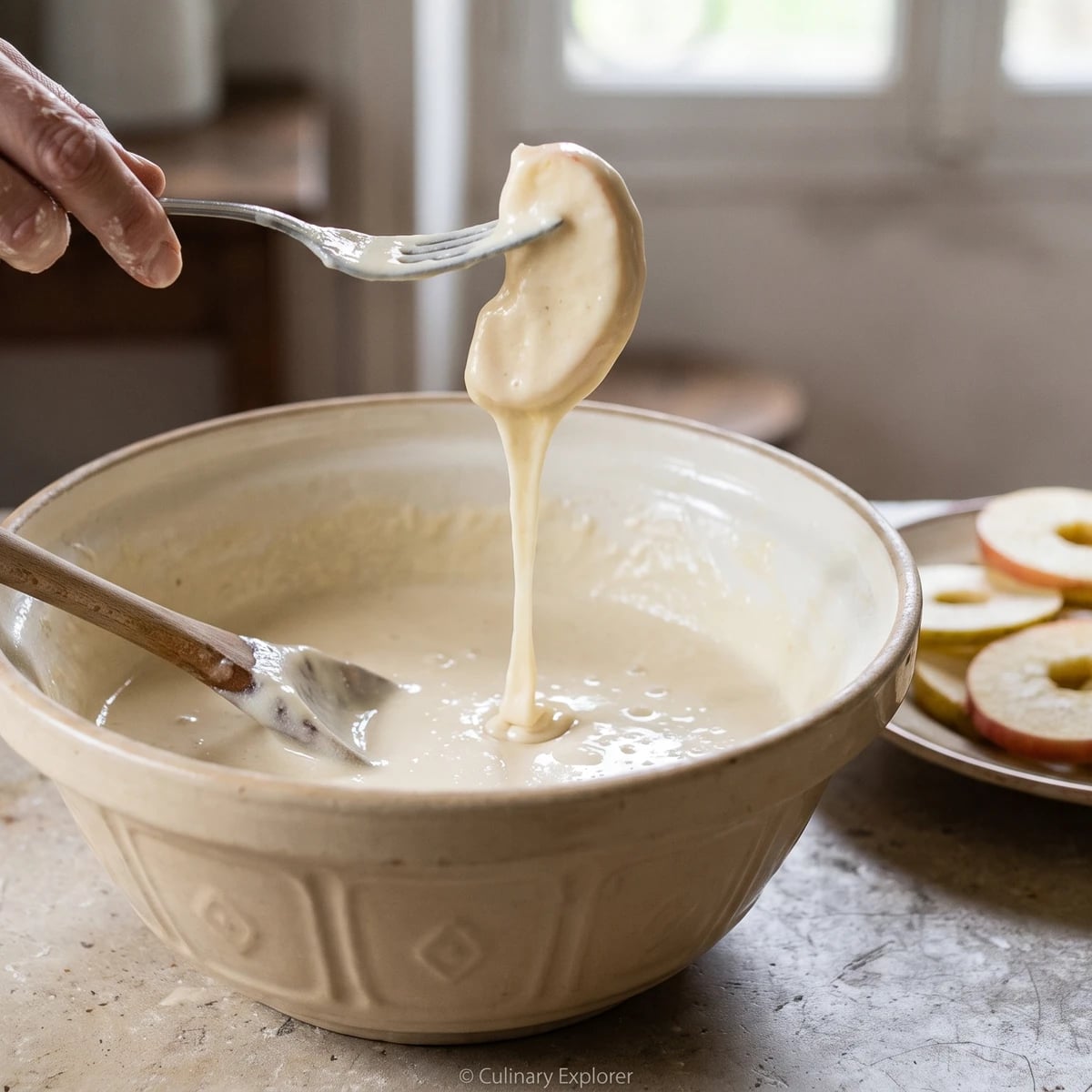
Batter for Oven-glazed Fruit Fritters
Created by Chef Juliette
Pâte à frire teaches the judgment behind every fine fruit fritter: add water until the batter clings in a smooth veil, rest it warm, then stir once before dipping.
Pâte à frire pour beignets de fruits glacés au four teaches one indispensable judgment: the correct batter is neither a dough nor a pourable cream. It must cling to the fruit in an opaque veil, then fall from the wooden spoon in a slow, broad ribbon. Learn that consistency and the vague old instruction, "the necessary quantity of water," becomes useful rather than mysterious.
The original assumed a pastry kitchen with a reliably lukewarm corner, a cook who judged water by eye, and enough diners to absorb a batter beginning with a pound of flour. Here every fixed quantity is halved for four servings, while the variable water is given a practical starting point and range. The brigade quantity is scaffolding and can go. The order of mixing, the warm fermentation, and the final stir are the dish, so they stay. One cook, one stove, one evening.
No commercial yeast appears in the source, and I haven't inserted one. The warm rest hydrates the flour, softens the batter, and allows a little natural aeration; its expansion during cooking comes chiefly from the egg and moisture. Watch the ribbon rather than the clock alone. That is the step that decides whether the fruit emerges neatly coated or wearing its batter in patches.
Ingredients
plain flour
Quantity
1 7/8 cups (445 ml / 227 g)
neutral oil, such as sunflower or grapeseed
Quantity
1 tablespoon (15 ml / 14 g)
fine salt
Quantity
1/8 teaspoon (0.6 ml / 1 g)
| Ingredient | Quantity |
|---|---|
| plain flour | 1 7/8 cups (445 ml / 227 g) |
| neutral oil, such as sunflower or grapeseed | 1 tablespoon (15 ml / 14 g) |
| fine salt | 1/8 teaspoon (0.6 ml / 1 g) |
Where cooking meets culture.
Culinary guides, cultural storytelling, and the editorial depth that makes cooking meaningful.
Discover Culinary Explorer