
Chef Juliette
Smelt (Éperlans)
Tiny éperlans, lightly floured and fried until their tails stand crisp, arrive in a generous heap on a napkin with fried parsley and grooved lemon, a weeknight lesson in heat and restraint.
A cooking platform built around craft, culture, and the stories behind what we eat.

Created by Chef Juliette
Based on No. 2312, Crème Frite au Fromage, from Le Guide Culinaire (1907) by Auguste Escoffier
Gruyère-rich cream set firm, cut into elegant lozenges, and fried only at the last moment: crisp cheese crumb outside, soft savory cream within, and patience doing the essential work.
Crème frite au fromage (fried cheese cream) teaches the discipline behind every soft croquette: the filling must be cooked until it has a spine, then chilled until it is colder and firmer than impatience finds reasonable. A warm paste doesn't merely soften in the oil; it bursts its crumb. The crust should arrive deep gold and crisp, enclosing a Gruyère cream that yields under the fork without running away.
The book's kitchen assumed a cook stirring incessantly over an open fire, a broad buttered tray, and service hands ready to fry at the last moment. At home, the open fire becomes a heavy saucepan over controlled medium heat, the tray becomes a small 18 cm pan, and the batch is halved exactly to make twelve lozenges for four. The napkin-lined serving dish is service scaffolding, so a wire rack drains them better; the five-minute cook, the full chill, the cheese crumb, and the last-moment frying are the dish and stay untouched. One cook, one stove, one evening.
Work the cold mixture smooth before heat touches it, then stir without interruption once it thickens. The decisive step comes later: don't cut, crumb, or fry until the slab is firm all the way through. If it bends, back to the cold it goes.
Crèmes frites belong to the Parisian classical table, where cooks set thick milk-and-egg preparations on trays, cut them into geometric pieces, and fried them as hot hors-d'œuvre. The fromage version folds Gruyère into a body strengthened by both wheat flour and crème de riz, so despite its name it is closer to the croquette family than to a sweet pastry cream.
Quantity
2 teaspoons (10 ml / 10 g)
softened, for the tray
Quantity
Scant 1/2 cup (120 ml / 57 g)
Quantity
Scant 1/4 cup (55 ml / 35 g)
Quantity
3 (about 150 ml / 150 g without shells)
beaten and divided equally by weight
Quantity
1 (15 ml / 18 g)
Quantity
1 cup (240 ml / 245 g)
Quantity
3/4 teaspoon (3.75 ml / 4.5 g)
Quantity
1/16 teaspoon (0.3 ml / 0.1 g)
Quantity
1/8 teaspoon (0.6 ml / 0.25 g)
Quantity
Loosely packed 1/2 cup (120 ml / 57 g)
finely grated, for the cream
Quantity
1 cup (240 ml / 100 g)
Quantity
1/4 cup (60 ml / 28 g)
finely grated, for the crumb
Quantity
3 cups (720 ml / 660 g), or enough for a 3 cm depth
for frying
| Ingredient | Quantity |
|---|---|
| unsalted buttersoftened, for the tray | 2 teaspoons (10 ml / 10 g) |
| plain flour | Scant 1/2 cup (120 ml / 57 g) |
| crème de riz (rice cream, finely milled rice flour) | Scant 1/4 cup (55 ml / 35 g) |
| large eggsbeaten and divided equally by weight | 3 (about 150 ml / 150 g without shells) |
| large egg yolk | 1 (15 ml / 18 g) |
| whole milk | 1 cup (240 ml / 245 g) |
| fine salt | 3/4 teaspoon (3.75 ml / 4.5 g) |
| cayenne pepper | 1/16 teaspoon (0.3 ml / 0.1 g) |
| freshly grated nutmeg | 1/8 teaspoon (0.6 ml / 0.25 g) |
| Gruyèrefinely grated, for the cream | Loosely packed 1/2 cup (120 ml / 57 g) |
| fine dry breadcrumbs | 1 cup (240 ml / 100 g) |
| Gruyèrefinely grated, for the crumb | 1/4 cup (60 ml / 28 g) |
| refined sunflower or peanut oilfor frying | 3 cups (720 ml / 660 g), or enough for a 3 cm depth |
Butter the base and sides of an 18 cm square shallow metal tray thoroughly, working the butter into the corners. Set it beside the stove with a flexible spatula ready. Once the cream is cooked, it must leave the saucepan immediately; lingering over the heat makes the bottom catch while you hunt for equipment.
Whisk the plain flour and crème de riz together in a bowl. Add half the beaten eggs, 75 ml or 75 g, along with the yolk, and work them into a perfectly smooth, thick paste. Cover and refrigerate the remaining beaten egg for the crumb. Whisk the milk into the paste gradually, beginning with a few spoonfuls so no lumps escape, then add the salt, cayenne, and nutmeg. If you see flour knots while the mixture is still fluid, pass it through a fine sieve into the saucepan. Ça se rattrape now; after thickening, those knots become stubborn.
Set the saucepan over medium heat and stir constantly with a flat whisk, reaching into every corner. The mixture will thicken abruptly. When the first heavy bubble breaks through, lower the heat slightly, change to a firm wooden spoon, and cook for five full minutes, stirring and scraping without pause. The cream is ready when it is glossy, extremely thick, and pulls from the pan in a single mass, leaving a path that stays open behind the spoon. If the bottom catches, don't scrape at it. Transfer the clean upper paste to another saucepan at once and finish the five minutes there; burnt fond cannot be stirred away.
Take the pan off the heat and beat in the 57 g of Gruyère until the cheese has melted through the cream. Scrape it immediately into the buttered tray and spread it into an even layer about 1.25 cm thick, smoothing the top with a buttered spatula. Let it lose its surface heat for fifteen minutes, cover, and refrigerate for at least four hours, preferably overnight. The slab must feel cold and solid through its centre. If it flexes or clings when lifted, chill it in the freezer for twenty to thirty minutes without freezing it solid. If it remains loose, the starch was undercooked: scrape it back into a saucepan, cook and stir for two more minutes, then spread and chill it again.
Mix the breadcrumbs with the remaining 28 g of grated Gruyère in a shallow dish. Loosen the chilled slab around its edges and turn it onto a cold board. Cut it into twelve elongated lozenges, roughly 8 by 5 cm, wiping the knife between cuts; fry the neat trimmings as the cook's share. Pass each lozenge through the reserved beaten egg, let the excess fall away, then press it gently into the cheese crumbs until every surface is covered. Patch any bare spot with a touch more egg and crumbs. Arrange the pieces in one layer and chill for twenty minutes so the coating grips.
Pour the oil into a heavy saucepan no more than half full and heat it to 175°C. Fry the lozenges straight from the cold, two or three at a time, turning once if needed, until deep butter-gold and crisp, about two to three minutes. Let the oil return to temperature between batches. If a coating begins to open, lift that piece out immediately and return the unfried lozenges to the cold; patch any weak seam with egg and crumbs, chill it for ten minutes, and fry only after the oil is steady again. Warm paste and cool fat are the two causes of bursting.
Lift the lozenges onto a wire rack and leave them for one minute, just long enough for the excess oil to fall away while the crust stays crisp. Arrange them on a warm plain platter and serve immediately. Don't hold them in the oven; the cream continues to loosen and the crumb loses its nerve. À table!
1 serving (about 165g)
Culinary guides, cultural storytelling, and the editorial depth that makes cooking meaningful.
Discover Culinary ExplorerChef Juliette
Tiny éperlans, lightly floured and fried until their tails stand crisp, arrive in a generous heap on a napkin with fried parsley and grooved lemon, a weeknight lesson in heat and restraint.

Chef Juliette
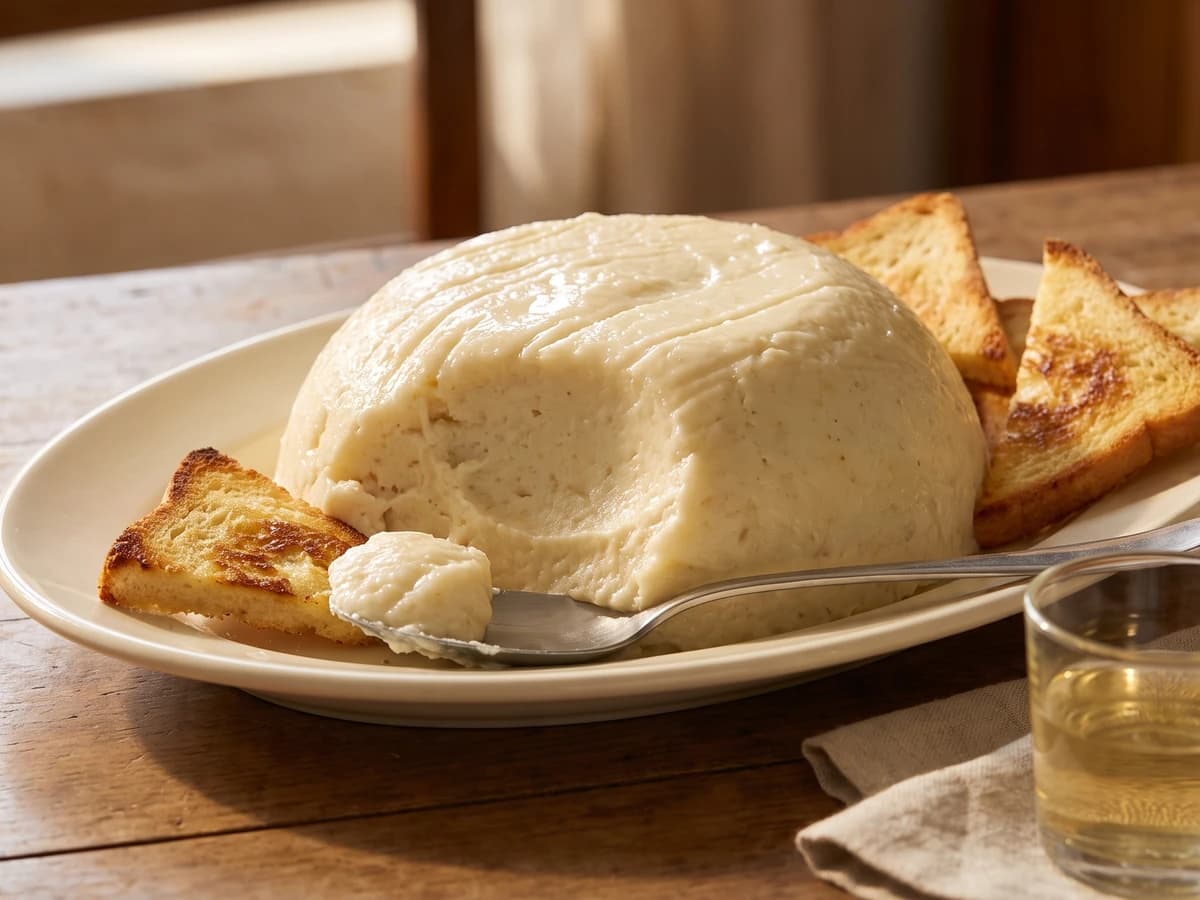
Brandade de Morue turns salt cod, warm olive oil, and milk into a pale, silky emulsion: keep everything warm and add the oil slowly, then crown the generous dome with butter-fried bread.
Chef Juliette
Salt cod worked warm with cream, one patient spoonful at a time, until the rough flakes become a glossy Nîmes paste, domed generously and ringed with butter-fried croutons for the table.

Chef Juliette
Wine-poached char packed in its earthenware crock beneath butter gold: a make-ahead first course that turns careful cooling, thorough boning, and one unbroken seal into quiet abundance.