
Chef Juliette
Smelt (Éperlans)
Tiny éperlans, lightly floured and fried until their tails stand crisp, arrive in a generous heap on a napkin with fried parsley and grooved lemon, a weeknight lesson in heat and restraint.
A cooking platform built around craft, culture, and the stories behind what we eat.
Created by Chef Juliette
Based on No. 2308, Canapes à l’Écossaise, from Le Guide Culinaire (1907) by Auguste Escoffier
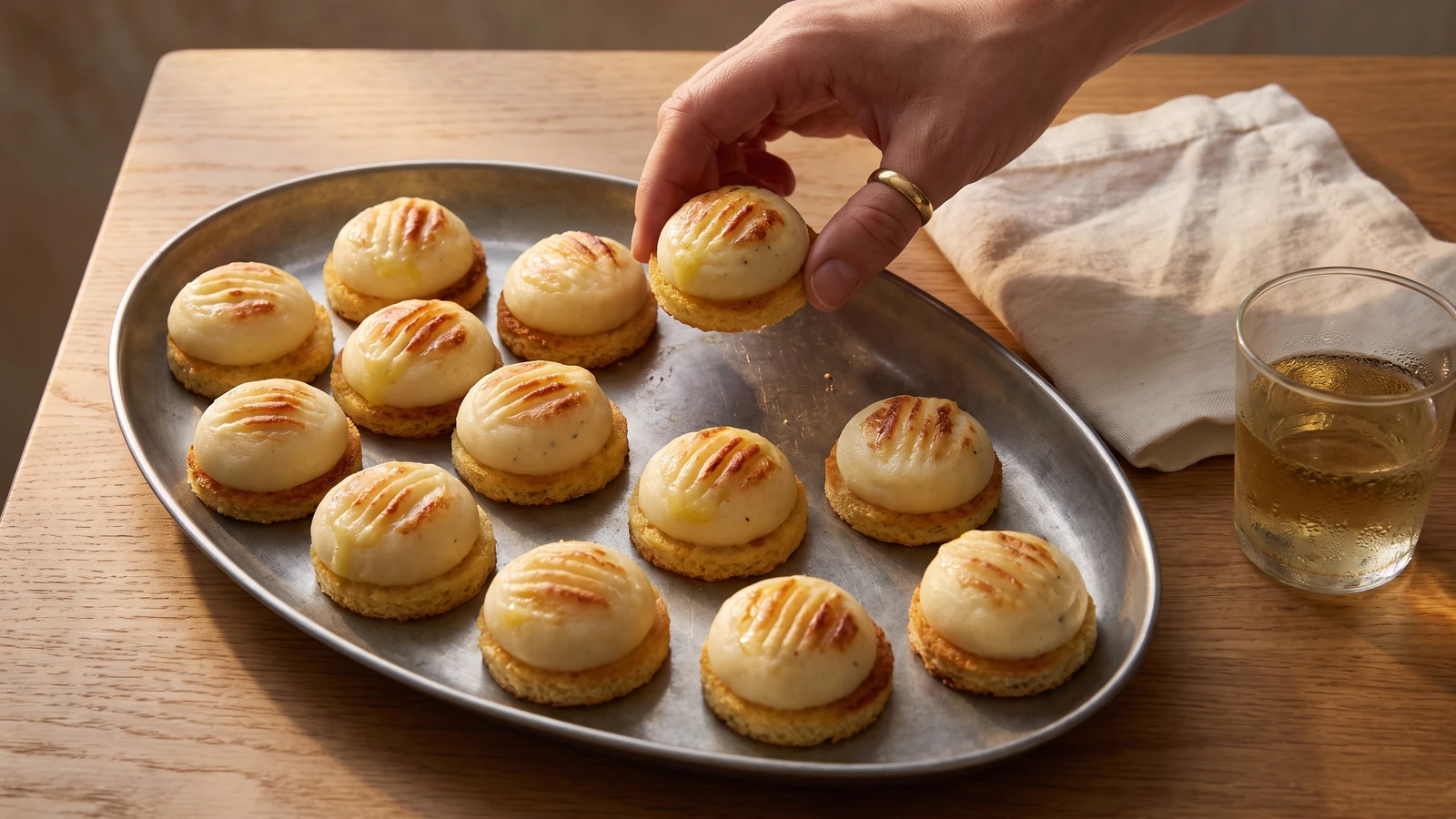
Crisp rounds of buttered toast carry firm smoked-haddock purée, domed rather than spread, then pass under fierce top heat just long enough to gleam and take a delicate golden blush.
Canapés à l’Écossaise (Scottish smoked-haddock toasts) teach one exact lesson: a purée meant for top heat must hold its shape before it ever meets that heat. Spoon it into a dome and it should remain a dome. If it spreads on the plate, it will slide from the toast beneath the broiler.
The original entry assumed haddock purée already waiting, a toast station producing trays of rounds, and a salamander ready to color them in seconds. Here, one smoked fillet is poached and worked in a food processor, the honest home equivalent of mortar and sieve, while an ordinary broiler supplies the fierce top heat. The bulk preparation and separate kitchen stations were brigade scaffolding, so they go. The buttered toast, concentrated purée, rounded shape, and quick glazing are the dish itself, so every one stays. Twelve canapés are enough for four people, one cook, one stove, one evening.
When they are right, the toast is crisp beneath a pale, buttery mound of smoked fish, with a glossy top just blushing gold. The step that decides everything is drying the poached haddock before enriching it; hold back the cream until the purée proves it can stand.
Canapés à l’Écossaise belong to the French classical hors-d’œuvre tray, particularly the hotel and private-house service of Paris, while their defining fish comes from the smokehouses of Scotland’s northeast coast. In French kitchen vocabulary, haddock generally means smoked églefin rather than the fresh fish, so à l’Écossaise identifies the Scottish smokehouse lineage of the garnish, not a documented Scottish household recipe. Classical kitchens pounded the fish into purée and colored it beneath a salamander, concentrating a robust preserved ingredient into one warm, precise bite.
Quantity
10 oz / 285 g
skin on and checked for pin bones
Quantity
1¼ cups (300 ml / 305 g)
Quantity
12 small slices (about 6 oz / 170 g)
cut into 2-inch / 5-cm rounds
Quantity
5 tablespoons (75 ml / 71 g)
divided
Quantity
2 tablespoons (30 ml / 30 g)
warmed
Quantity
⅛ teaspoon (0.6 ml / 0.3 g)
| Ingredient | Quantity |
|---|---|
| naturally smoked haddock filletskin on and checked for pin bones | 10 oz / 285 g |
| whole milk | 1¼ cups (300 ml / 305 g) |
| pain de mie or firm white sandwich breadcut into 2-inch / 5-cm rounds | 12 small slices (about 6 oz / 170 g) |
| unsalted butterdivided | 5 tablespoons (75 ml / 71 g) |
| heavy creamwarmed | 2 tablespoons (30 ml / 30 g) |
| freshly ground white pepper | ⅛ teaspoon (0.6 ml / 0.3 g) |
Heat the oven to 400°F (200°C) with a rack in the upper third. Cut twelve neat 2-inch / 5-cm rounds from the bread. Save the trimmings for breadcrumbs; economy and precision have always shared a kitchen.
Melt 2 tablespoons (30 ml / 28 g) of the butter and brush it lightly over both sides of each round. Arrange the rounds on a baking sheet and bake for 8 to 10 minutes, turning once, until evenly golden and crisp through the center. Pale, flexible toast will soften beneath the purée, so give it real color without letting its edges burn. Set the rounds aside and switch the oven to broil.
Lay the haddock skin-side down in a shallow saucepan and pour over the milk. Bring the milk only to a bare simmer, cover, remove the pan from the heat, and leave the fish for 6 to 8 minutes. It is ready when the flesh is opaque, separates into moist flakes, and reaches 145°F (63°C) at its thickest point. If the center remains translucent, return the pan to low heat for another minute or two.
Lift the haddock from the milk, reserving a little milk, and let it drain for 5 minutes. Remove the skin and any remaining bones, then flake the fish into a food processor. Pulse until fine, add 2½ tablespoons (37 ml / 36 g) softened butter and the white pepper, then pulse again. Add 1 tablespoon (15 ml / 15 g) warm cream and test the purée before adding more: a spoonful placed on a plate must remain in a firm mound. If it is loose, scrape it into a saucepan and stir over gentle heat until it pulls cleanly from the sides. Ça se rattrape. If it is dry or crumbly, beat in the remaining cream or reserved poaching milk, one teaspoon at a time.
Place about 1½ tablespoons of purée on each toast and shape it into a smooth, rounded dome with two teaspoons. Keep the purée within the toast’s edge so the butter can crisp the border. If a dome begins to settle, stop and dry the remaining purée gently before continuing; the shape must be stable now because top heat will not repair a loose mixture.
Melt the remaining ½ tablespoon (7 ml / 7 g) butter and brush the domes very lightly. Set the canapés 5 to 6 inches (13 to 15 cm) beneath the broiler and glacer them, exposing them briefly to fierce top heat, for 45 seconds to 2 minutes. Remove them when the surface gleams and takes a pale golden blush at the ridges. Watch without turning away, because the distance between glazed and scorched is one conversation. Serve at once. À table!
1 serving (about 130g)
Culinary guides, cultural storytelling, and the editorial depth that makes cooking meaningful.
Discover Culinary ExplorerChef Juliette
Tiny éperlans, lightly floured and fried until their tails stand crisp, arrive in a generous heap on a napkin with fried parsley and grooved lemon, a weeknight lesson in heat and restraint.

Chef Juliette
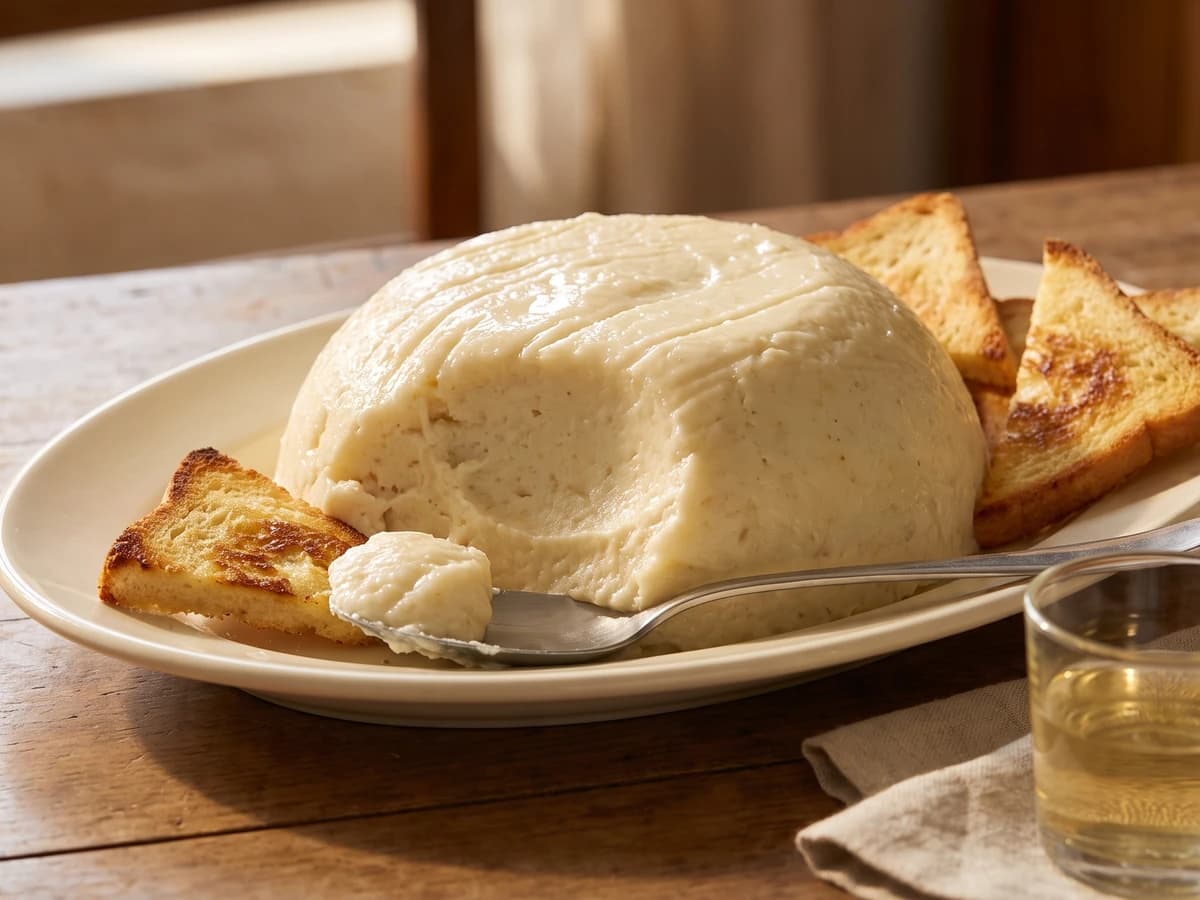
Brandade de Morue turns salt cod, warm olive oil, and milk into a pale, silky emulsion: keep everything warm and add the oil slowly, then crown the generous dome with butter-fried bread.
Chef Juliette
Salt cod worked warm with cream, one patient spoonful at a time, until the rough flakes become a glossy Nîmes paste, domed generously and ringed with butter-fried croutons for the table.

Chef Juliette
Wine-poached char packed in its earthenware crock beneath butter gold: a make-ahead first course that turns careful cooling, thorough boning, and one unbroken seal into quiet abundance.