
Chef Juliette
Smelt (Éperlans)
Tiny éperlans, lightly floured and fried until their tails stand crisp, arrive in a generous heap on a napkin with fried parsley and grooved lemon, a weeknight lesson in heat and restraint.
A cooking platform built around craft, culture, and the stories behind what we eat.
Created by Chef Juliette
Based on No. 2306, Canapes des Gourmets, from Le Guide Culinaire (1907) by Auguste Escoffier
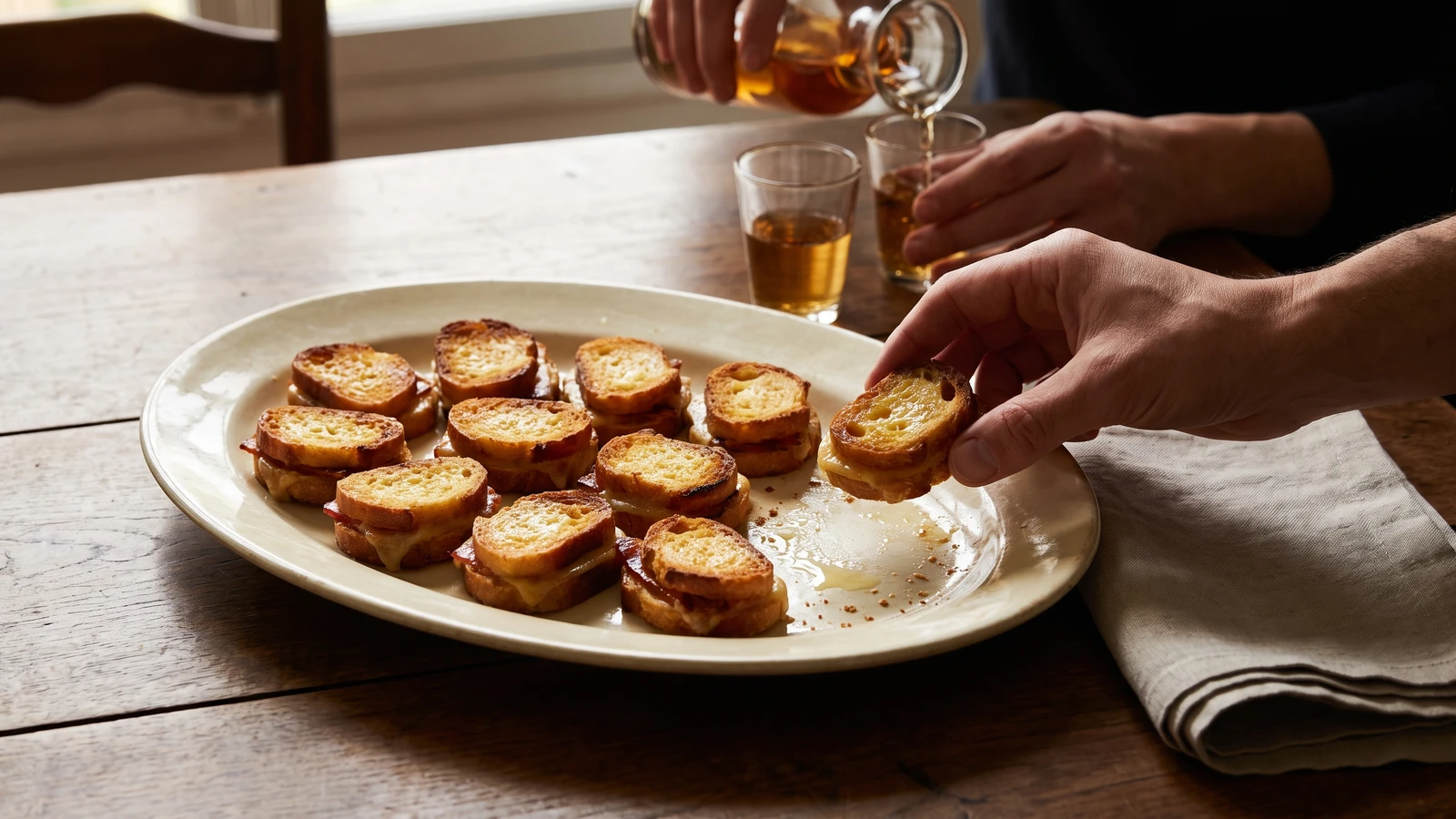
Butter-fried bread, molten Gruyère fondue, and grilled bacon meet in a two-bite canapé that teaches exact heat: crisp toast outside, yielding cheese and pork within.
Canapés des Gourmets (butter-fried cheese and bacon toasts) teach one true thing before you touch the pan: frying is the dish. The bread is not browned under a grill or dried in a toaster. It drinks a thin film of butter in the pan, turning crisp and golden while keeping enough tenderness to meet the fondue, a melted cheese preparation, and bacon without collapsing into crumbs.
The original entry assumed a saucier with fondue ready, a salamander for the bacon, and enough hands to fry and assemble by the tray. Although the brigade's stockpot never went cold, this canapé asks nothing from it. The entry gives no household proportions, so the honest home scale is twelve paired canapés for four, with a small Gruyère-and-cream fondue made when needed and the home broiler standing in for the salamander. The holding gear and extra hands were scaffolding and can go. Frying in real butter, coating every toast, pairing the pieces, and enclosing grilled bacon are the dish and must stay. One cook, one stove, one evening.
The critical moment is the fondue. Keep the heat low and stop as soon as the cheese becomes smooth enough to spread, because boiling makes it shed fat and tighten into strings. If it begins to split, pull it from the heat and stir in the reserved warm cream a teaspoon at a time. Ça se rattrape. Assemble while everything is warm, and serve before the butter-fried edges lose their crisp bite.
Canapés des Gourmets belong to the formal French hors-d'œuvre table rather than to the larder of any single region. Small fried or toasted bread supports traveled from grand dining rooms to bourgeois apéritif tables, and the culinary word canapé shares its name with the sofa because the bread acts as the garnish's seat. This version corrects a common shortcut: its very thin bread is fried in butter, not grilled, then paired around bacon rather than left open.
Quantity
6 very thin slices (about 4¼ oz / 120 g)
crusts removed
Quantity
6 rashers (about 4 oz / 115 g)
each cut crosswise in half
Quantity
1½ packed cups (355 ml / 150 g)
finely grated
Quantity
⅓ cup (80 ml / 80 g)
divided
Quantity
6 tablespoons (90 ml / 85 g)
divided
| Ingredient | Quantity |
|---|---|
| firm pain de mie or close-crumbed white sandwich breadcrusts removed | 6 very thin slices (about 4¼ oz / 120 g) |
| thin-cut streaky baconeach cut crosswise in half | 6 rashers (about 4 oz / 115 g) |
| Gruyère cheesefinely grated | 1½ packed cups (355 ml / 150 g) |
| heavy creamdivided | ⅓ cup (80 ml / 80 g) |
| unsalted butterdivided | 6 tablespoons (90 ml / 85 g) |
Cut each bread slice into four equal squares or neat rectangles, giving you 24 pieces for 12 paired canapés. Keep them no thicker than about ¼ inch (6 mm); thin bread fries through before its butter burns. Halve the bacon rashers crosswise and arrange a broiler-safe rack over a rimmed metal sheet. Set the oven rack 4 to 6 inches (10 to 15 cm) below the broiler.
Heat the broiler and lay the 12 bacon pieces flat on the rack. Broil for 5 to 8 minutes, turning once, until the fat has rendered and the edges are bronzed but the pieces remain slightly pliable. Bacon cooked rigid will push the delicate toasts apart when bitten. Transfer it to absorbent paper, then keep it nearby for assembly.
Set a large skillet over medium heat and melt 1½ tablespoons (22 ml / 21 g) butter. When the foam subsides, add six bread pieces in one uncrowded layer. Fry for 45 to 75 seconds per side, until evenly butter-gold with deeper bronze at the edges. Transfer them to a wire rack and repeat with the remaining bread and butter. If the milk solids turn black, wipe the pan before the next batch and begin with fresh butter; burnt bitterness has no place beneath the fondue.
Warm the cream in a small heavy saucepan over low heat until the edge barely trembles. Spoon 1 tablespoon (15 ml / 15 g) into a small cup and keep it warm for adjustment. Add the Gruyère to the remaining cream in three additions, stirring each one smooth before adding the next. Keep the heat low and remove the pan as soon as the fondue is glossy, cohesive, and thick enough to spread. Do not let it boil. If fat beads around the edge or the cheese tightens into ropes, take the pan off the heat and stir in the reserved warm cream one teaspoon at a time. Ça se rattrape.
Spread a scant 2 teaspoons of warm fondue over one side of every fried bread piece, reaching nearly to the edges. Lay one grilled bacon piece across 12 of them, then cover each with a second toast, fondue side facing inward. Press only enough to settle the layers together; pressing hard squeezes out the cheese and steals the canapé's height.
Arrange the Canapés des Gourmets on a warm platter and carry them directly to the table. They should arrive with the toast still crisp, the bacon yielding, and a narrow ivory seam of fondue visible between the butter-gold layers. No garnish is needed. Cooking well is not cooking fancy. À table!
1 serving (about 110g)
Culinary guides, cultural storytelling, and the editorial depth that makes cooking meaningful.
Discover Culinary ExplorerChef Juliette
Tiny éperlans, lightly floured and fried until their tails stand crisp, arrive in a generous heap on a napkin with fried parsley and grooved lemon, a weeknight lesson in heat and restraint.

Chef Juliette
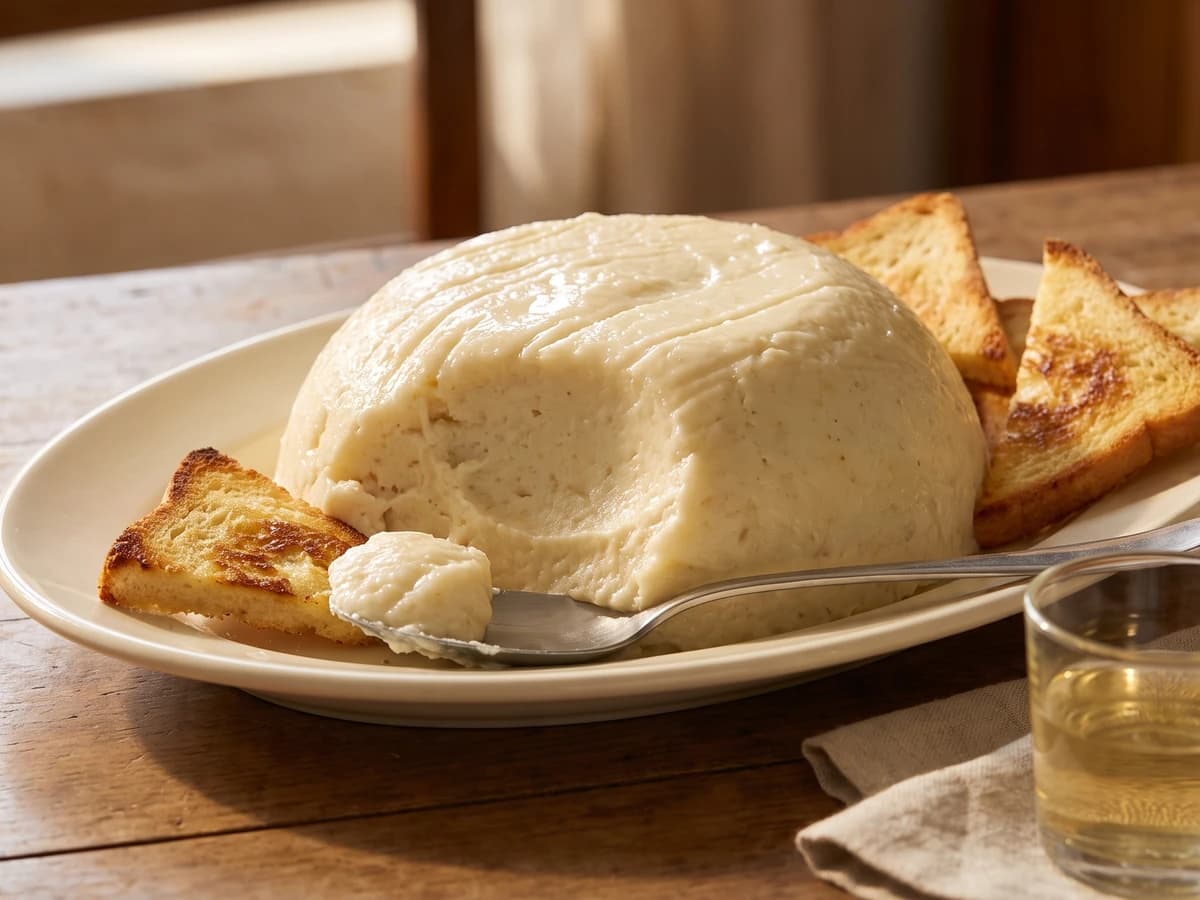
Brandade de Morue turns salt cod, warm olive oil, and milk into a pale, silky emulsion: keep everything warm and add the oil slowly, then crown the generous dome with butter-fried bread.
Chef Juliette
Salt cod worked warm with cream, one patient spoonful at a time, until the rough flakes become a glossy Nîmes paste, domed generously and ringed with butter-fried croutons for the table.

Chef Juliette
Wine-poached char packed in its earthenware crock beneath butter gold: a make-ahead first course that turns careful cooling, thorough boning, and one unbroken seal into quiet abundance.