
Chef Juliette
Smelt (Éperlans)
Tiny éperlans, lightly floured and fried until their tails stand crisp, arrive in a generous heap on a napkin with fried parsley and grooved lemon, a weeknight lesson in heat and restraint.
A cooking platform built around craft, culture, and the stories behind what we eat.
Created by Chef Juliette
Based on No. 2305, Canapes à la Cadogan, from Le Guide Culinaire (1907) by Auguste Escoffier
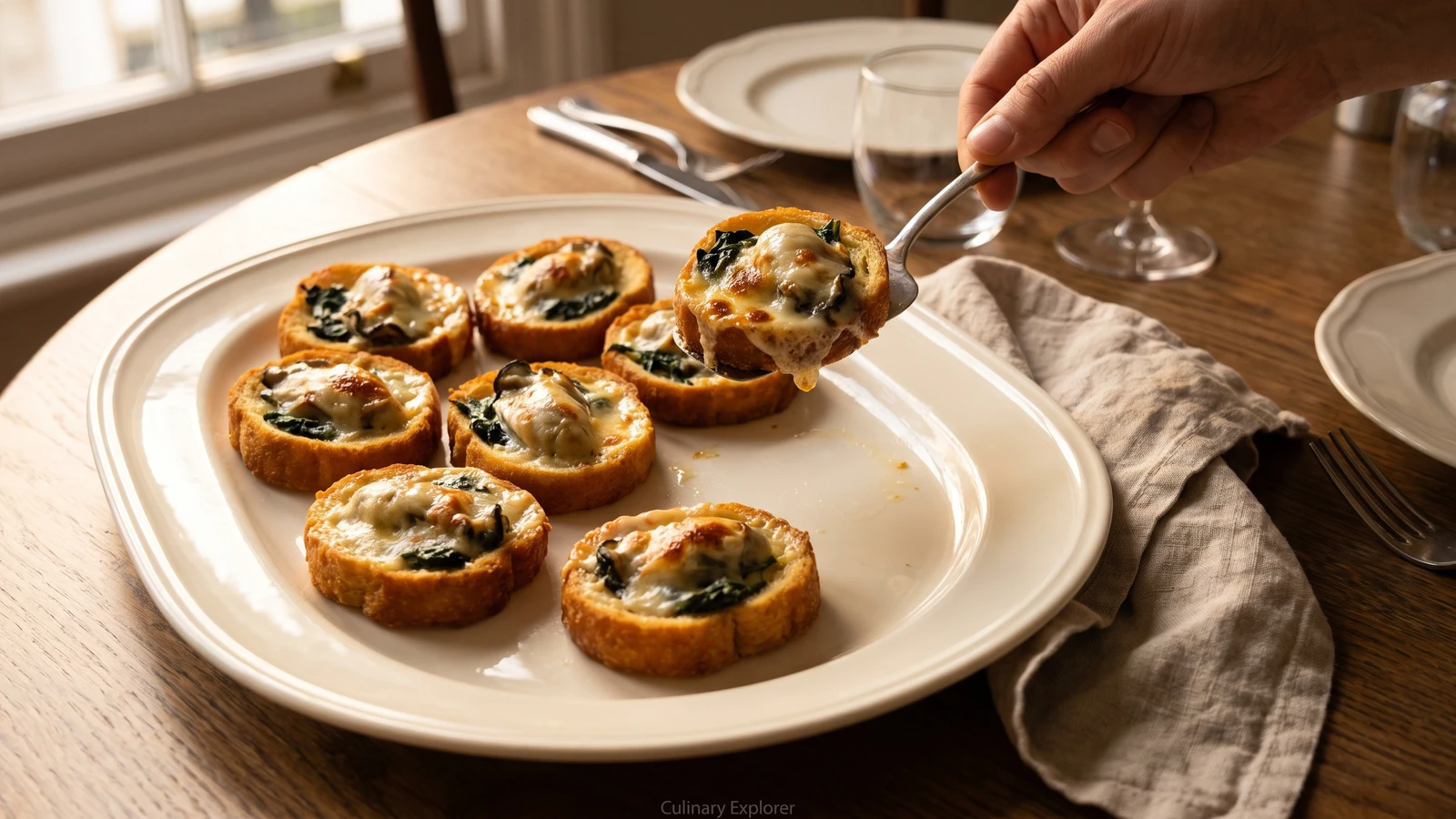
Butter-fried oval toasts cradle spinach and two oysters beneath Mornay, then meet a fierce broiler just long enough to bronze the sauce while the shellfish stay tender.
Canapés à la Cadogan (butter-fried oyster toasts with spinach and Mornay) teach one decisive lesson: the glaze must be fierce and brief. The sauce should bronze while the oysters remain plump, so every element beneath it must be ready before the tray approaches the heat.
The original belonged to a brigade kitchen with a saucier at the elbow, stock never off the fire for service, and a salamander already fierce. This entry actually reaches only for the saucier's finished Mornay sauce; the stockpot and separate holding pans are service scaffolding, so they can go. At home, warm one measured cup of Mornay and use a fully preheated broiler. The butter-fried bread, buttered spinach, two oysters on every toast, Mornay, and quick glaze are the dish, and every one stays. Eight canapés serve four. One cook, one stove, one evening.
When they are right, the bread rims are crisp and butter-gold, the spinach remains distinctly green, and the ivory sauce wears only scattered bronze marks. Don't chase a dark, even crust while the oysters tighten beneath it. Before touching a pan, preheat the broiler until it is truly fierce; that is the step that decides the dish.
Canapés à la Cadogan belong to the Paris-trained grand-hotel repertory of hot hors-d'œuvre that moved between Paris and London dining rooms. Cadogan is an honorific British name, not a French region, while the construction is thoroughly classical: fried bread as the foundation, spinach as the garnish, oysters as the principal element, Mornay as the finished sauce, then a rapid glaze. Its exact two-oyster stack matters because these named canapés functioned as formulas, not invitations to improvise.
Quantity
8 thick slices (about 7 oz / 200 g total)
each about 1/2 inch (1.25 cm) thick
Quantity
8 tablespoons (1/2 cup / 120 ml / 113 g)
divided
Quantity
10 packed cups (about 2/3 lb / 300 g)
washed, with tough stems removed
Quantity
1/4 teaspoon (1.25 ml / 1.5 g)
Quantity
16 (about 12 oz / 340 g shucked meat)
freshly shucked, drained, checked for shell, and blotted dry
Quantity
1 cup (240 ml / about 250 g)
warmed
| Ingredient | Quantity |
|---|---|
| pain de mie or firm fine-crumb white sandwich breadeach about 1/2 inch (1.25 cm) thick | 8 thick slices (about 7 oz / 200 g total) |
| unsalted butterdivided | 8 tablespoons (1/2 cup / 120 ml / 113 g) |
| fresh spinachwashed, with tough stems removed | 10 packed cups (about 2/3 lb / 300 g) |
| fine sea salt | 1/4 teaspoon (1.25 ml / 1.5 g) |
| medium oystersfreshly shucked, drained, checked for shell, and blotted dry | 16 (about 12 oz / 340 g shucked meat) |
| finished Mornay saucewarmed | 1 cup (240 ml / about 250 g) |
Set an oven rack 3 to 4 inches (8 to 10 cm) below the broiler, the home equivalent of the classical salamander, and heat it on high for at least 10 minutes. Have a bare broiler-safe sheet pan ready. A broiler that is still warming will dry the oysters before it colors the Mornay, so give it the full preheat.
Cut each bread slice into an oval about 3 by 2 inches (7.5 by 5 cm). Score a smaller oval inside each piece, leaving a rim about 1/4 inch (6 mm) wide and cutting only halfway through the crumb. Press the inner crumb down firmly with the back of a teaspoon to form a shallow hollow. Do not cut through the bottom; the oysters need a cradle, not a leaking floor.
Put the spinach in a wide skillet over medium-high heat, cover, and turn the leaves until just wilted, about 2 minutes. Transfer it to a clean towel, let it cool enough to handle, then squeeze out the water firmly and chop it. Melt 2 tablespoons (30 ml / 28 g) of the butter in the skillet, add the spinach and salt, and cook for 2 to 3 minutes until glossy with butter but no longer releasing water. If liquid gathers in the pan, keep cooking until it evaporates; wet spinach would soften the toast and send the sauce sliding. Transfer the spinach to a covered bowl and keep it warm.
Wipe the skillet clean and melt 3 tablespoons (45 ml / 42 g) of butter over medium heat. Fry four bread ovals, flat side first, until deep butter-gold, about 60 to 90 seconds per side. Repeat with the remaining 3 tablespoons (45 ml / 42 g) of butter and bread. If the butter darkens before the bread colors, wipe out the pan, lower the heat slightly, and continue with fresh butter. Drain the fried ovals briefly on a wire rack, hollowed side up. The book says fried in butter, and that stays; baking or dry-toasting loses the rich, crisp foundation that supports the oysters.
Warm the finished Mornay sauce gently in a small saucepan, stirring until it falls from the spoon in a broad, heavy ribbon. Do not boil it, or the cheese may tighten and release fat. If it turns oily, take the pan off the heat and whisk in 1 teaspoon of cool water until smooth. Ça se rattrape. Keep the sauce warm only long enough to assemble the canapés.
Arrange the fried bread ovals on the sheet pan, hollowed side up. Divide the warm spinach among them, using about 1 rounded tablespoon on each and keeping it inside the rim. Lay exactly two dry oysters over each bed of spinach, then spoon about 2 tablespoons of warm Mornay over each canapé, covering the oysters without flooding the bread. Work promptly so the toast, spinach, and sauce reach the broiler warm.
Slide the tray beneath the fully heated broiler and watch without leaving it. Glaze for 2 to 3 minutes, until the Mornay bubbles, takes scattered bronze marks, and the oysters curl slightly at their edges; an oyster tested at its center should register 145°F (63°C). If the sauce remains pale after 90 seconds, move the tray one level closer for 20 to 30 seconds instead of leaving the oysters beneath weak heat. The aim is a rapid glaze, not a dark crust. Transfer the canapés immediately to a warm platter and serve while the bread is crisp. À table!
1 serving (about 225g)
Culinary guides, cultural storytelling, and the editorial depth that makes cooking meaningful.
Discover Culinary ExplorerChef Juliette
Tiny éperlans, lightly floured and fried until their tails stand crisp, arrive in a generous heap on a napkin with fried parsley and grooved lemon, a weeknight lesson in heat and restraint.

Chef Juliette
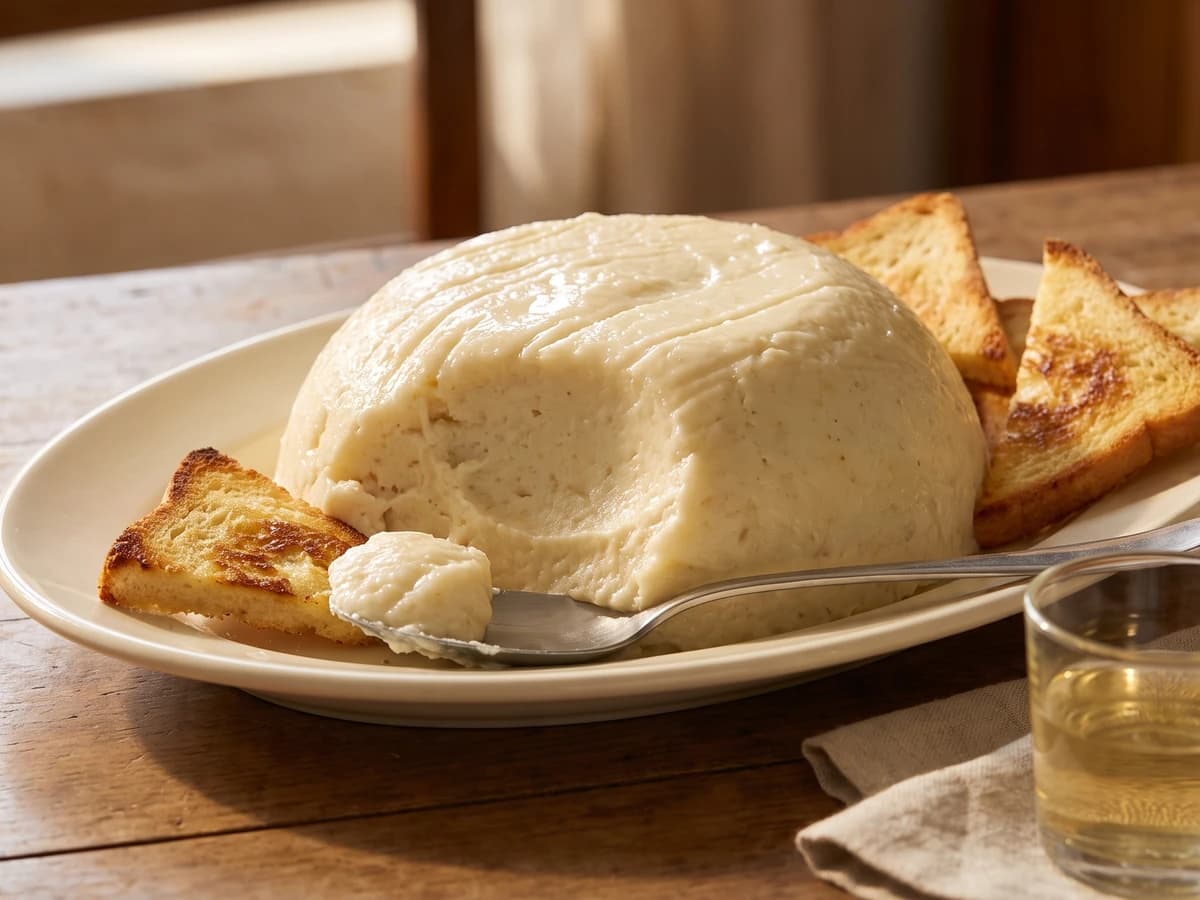
Brandade de Morue turns salt cod, warm olive oil, and milk into a pale, silky emulsion: keep everything warm and add the oil slowly, then crown the generous dome with butter-fried bread.
Chef Juliette
Salt cod worked warm with cream, one patient spoonful at a time, until the rough flakes become a glossy Nîmes paste, domed generously and ringed with butter-fried croutons for the table.

Chef Juliette
Wine-poached char packed in its earthenware crock beneath butter gold: a make-ahead first course that turns careful cooling, thorough boning, and one unbroken seal into quiet abundance.