Culinary Explorer
A cooking platform built around craft, culture, and the stories behind what we eat.
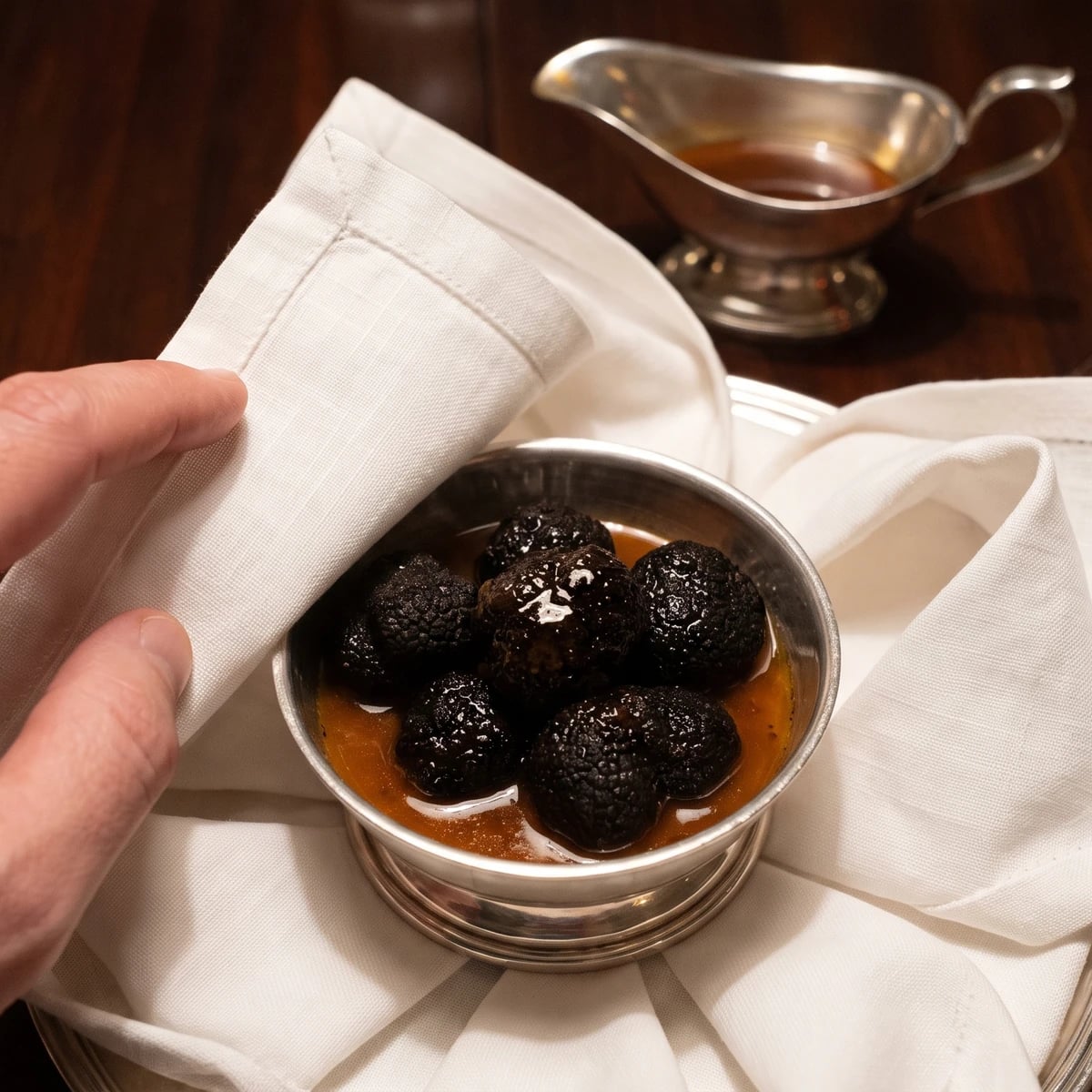
Truffes à la Serviette
Created by Chef Juliette
Truffes à la Serviette gathers whole black truffles, Madeira, and butter beneath warm linen, where gentle covered cooking protects their perfume and the folded napkin turns table ceremony into useful technique.
Truffes à la Serviette (whole black truffles in a folded napkin) teaches that service can be technique. The linen is not decoration: warmed, unscented, and folded closely around the timbale, it holds the heat and Madeira-dark perfume until the parcel opens. The one true thing to know before touching the pan is this: truffles want a cuisson couverte (covered cooking) held at a tremble, never a hard boil, because violent heat spends their aroma before it reaches the table.
The source entry assumes Truffes au Champagne are already part of the kitchen's repertoire, then makes one exact change: Madeira replaces Champagne. It also assumes a brigade can spare hands to fold a napkin into an artichoke and carry a hot timbale at once. Here the quantity comes down to four, a snug covered saucepan handles the cooking, and a simply folded linen napkin does the useful work. The elaborate artichoke fold is brigade scaffolding; the closed, fragrant presentation is the dish and must stay. One cook, one stove, one evening.
Cook the truffles only until a fine skewer meets gentle resistance, then enclose them in the warmed timbale immediately. If the Madeira reduction becomes sharp or sticky, ça se rattrape: water softens it and cold butter restores its gloss. That quiet transfer from covered pan to covered linen, without surrendering the scent to the kitchen, is the step that matters most.
Ingredients
fresh Périgord black truffles
Quantity
12 small (12 oz / 340 g)
scrubbed just before cooking
Madeira
Quantity
1¼ cups (300 ml / 300 g)
preferably dry or medium-dry
cold unsalted butter
Quantity
2 tablespoons (30 ml / 28 g)
divided
| Ingredient | Quantity |
|---|---|
| fresh Périgord black trufflesscrubbed just before cooking | 12 small (12 oz / 340 g) |
| Madeirapreferably dry or medium-dry | 1¼ cups (300 ml / 300 g) |
| cold unsalted butterdivided | 2 tablespoons (30 ml / 28 g) |
Where cooking meets culture.
Culinary guides, cultural storytelling, and the editorial depth that makes cooking meaningful.
Discover Culinary Explorer