
Chef Juliette
Suet Dumpling
Boulettes au suif, poached beside salt beef, turn equal weights of flour and finely chopped suet into tender, rich dumplings. Keep the beef liquor at a bare tremble and the old garnish works beautifully at home.
A cooking platform built around craft, culture, and the stories behind what we eat.
Created by Chef Juliette
Based on No. 2209, Pommes de Terre à la Crème, from Le Guide Culinaire (1907) by Auguste Escoffier
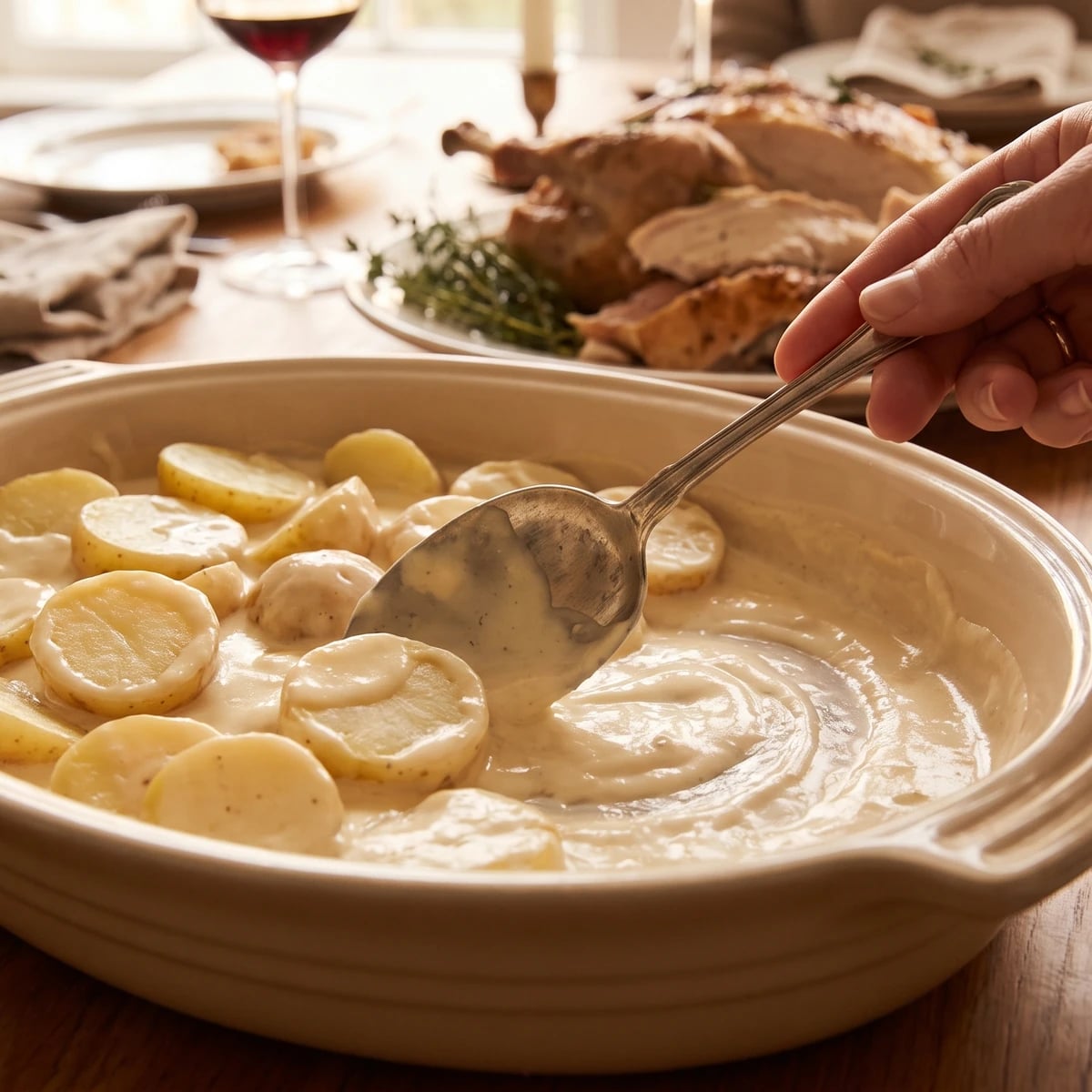
Pommes de Terre à la Crème proves that reduction can be the whole sauce: waxy potato rounds simmer in cream until it clings, then a final pour of fresh cream restores the silk.
Pommes de Terre à la Crème (waxy potatoes in reduced cream) teaches reduction in its clearest form. The one true thing to know before touching a pan is that the cream isn't poured on as a dressing. It must boil around the thick potato rounds until its water cooks away and the sauce clings, then cold, uncooked cream restores its suppleness.
The original entry assumed a wide sauté pan on a busy range, cream already boiling, and a cook free to finish the potatoes à la minute. It needed none of the stockpots, roux, or salamander that supported grander formulas. For one cook, one stove, one evening, a 10-inch sauté pan, a small saucepan, and four side portions replace the brigade quantity. Holding cream ready through an entire service was scaffolding and can go. Boiling the potatoes whole, peeling them hot, slicing them thick, reducing them in cream, and finishing with raw cream are the dish and must stay.
When it's right, each intact round wears an ivory gloss and the pan holds sauce, not a puddle. Watch the final two minutes closely. The step that matters most is stopping the reduction while the cream still moves, before it turns oily or the potatoes begin to break.
Pommes de terre à la crème belongs to cuisine bourgeoise, the well-provisioned French household table, and passed from domestic service into the classical repertoire as a last-minute accompaniment for roasts and sautéed meats. It is not a gratin and does not belong to Dauphiné: the potatoes are boiled first, then finished on the stovetop as cream reduces around them. Cream describes the sauce rather than a claim of Norman origin, and the final spoonful is deliberately uncooked so the concentrated cream regains a fresh, supple finish.
Quantity
1¼ pounds (570 g; about 10 to 12 small)
scrubbed
Quantity
8 cups (1.9 L / 1.9 kg), or enough to cover the potatoes by 1 inch (2.5 cm)
Quantity
1 tablespoon (15 ml / 18 g)
Quantity
1¾ cups (420 ml / 420 g), divided: 1½ cups (360 ml / 360 g) for simmering and ¼ cup (60 ml / 60 g) for finishing
kept cold
Quantity
½ teaspoon (2.5 ml / 3 g)
Quantity
⅛ teaspoon (0.6 ml / 0.3 g)
| Ingredient | Quantity |
|---|---|
| waxy Vitelotte or new kidney potatoesscrubbed | 1¼ pounds (570 g; about 10 to 12 small) |
| cold water | 8 cups (1.9 L / 1.9 kg), or enough to cover the potatoes by 1 inch (2.5 cm) |
| fine sea salt for the cooking water | 1 tablespoon (15 ml / 18 g) |
| pasteurized heavy cream, at least 36% fatkept cold | 1¾ cups (420 ml / 420 g), divided: 1½ cups (360 ml / 360 g) for simmering and ¼ cup (60 ml / 60 g) for finishing |
| fine sea salt for seasoning | ½ teaspoon (2.5 ml / 3 g) |
| finely ground white pepper | ⅛ teaspoon (0.6 ml / 0.3 g) |
Measure the cream before you begin. Keep ¼ cup (60 ml / 60 g) cold for the last moment and put the remaining 1½ cups (360 ml / 360 g) into a small saucepan. That final portion must remain uncooked until the reduction is complete; it is the fresh finish specified by the preparation, not extra sauce added for richness.
Put the whole, unpeeled potatoes in a saucepan with the cold water and cooking salt. Bring to a boil, then lower the heat enough to maintain a steady, gentle boil. Cook for 15 to 22 minutes, depending on size, until a thin skewer reaches the centre with only slight resistance. They will cook a little more in the cream, so don't take them to the point of splitting.
Drain the potatoes immediately. As soon as they're safe to hold, cradle each one in a folded kitchen towel and slip off the skin with a paring knife. Cut them crosswise into roundels about ½ inch (1.25 cm) thick. Work while they're warm and don't rinse them after peeling; the faint surface starch helps the cream attach.
Arrange the potato roundels in a 10-inch (25 cm) sauté pan, overlapping them only as much as necessary. Bring the 1½ cups (360 ml / 360 g) cream to a full boil in its saucepan, watching closely because cream climbs quickly. Pour the boiling cream over the potatoes so they are just covered, then season with the ½ teaspoon salt and white pepper. Return the pan promptly to a lively simmer.
Simmer uncovered for 8 to 12 minutes, shaking the pan gently and nudging beneath the roundels with a flexible spatula rather than stirring. The bubbles will become slower and the cream will coat the potatoes in a glossy layer; when a spatula drawn across the pan leaves a track that closes gradually, stop. If the cream develops an oily edge, remove the pan from the heat for 30 seconds, then swirl in cold finishing cream one tablespoon at a time until it comes together. Ça se rattrape. If the potatoes begin to fracture, lift the intact rounds to a warm dish, finish reducing the cream alone, then return them to the pan.
Take the pan off the heat. Add the reserved cold cream a tablespoon at a time, swirling gently, until the reduced sauce loosens enough to flow slowly around the potatoes while still coating them. If some cream was used to rescue the reduction, add only what remains and stop as soon as the sauce moves properly. Don't boil it again. Here raw cream means cream not previously cooked in the dish, not unpasteurized dairy. Taste for salt, transfer carefully to a warmed shallow serving dish, and serve at once. À table!
1 serving (about 220g)
Culinary guides, cultural storytelling, and the editorial depth that makes cooking meaningful.
Discover Culinary Explorer
Chef Juliette
Boulettes au suif, poached beside salt beef, turn equal weights of flour and finely chopped suet into tender, rich dumplings. Keep the beef liquor at a bare tremble and the old garnish works beautifully at home.

Chef Juliette
Bread, flour, frangipane, and rice become four cool, supple panades for binding forcemeats, each changing body and flavor while preserving tenderness. The finest Mousselines need none, and knowing that distinction is the lesson.

Chef Juliette
Panade au pain is bread, milk, salt, heat, and attention: stir until the paste releases cleanly, butter it against a skin, and you have the quiet binder behind tender French farces.

Chef Juliette
Panade de farine teaches the drying stroke behind pâte à choux: flour meets boiling buttered water, then stays over the fire until the paste gathers, smooths, and quits the pan cleanly.