
Chef Juliette
Suet Dumpling
Boulettes au suif, poached beside salt beef, turn equal weights of flour and finely chopped suet into tender, rich dumplings. Keep the beef liquor at a bare tremble and the old garnish works beautifully at home.
A cooking platform built around craft, culture, and the stories behind what we eat.
Created by Chef Juliette
Based on No. 2182, Fried Onions, from Le Guide Culinaire (1907) by Auguste Escoffier
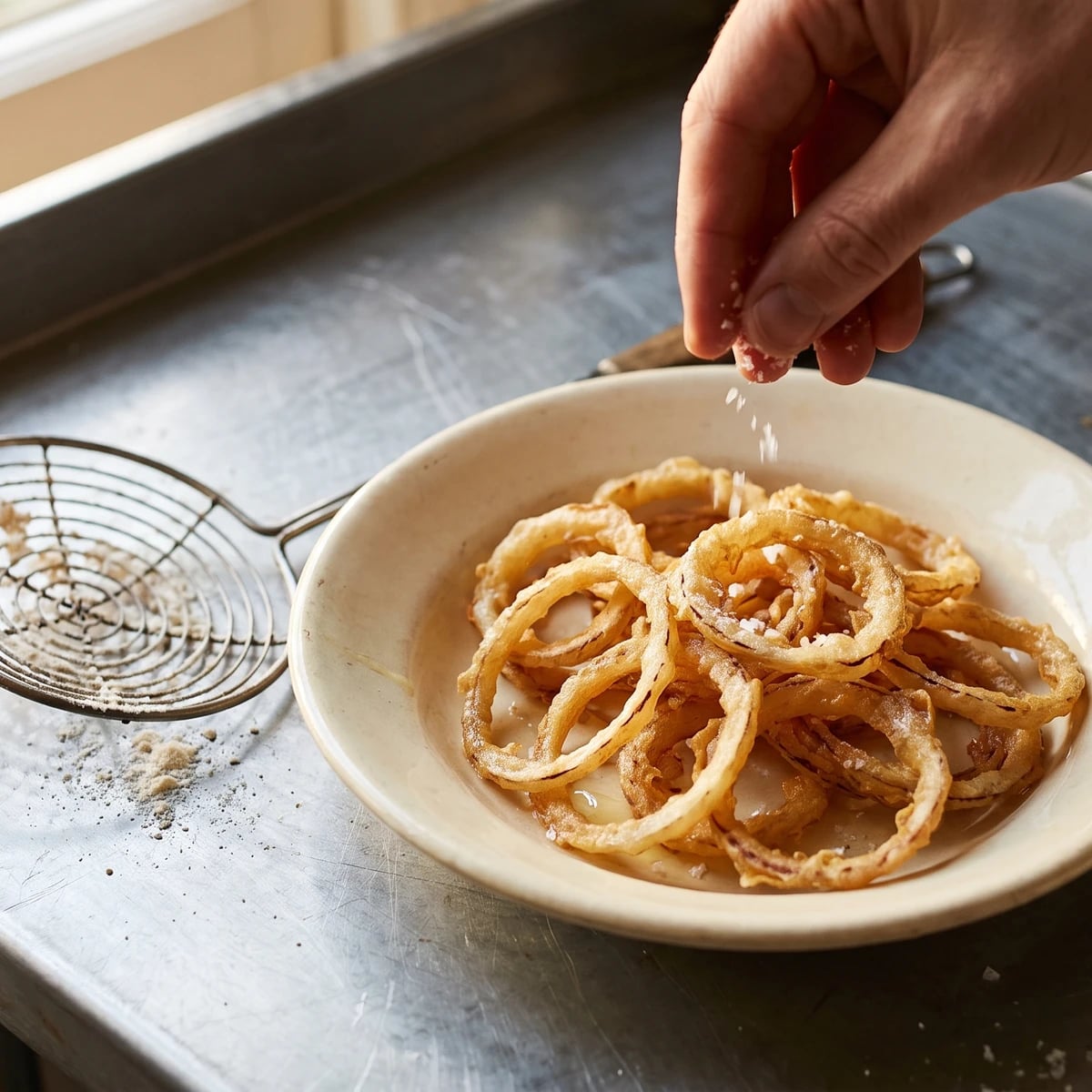
Oignons frits prove that frying is temperature before timing: thin onion rings, lightly floured and cooked in very hot oil until crisp outside, yielding within, then drained and salted at once.
Oignons frits (fried onion rings) teach the first law of frying: the oil must set the flour coat before the onion releases its water. Get that heat right and the rings come out crisp at the edges, tender at the center, and almost weightless; let the oil cool and they sag under their own grease.
The classical entry gave no quantity because a brigade cut onions to match the covers and kept a fryer hot, with clean linen waiting at the pass. At home, two large onions serve four, a heavy saucepan and thermometer replace the fryer, and a wire rack with an absorbent towel replaces the draining station. This is the scaffolding, and it can change. The 5 mm roundels, separate rings, seasoning before flour, very hot oil, and final pinch of salt are the dish, and every one stays. One cook, one stove, one evening.
Have the oil at 190°C before you season the onions, then dredge only as each batch is ready. Temperature is the step that matters most: crowding steals heat, so fry loosely and let the oil recover between batches.
Oignons frits sit in the classical French repertoire of garnitures, the supporting preparations served in Parisian brasseries and provincial dining rooms beside grilled or roasted meats rather than as a separate snack. The preparation traveled easily to home kitchens because its grammar is spare: evenly cut onion, seasoned flour, and oil hot enough to set the crust before the onion collapses. The familiar thick, battered onion ring is a cousin, not this entry; the French version wears only a fine coat of flour.
Quantity
2 large (about 1 lb / 450 g)
peeled
Quantity
¾ cup (180 ml / 90 g)
Quantity
1 teaspoon (5 ml / 6 g)
divided
Quantity
¼ teaspoon (1.25 ml / 0.5 g)
Quantity
6 cups (1.5 L / about 1.4 kg)
for frying
| Ingredient | Quantity |
|---|---|
| large yellow onionspeeled | 2 large (about 1 lb / 450 g) |
| all-purpose flour | ¾ cup (180 ml / 90 g) |
| fine sea saltdivided | 1 teaspoon (5 ml / 6 g) |
| freshly ground black pepper | ¼ teaspoon (1.25 ml / 0.5 g) |
| neutral high-heat oil, such as sunflower or grapeseedfor frying | 6 cups (1.5 L / about 1.4 kg) |
Cut each onion crosswise into roundels exactly 5 mm, or one-fifth inch, thick. Separate them carefully into rings without splitting them, keeping the smallest centers apart because they cook faster. Even cutting matters here: thin rings burn while thick ones remain raw, and no thermometer can correct a careless knife.
Set a wire rack over a rimmed sheet pan, with a clean lint-free kitchen towel or paper towel ready beside it. Pour the oil into a heavy 4-quart saucepan, making certain the pot is no more than half full, and heat it over medium-high heat to 190°C (375°F). Let the oil reach the full temperature before flour touches onion. Very hot oil is not bravado here; it is what crisps the coating before the onion goes limp.
Once the oil is ready, toss the onion rings with ¾ teaspoon of the salt and all the pepper. Put the flour in a wide shallow bowl. Working with one-quarter of the onions at a time, dredge the rings lightly, separate any that cling together, and shake off every loose veil of flour. Fry each batch immediately. If the salted onions begin to bead with moisture, blot them gently before dredging; ça se rattrape, and a fresh dusting of flour will adhere cleanly.
Lower one batch into the oil with a wire skimmer, adding the rings separately so they float in a loose layer. Fry for 2 to 3 minutes, turning them once or twice, until evenly golden, crisp at the edges, and tender within. Keep the oil between 175°C and 190°C (350°F and 375°F), letting it recover fully before the next batch. If a batch emerges pale and floppy because the temperature fell, lift it out, reheat the oil to 190°C, and fry it again for 30 to 60 seconds. Ça se rattrape. If the rings darken too quickly, lower the heat and wait for the oil to settle before continuing.
Lift each batch with the skimmer and let the excess oil fall back into the pot. Touch the rings onto the absorbent towel for about 10 seconds, then spread them on the rack in a single layer so the crust stays crisp. Season lightly with the remaining ¼ teaspoon salt while they are still glossy from the oil. Never heap or cover them, since trapped moisture softens the flour coat. Serve at once as an accompaniment to grilled steak, roast pork, sausages, or a simple omelette. À table!
1 serving (about 100g)
Culinary guides, cultural storytelling, and the editorial depth that makes cooking meaningful.
Discover Culinary Explorer
Chef Juliette
Boulettes au suif, poached beside salt beef, turn equal weights of flour and finely chopped suet into tender, rich dumplings. Keep the beef liquor at a bare tremble and the old garnish works beautifully at home.

Chef Juliette
Bread, flour, frangipane, and rice become four cool, supple panades for binding forcemeats, each changing body and flavor while preserving tenderness. The finest Mousselines need none, and knowing that distinction is the lesson.

Chef Juliette
Panade au pain is bread, milk, salt, heat, and attention: stir until the paste releases cleanly, butter it against a skin, and you have the quiet binder behind tender French farces.

Chef Juliette
Panade de farine teaches the drying stroke behind pâte à choux: flour meets boiling buttered water, then stays over the fire until the paste gathers, smooths, and quits the pan cleanly.