Culinary Explorer
A cooking platform built around craft, culture, and the stories behind what we eat.
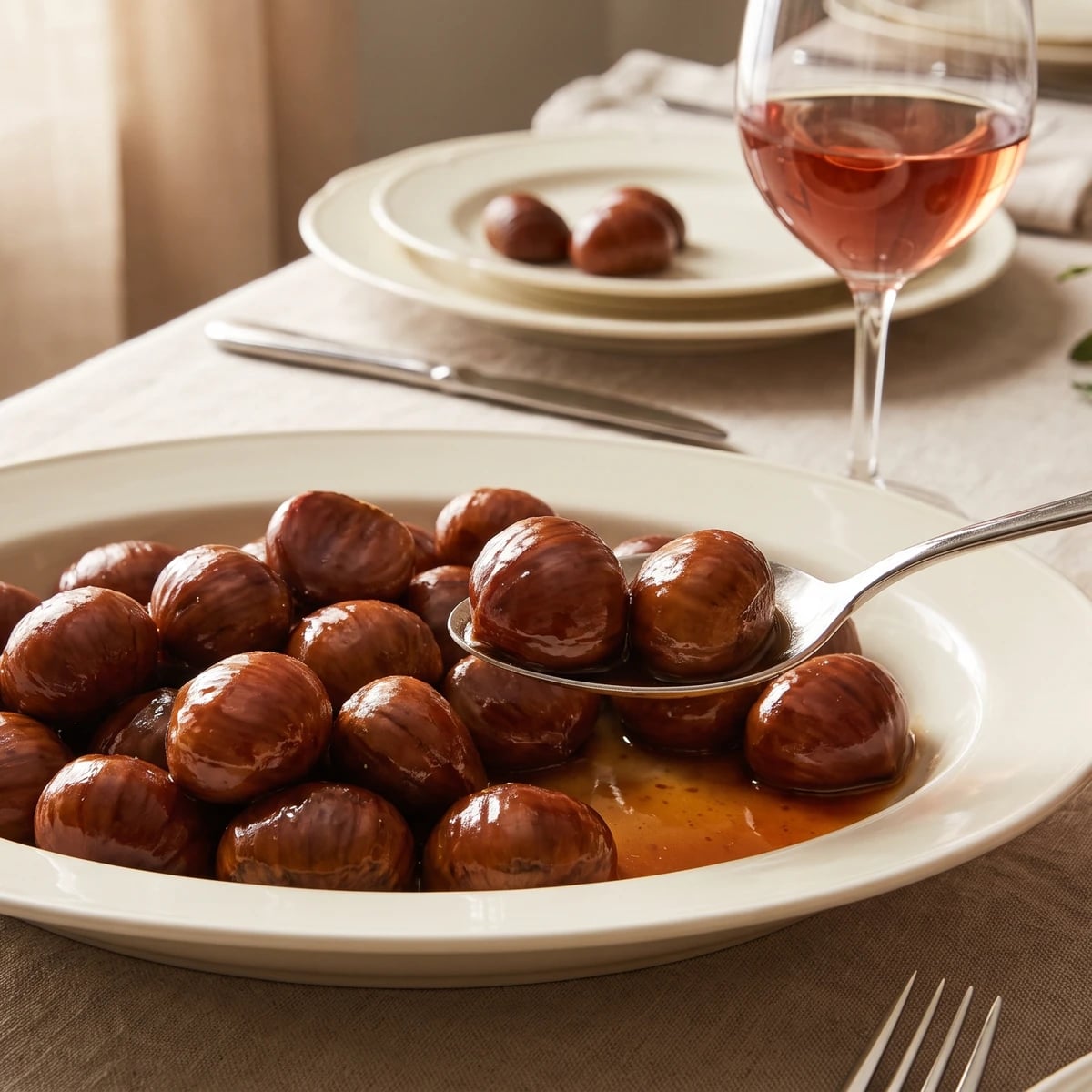
Braised and Glazed Chestnuts
Created by Chef Juliette
Whole chestnuts settle into one layer, drink in strong veal stock, then roll through their own reduction until brilliantly coated. Disturb them little, never heap them, and the garnish keeps its tender shape.
Marrons braisés et glacés teach the discipline of reduction without rough handling. The one true thing is this: chestnuts are not potatoes. Lay them in one snug layer and barely disturb them, because every unnecessary spoon stroke turns a proud whole marron into sweet rubble. The reward is a brilliant, savory glaze clinging to each tender nut, not a pan of broken purée.
The original recipe assumed a cauldron of hot fat for loosening the skins, a saucier beside the pan, brigade quantities, and strong veal stock never off the fire. For one cook, one stove, one evening, scored chestnuts are blanched and peeled while warm, then 500 grams of them are braised in a broad home sauté pan. The hot-fat dip was brigade scaffolding and can go because the fat's job was peeling, not seasoning. The single layer, strong stock, minimal movement, and final reduction are the dish, so every one of those stays.
Once the chestnuts are three-quarters tender, the stock must reduce around them until its gelatin becomes a lacquer. If tenderness outruns reduction, lift the chestnuts, reduce the liquid alone, and return them for one careful roll. Ça se rattrape. Before you touch the pan, choose one broad enough for a single snug layer; that geometry decides the dish.
Ingredients
very large fresh chestnuts
Quantity
24 (about 4 cups / 700 g in shell; about 3 cups / 500 g peeled)
water
Quantity
2 quarts (1.9 L / 1.9 kg)
for blanching
strong veal stock
Quantity
2½ to 3 cups (600 to 720 ml / 600 to 720 g)
unsalted or very lightly salted and kept hot
| Ingredient | Quantity |
|---|---|
| very large fresh chestnuts | 24 (about 4 cups / 700 g in shell; about 3 cups / 500 g peeled) |
| waterfor blanching | 2 quarts (1.9 L / 1.9 kg) |
| strong veal stockunsalted or very lightly salted and kept hot | 2½ to 3 cups (600 to 720 ml / 600 to 720 g) |
Where cooking meets culture.
Culinary guides, cultural storytelling, and the editorial depth that makes cooking meaningful.
Discover Culinary Explorer