
Chef Juliette
Suet Dumpling
Boulettes au suif, poached beside salt beef, turn equal weights of flour and finely chopped suet into tender, rich dumplings. Keep the beef liquor at a bare tremble and the old garnish works beautifully at home.
A cooking platform built around craft, culture, and the stories behind what we eat.
Created by Chef Juliette
Based on No. 2166, Lentilles au Beurre, from Le Guide Culinaire (1907) by Auguste Escoffier
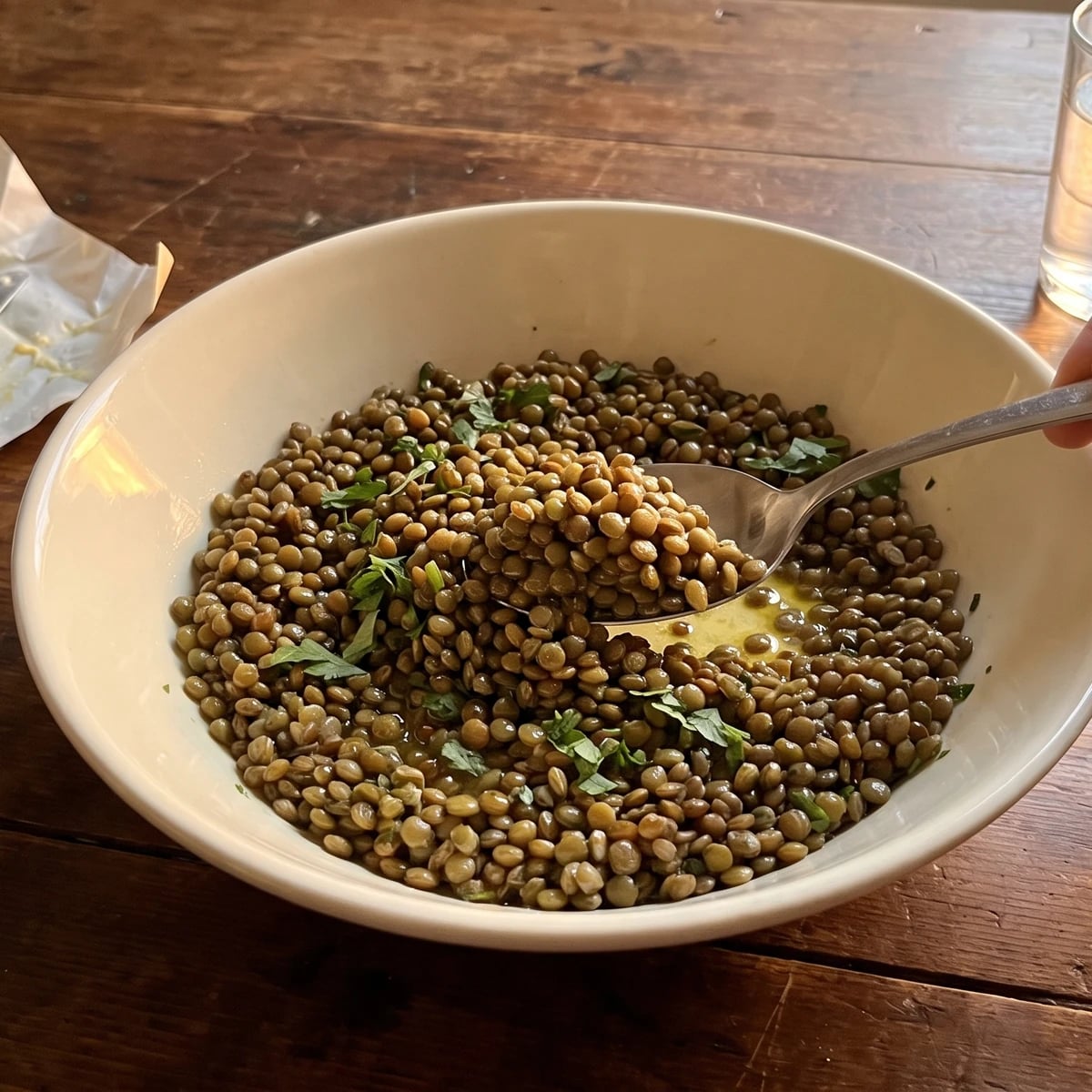
Lentils tossed dry over the heat before butter touches them: one plain, exacting move that keeps each tender lentil distinct, glossy, and rich instead of stranded in a watery bowl.
Lentilles au Beurre (buttered lentils) teaches a small piece of classical grammar: dry the cooked lentils before the butter goes in. Butter binds to a hot, nearly dry surface and coats each lentil; add it while drainage water still clings, and richness becomes a thin puddle. The drying is the dish.
The entry was written for service, with cooked lentils already waiting, an open fire to carry away moisture quickly, and a timbale on the pass. At home, a scant cup of dried lentils yields roughly the required pound, a wide sauté pan replaces the fierce fire, and a warmed serving bowl does the timbale's work. Separate holding pans and station timing are brigade scaffolding and can go; the proportion of two ounces of butter to one pound of cooked lentils, and the dry toss before butter, must stay. One cook, one stove, one evening.
Watch the pan rather than the clock. When the wet hiss fades to a soft rustle and the pan floor shows no liquid, the lentils are ready for butter. That is the one moment that decides whether they arrive glossy or watery.
Lentilles au Beurre belongs to the cuisine bourgeoise side-dish repertoire served across France, rather than to one regional claim, though the small green lentils of Le Puy-en-Velay in Auvergne became a prized choice because they hold their shape. Household pots supplied boiled lentils, while grand kitchens codified the last-minute finish: drain, dry over the fire, bind with butter, and send them to the table in a timbale. The butter is not a sauce poured over the legumes; the dry toss makes it cling lentil by lentil.
Quantity
scant 1 cup (225 ml / 180 g)
picked over and rinsed
Quantity
5 cups (1.2 L / 1.2 kg)
Quantity
2 teaspoons (10 ml / 12 g), plus more only if needed
Quantity
1/4 cup (60 ml / 57 g), for 1 pound (454 g) cooked lentils
cut into 4 pieces
Quantity
1 tablespoon (15 ml / 4 g)
finely chopped
| Ingredient | Quantity |
|---|---|
| dried French green or firm brown lentilspicked over and rinsed | scant 1 cup (225 ml / 180 g) |
| cold water | 5 cups (1.2 L / 1.2 kg) |
| fine sea salt | 2 teaspoons (10 ml / 12 g), plus more only if needed |
| unsalted buttercut into 4 pieces | 1/4 cup (60 ml / 57 g), for 1 pound (454 g) cooked lentils |
| flat-leaf parsleyfinely chopped | 1 tablespoon (15 ml / 4 g) |
Put the lentils in a medium saucepan with the cold water and salt. Bring them just to a boil, then lower the heat and hold them at a gentle simmer for 20 to 25 minutes. Taste several from different parts of the pan: they should be tender through the centre but still hold their shape. If the water falls below the lentils before they are ready, add enough boiling water to cover them again.
Pour the lentils into a fine-mesh sieve or colander and let them drain for 2 minutes without rinsing or pressing. They must remain hot. You need about 1 pound (454 g), roughly 2 1/3 cups (560 ml), of drained lentils for the book's proportion. If your yield differs, use 1 tablespoon (15 ml / 14 g) butter for every 4 ounces (113 g) of cooked lentils.
Set a wide sauté pan over medium heat and add the drained lentils with no fat. Toss them by jerking the pan toward you, or turn them gently with a broad silicone spatula, for 2 to 4 minutes. At first they will hiss and leave a wet trail; they are ready when the sound softens, the trail disappears, and the lentils move separately. If they begin catching before the surface moisture is gone, lower the heat and lift the pan for a few seconds. Patience, not vigorous stirring, keeps their skins whole.
Lier au beurre, to bind with butter, is gentle work. Turn the heat to low and add the butter one piece at a time, tossing until each piece melts and coats the lentils before adding the next. The butter should glisten and cling without browning. If a thin puddle forms because the lentils carried too much water, do not add more butter. Ça se rattrape: lift out the lentils with a slotted spoon, reduce the buttery liquid until only a glossy tablespoon remains, then return the lentils and fold them through off the heat.
Taste and add salt only if needed. Spoon the lentils into a warmed, high-sided serving bowl, keeping the mound loose rather than packing it down, then sprinkle the chopped parsley over the top exactly as the entry directs. Serve at once, while the butter still gleams. À table!
1 serving (about 129g)
Culinary guides, cultural storytelling, and the editorial depth that makes cooking meaningful.
Discover Culinary Explorer
Chef Juliette
Boulettes au suif, poached beside salt beef, turn equal weights of flour and finely chopped suet into tender, rich dumplings. Keep the beef liquor at a bare tremble and the old garnish works beautifully at home.

Chef Juliette
Bread, flour, frangipane, and rice become four cool, supple panades for binding forcemeats, each changing body and flavor while preserving tenderness. The finest Mousselines need none, and knowing that distinction is the lesson.

Chef Juliette
Panade au pain is bread, milk, salt, heat, and attention: stir until the paste releases cleanly, butter it against a skin, and you have the quiet binder behind tender French farces.

Chef Juliette
Panade de farine teaches the drying stroke behind pâte à choux: flour meets boiling buttered water, then stays over the fire until the paste gathers, smooths, and quits the pan cleanly.