
Chef Juliette
Suet Dumpling
Boulettes au suif, poached beside salt beef, turn equal weights of flour and finely chopped suet into tender, rich dumplings. Keep the beef liquor at a bare tremble and the old garnish works beautifully at home.
A cooking platform built around craft, culture, and the stories behind what we eat.
Created by Chef Juliette
Based on No. 2158, Haricots Panachés, from Le Guide Culinaire (1907) by Auguste Escoffier
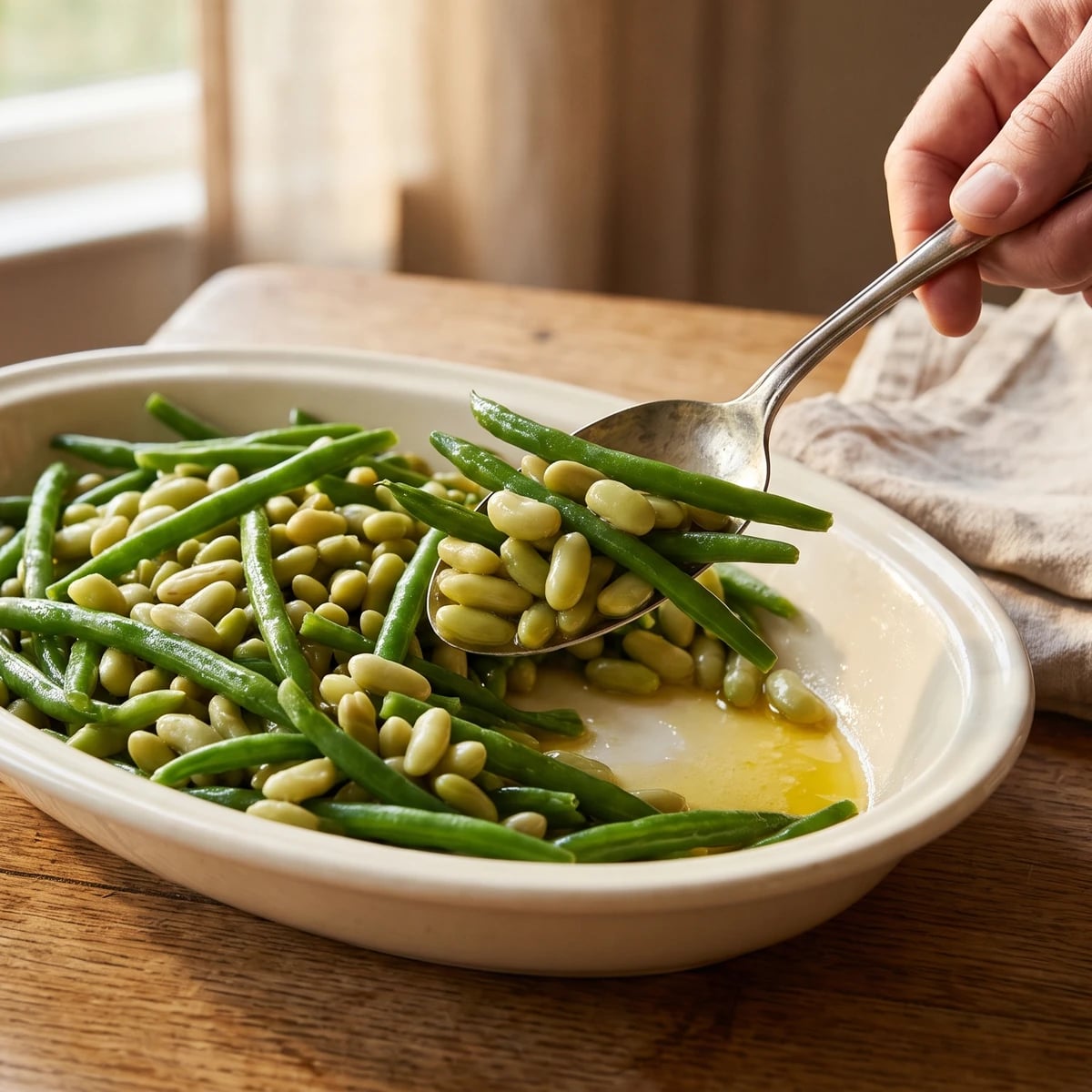
Two beans, one discipline: haricots verts kept green and crisp, flageolets kept tender and whole, then equal measures tossed in butter until distinct but inseparable on the spoon.
Haricots panachés (green beans and flageolets bound with butter) teaches one clean rule: cook the two beans apart. Haricots verts want brisk salted water and a quick stop while they still answer the tooth; flageolets want gentle heat so their pale skins stay whole. Force them through one cooking and one will always pay for the other.
The classical formula assumed a vegetable station with both beans already cooked, drained, and waiting for service, plus enough hands to finish a large batch at the last moment. Your home equivalent is one saucepan used twice, one wide skillet, and four servings measured at equal prepared weight. What changed is the brigade scaffolding and the scale, not the proportion or the liaison au beurre, the butter binding that makes the two vegetables arrive as one dish. One cook, one stove, one evening.
The finished beans should glisten without sitting in a greasy puddle, the haricots verts bright and supple, the flageolets creamy but intact. The step that decides the dish is the separate cooking: stop each bean at its proper tenderness, dry both well, and combine them only for the buttery finish.
In the classical Paris kitchen, panaché named a preparation of two related elements mixed for contrast, here the deep green snap of haricots verts against the pale, creamy flageolet. The combination moved easily from grand service into the cuisine bourgeoise table because it needs no rare garnish or elaborate sauce, only disciplined vegetable cooking and butter at the last moment. Its identity lies in equal quantities and separate cooking; garlic, cream, or bacon may suit other bean dishes, but they don't belong to this one.
Quantity
About 3 cups (710 ml / 260 g)
trimmed
Quantity
1½ cups (355 ml / 260 g drained)
rinsed and drained
Quantity
3 tablespoons (45 ml / 43 g)
divided
Quantity
1 tablespoon (15 ml / 18 g)
for the cooking water
Quantity
¼ teaspoon (1.25 ml / 1.5 g)
for finishing if needed
| Ingredient | Quantity |
|---|---|
| haricots vertstrimmed | About 3 cups (710 ml / 260 g) |
| cooked flageolets, preferably canned or jarredrinsed and drained | 1½ cups (355 ml / 260 g drained) |
| unsalted butterdivided | 3 tablespoons (45 ml / 43 g) |
| fine sea saltfor the cooking water | 1 tablespoon (15 ml / 18 g) |
| fine sea salt (optional)for finishing if needed | ¼ teaspoon (1.25 ml / 1.5 g) |
Measure the trimmed haricots verts and drained flageolets at equal weights. Their volumes differ because flageolets pack more densely, so trust the scale here. Rinse the flageolets gently until their canning liquid is gone, then leave them in a colander without shaking or stirring them.
Bring a medium saucepan of water to a vigorous boil and add the tablespoon of salt. Drop in the haricots verts and cook uncovered for 3 to 5 minutes, until deep green and tender with a clean resistance at the centre. Move them immediately into a bowl of very cold water, then drain and spread them over a clean towel until thoroughly dry. Wet beans dilute the butter instead of wearing it.
Return the same saucepan of water to a bare simmer, add the flageolets, and warm them for 1 to 2 minutes without boiling. Drain them well and spread them separately on the towel. If their skins begin to split, stop the heat and drain at once; a few broken beans do no harm, but stirring will turn them to paste. Fold gently from this point onward.
Melt 2 tablespoons of the butter in a wide skillet over medium heat, stopping while it is foaming but still pale. Add the haricots verts and toss for 1 minute, then add the flageolets and fold with a broad spatula for another 1 to 2 minutes, until both are hot. Turn off the heat and fold in the remaining cold butter until every bean gleams. If water collects and the butter separates into a puddle, lift out the beans, boil the liquid down to a spoonful, lower the heat, swirl in the cold butter, and return the beans. Ça se rattrape.
Taste before adding the finishing salt, especially if the flageolets came from a can or jar. Transfer the haricots panachés to a warm shallow serving dish and bring them straight to the table while the butter still holds its soft gloss. À table!
1 serving (about 145g)
Culinary guides, cultural storytelling, and the editorial depth that makes cooking meaningful.
Discover Culinary Explorer
Chef Juliette
Boulettes au suif, poached beside salt beef, turn equal weights of flour and finely chopped suet into tender, rich dumplings. Keep the beef liquor at a bare tremble and the old garnish works beautifully at home.

Chef Juliette
Bread, flour, frangipane, and rice become four cool, supple panades for binding forcemeats, each changing body and flavor while preserving tenderness. The finest Mousselines need none, and knowing that distinction is the lesson.

Chef Juliette
Panade au pain is bread, milk, salt, heat, and attention: stir until the paste releases cleanly, butter it against a skin, and you have the quiet binder behind tender French farces.

Chef Juliette
Panade de farine teaches the drying stroke behind pâte à choux: flour meets boiling buttered water, then stays over the fire until the paste gathers, smooths, and quits the pan cleanly.