
Chef Juliette
Suet Dumpling
Boulettes au suif, poached beside salt beef, turn equal weights of flour and finely chopped suet into tender, rich dumplings. Keep the beef liquor at a bare tremble and the old garnish works beautifully at home.
A cooking platform built around craft, culture, and the stories behind what we eat.
Created by Chef Juliette
Based on No. 2111, Chou-fleur à la Milanaise, from Le Guide Culinaire (1907) by Auguste Escoffier
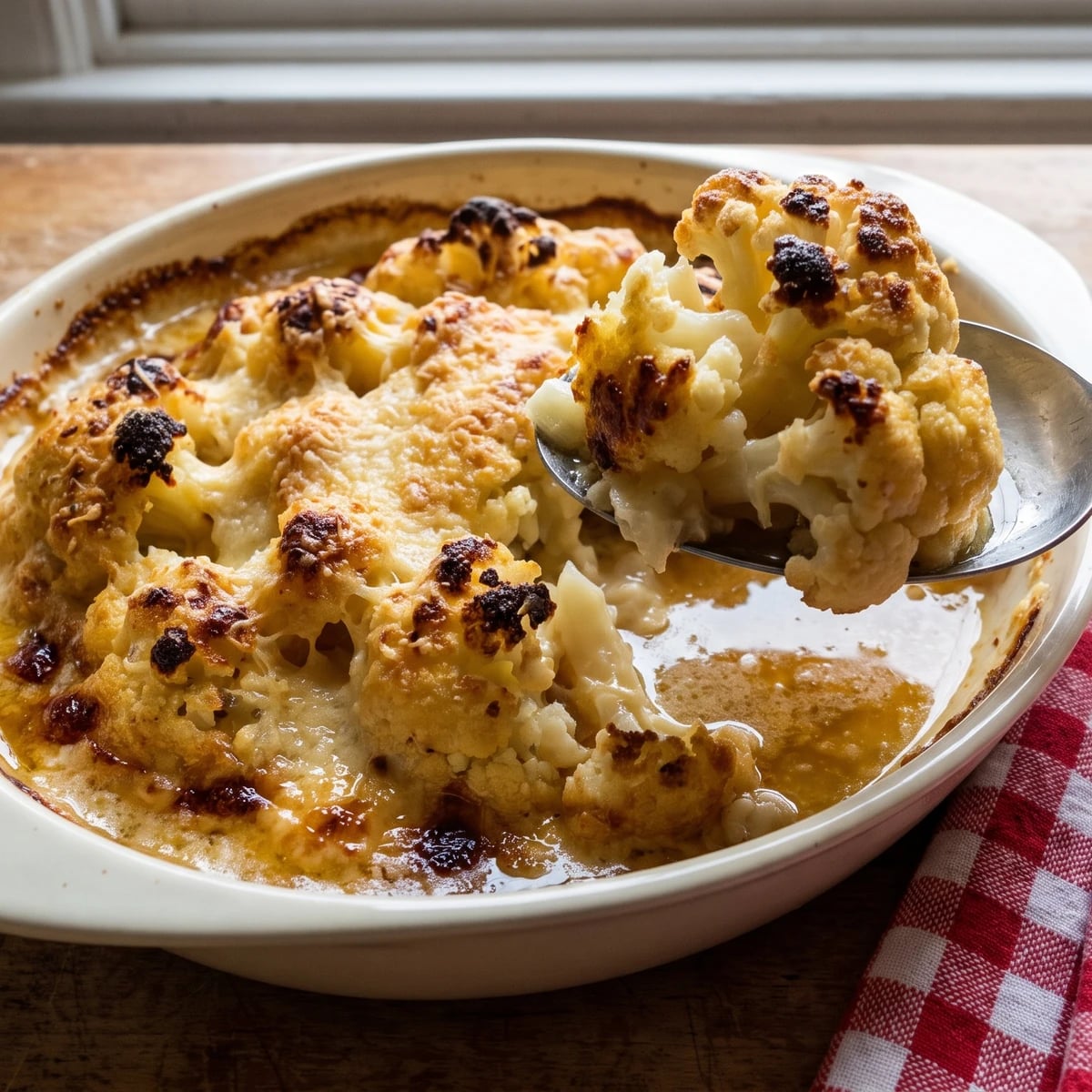
Cauliflower under Parmesan, bronzed by fierce heat and finished with beurre noisette: a spare rapid gratin that proves cheese below, cheese above, and proper draining are enough.
Chou-fleur à la Milanaise (cauliflower with a Parmesan crust) teaches the clean logic of a rapid gratin, a browned crust made under fierce top heat: cook the vegetable properly, dry it thoroughly, then let the cheese become its own crust. There is no sauce beneath it. That absence is not an omission, because the final beurre noisette, butter cooked until its milk solids turn hazelnut-brown, supplies the gloss, nuttiness, and richness.
The original entry assumed the rhythm of a brigade: cooked cauliflower waiting for service, a salamander over the pass, and another pair of hands free to watch the butter. A saucier on staff and stock never off the fire were ordinary infrastructure, but this recipe calls on neither, and adding sauce would undo it. At home, the salamander becomes a close, hot broiler, and the beurre noisette is prepared just before the gratin so one cook can watch both properly. Holding vegetables for service was scaffolding and goes; cheese below and above, pieces of butter, fierce heat, and the final beurre noisette stay because they are the dish. One cook, one stove, one evening.
Drain the cauliflower until no water hides between its florets. This is the one step that decides the result: a dry cauliflower takes a bronzed crust, while a wet one dilutes the butter and leaves the cheese pale.
Chou-fleur à la Milanaise belongs to the Parisian grand-kitchen repertoire, where à la Milanaise often signaled Parmesan and an Italian-facing garnish rather than one fixed household formula from Milan. The preparation passed easily to the cuisine bourgeoise because its whole structure is a cooked vegetable, grated cheese, butter, and fierce top heat. Its striking detail is what it omits: no béchamel lies beneath the cauliflower, and the beurre noisette is added only after the gratin leaves the oven.
Quantity
1 head (about 1¾ lb / 800 g before trimming)
leaves removed and core trimmed flat
Quantity
3 quarts (2.8 L / 2.8 kg)
Quantity
1 tablespoon (15 ml / 18 g)
Quantity
1 cup (240 ml / 90 g)
finely grated and divided
Quantity
6 tablespoons (90 ml / 85 g)
divided
Quantity
1 application
| Ingredient | Quantity |
|---|---|
| medium cauliflowerleaves removed and core trimmed flat | 1 head (about 1¾ lb / 800 g before trimming) |
| water | 3 quarts (2.8 L / 2.8 kg) |
| fine sea salt | 1 tablespoon (15 ml / 18 g) |
| Parmesanfinely grated and divided | 1 cup (240 ml / 90 g) |
| unsalted butterdivided | 6 tablespoons (90 ml / 85 g) |
| Gratins (No. 268), rapid-gratin method | 1 application |
Bring the water and salt to a full boil in a covered pot. Remove the cauliflower leaves, trim the core so the head can stand upright, and cut a shallow cross into the thick end of the core. This helps the dense centre cook at the same pace as the florets without breaking the head apart.
Lower the cauliflower carefully into the boiling water, stem side down. Partially cover the pot and hold the water at a steady simmer, turning the head once, until a small knife enters the core with slight resistance, 12 to 16 minutes depending on its size. It must be tender but still capable of holding itself together. Lift it into a colander and drain upside down for at least 10 minutes, then blot between the florets with a clean towel. If the head begins to split, lift it out immediately and arrange the separated florets closely in the dish later. Ça se rattrape, and the cheese crust will bring them back together.
Melt 3 tablespoons (45 ml / 43 g) of the butter in a small, light-colored saucepan over medium heat. Let it foam and sputter, swirling often, until the foam thins and the milk solids on the bottom turn hazelnut-brown and smell deeply nutty. Pour it immediately into a heatproof cup so the pan cannot carry it into bitterness. If the color begins racing toward black, take the pan off the heat and pour at once. Ça se rattrape while the solids are brown; once they are black and acrid, begin again.
Set an oven rack about 6 inches (15 cm) beneath the broiler and heat the broiler to high. Butter a shallow broiler-safe gratin dish with 1 tablespoon (15 ml / 14 g) of the remaining butter, then scatter half the Parmesan across its base. Set the drained cauliflower upright on the cheese, cover its crown and sides with the remaining Parmesan, pressing a little into the spaces between the florets, and dot with the final 2 tablespoons (30 ml / 28 g) butter. This is the rapid treatment under Gratins (No. 268): cheese directly beneath and over the vegetable, with no sauce or breadcrumbs added.
Broil for 5 to 8 minutes, rotating the dish once, until the cheese bubbles around the base and the crown is deeply golden with bronzed tips. Watch closely, because the distance from the heat matters more than the clock. If dark patches appear before the rest colors, lower the rack and shield those spots loosely with foil; if the cheese stays pale, move the dish closer for its final minute.
The instant the dish leaves the oven, stir the beurre noisette and spoon it evenly over the cauliflower, including the browned solids at the bottom of the cup. Let it run into the florets and collect against the Parmesan underneath. Carry the gratin directly to the table and serve within minutes, while the crust is crisp and the butter still smells of toasted hazelnuts. À table!
1 serving (about 205g)
Culinary guides, cultural storytelling, and the editorial depth that makes cooking meaningful.
Discover Culinary Explorer
Chef Juliette
Boulettes au suif, poached beside salt beef, turn equal weights of flour and finely chopped suet into tender, rich dumplings. Keep the beef liquor at a bare tremble and the old garnish works beautifully at home.

Chef Juliette
Bread, flour, frangipane, and rice become four cool, supple panades for binding forcemeats, each changing body and flavor while preserving tenderness. The finest Mousselines need none, and knowing that distinction is the lesson.

Chef Juliette
Panade au pain is bread, milk, salt, heat, and attention: stir until the paste releases cleanly, butter it against a skin, and you have the quiet binder behind tender French farces.

Chef Juliette
Panade de farine teaches the drying stroke behind pâte à choux: flour meets boiling buttered water, then stays over the fire until the paste gathers, smooths, and quits the pan cleanly.