
Chef Juliette
Smelt (Éperlans)
Tiny éperlans, lightly floured and fried until their tails stand crisp, arrive in a generous heap on a napkin with fried parsley and grooved lemon, a weeknight lesson in heat and restraint.
A cooking platform built around craft, culture, and the stories behind what we eat.
Created by Chef Juliette
Based on No. 2082, Morilles Farcies, from Le Guide Culinaire (1907) by Auguste Escoffier
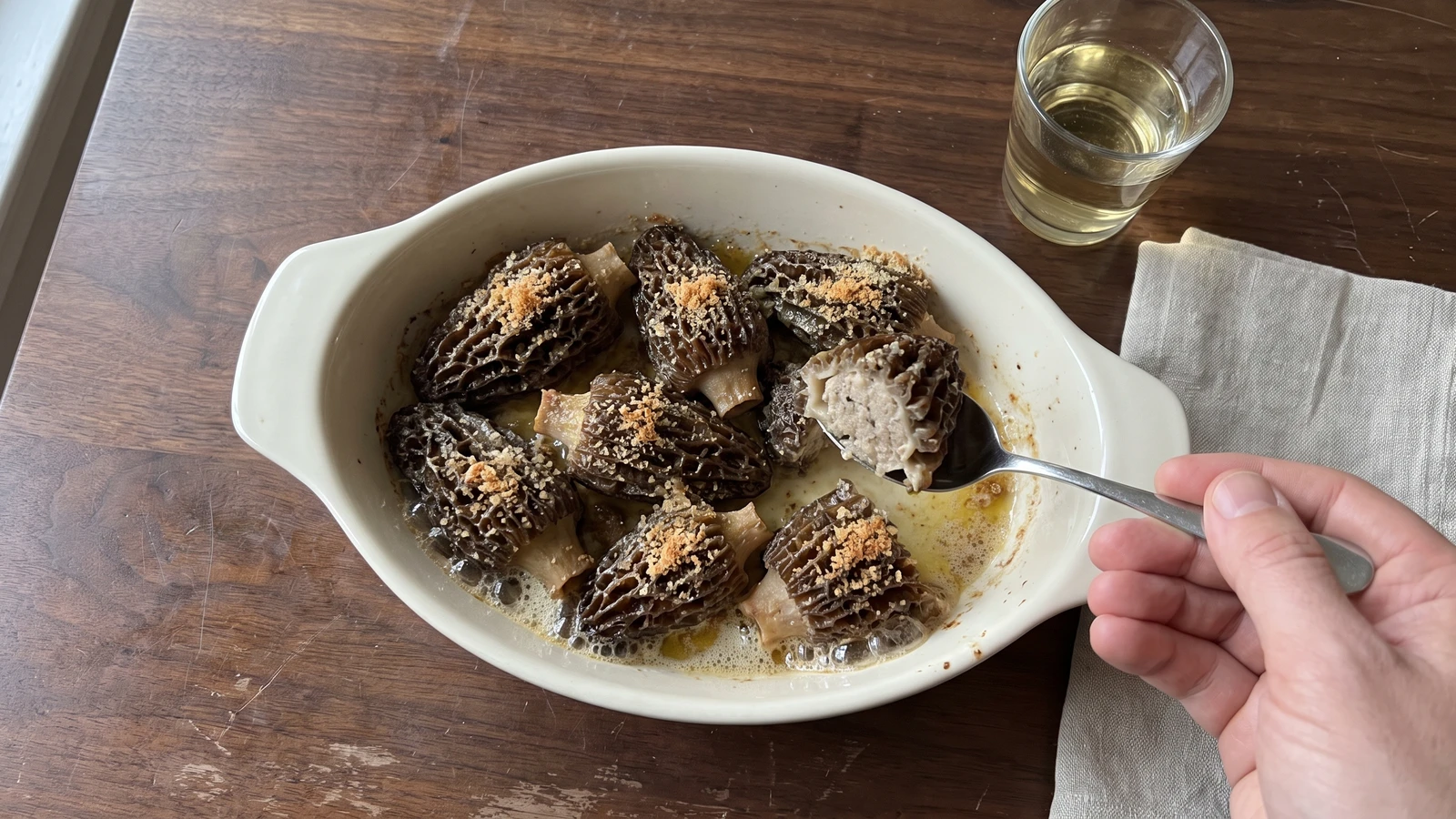
Large morels carry a farce of their own chopped stems and smooth sausage meat, then bake slit-side down beneath fine crumbs and butter, a precise lesson in keeping flavor and filling where they belong.
Morilles farcies (stuffed morels) teach one exact thing: a delicate filling stays inside because the slit goes against the dish, not because you pack it into submission. Open each morel along one side, fill it lightly, then bake it opened side nethermost. The ridged caps darken, the crumbs take butter, and the farce cooks inside its own little chamber.
The old entry assumes Ordinary or Dry Duxelle (No. 223) waiting in the mise en place and enough hands to turn mushroom stems into it without slowing service. It asks for neither a saucier on staff, stock kept on the fire, nor a salamander. At home, prepare one small measured batch from the reserved stems, combine it with exactly half its volume of smooth sausage meat, and bake sixteen morels in the shallow dish you will carry to the table. The brigade scale is gone; the ratio and sequence remain. One cook, one stove, one evening.
The referenced preparation remains separate, as it does in the canon. That separation is brigade scaffolding; the dry mushroom base, the half-volume of sausage, the buttered crumbs, and the slit-side-down baking are the dish and must stay. Dry the washed morels thoroughly before filling. That is the one step that decides whether they bake glossy or surrender their flavor to a puddle.
Morilles farcies belong to the French classical hors-d'oeuvre table rather than to one village, though the mushroom is especially cherished in the Jura, where woodland morels share a larder with vin jaune and cream. The grand and bourgeois kitchens turned a costly foraged mushroom into a lesson in thrift by making Ordinary or Dry Duxelle (No. 223) from the trimmed stems and returning every bit to the hollow caps with sausage meat. Unlike the creamy morel preparations associated with the Jura, this formula stays concentrated and nearly dry, finished with crumbs and abundant butter.
Quantity
16 (about 8 oz / 225 g)
stems removed and reserved
Quantity
about 1/4 cup (60 ml / 50 g) Ordinary or Dry Duxelle (No. 223)
prepared with the reserved morel stems and cooled
Quantity
2 tablespoons (30 ml / 28 g), or exactly half the finished Duxelle volume
Quantity
4 tablespoons (60 ml / 57 g)
divided
Quantity
1/4 cup (60 ml / 25 g)
| Ingredient | Quantity |
|---|---|
| large fresh morelsstems removed and reserved | 16 (about 8 oz / 225 g) |
| Ordinary or Dry Duxelleprepared with the reserved morel stems and cooled | about 1/4 cup (60 ml / 50 g) Ordinary or Dry Duxelle (No. 223) |
| very smooth plain pork sausage meat | 2 tablespoons (30 ml / 28 g), or exactly half the finished Duxelle volume |
| unsalted butterdivided | 4 tablespoons (60 ml / 57 g) |
| fine dry breadcrumbs | 1/4 cup (60 ml / 25 g) |
Swish the morels through several bowls of cold water, changing the water until no grit remains in the bottom. Drain them with the hollow ends downward, then dry them carefully inside and out on clean towels. Cut off the stems and reserve them. With a small sharp knife, open each cap along one side from the base almost to the tip, leaving the opposite side intact like a hinge.
Use the reserved stems to prepare Ordinary or Dry Duxelle (No. 223), following its own entry exactly. Measure the finished preparation, which should give about 1/4 cup, then spread it on a plate and cool it completely. If the stems yield a little more or less, keep all of it and adjust the sausage to exactly half its finished volume; the ratio matters more than forcing the batch to a measuring line.
Heat the oven to 350°F (180°C). Butter a shallow 9-inch (23 cm) gratin dish with 1 tablespoon of the butter. Fold the cold Ordinary or Dry Duxelle (No. 223) together with the smooth sausage meat until evenly combined, handling it lightly so the fat stays cool. If the mixture turns soft or greasy because the mushroom base was warm, don't add crumbs. Ça se rattrape: spread the farce thinly on a plate and chill it for 10 minutes, then continue.
Open each morel gently and fill its hollow center with a small spoonful of farce. Settle the filling into the ridges without packing it hard or stretching the cap. Close the slit with your fingers, then arrange the morel in the buttered dish with its opened side nethermost. If a slit gapes, don't reach for a skewer; press that side snugly against the dish. The vessel itself keeps the farce where it belongs.
Sprinkle the fine breadcrumbs evenly over the morels, making a light coat rather than burying their ridged caps. Melt the remaining 3 tablespoons of butter and spoon it generously across every cap and into the spaces between them. Plenty means plenty here. The butter carries the mushroom flavor into the crumbs and gives the dish its bronzed finish.
Bake in the moderate oven for 20 minutes, until the morels are tender, the crumbs are deeply golden, and the butter bubbles around the edge of the dish. The center of a test morel must reach 160°F (71°C) because the farce contains pork. If the crumbs color before the filling reaches that point, cover the dish loosely with parchment and bake for another 3 to 5 minutes. Rest for 3 minutes, then serve the morilles farcies in their baking dish, exactly as they stand. À table!
1 serving (about 70g)
Culinary guides, cultural storytelling, and the editorial depth that makes cooking meaningful.
Discover Culinary ExplorerChef Juliette
Tiny éperlans, lightly floured and fried until their tails stand crisp, arrive in a generous heap on a napkin with fried parsley and grooved lemon, a weeknight lesson in heat and restraint.

Chef Juliette
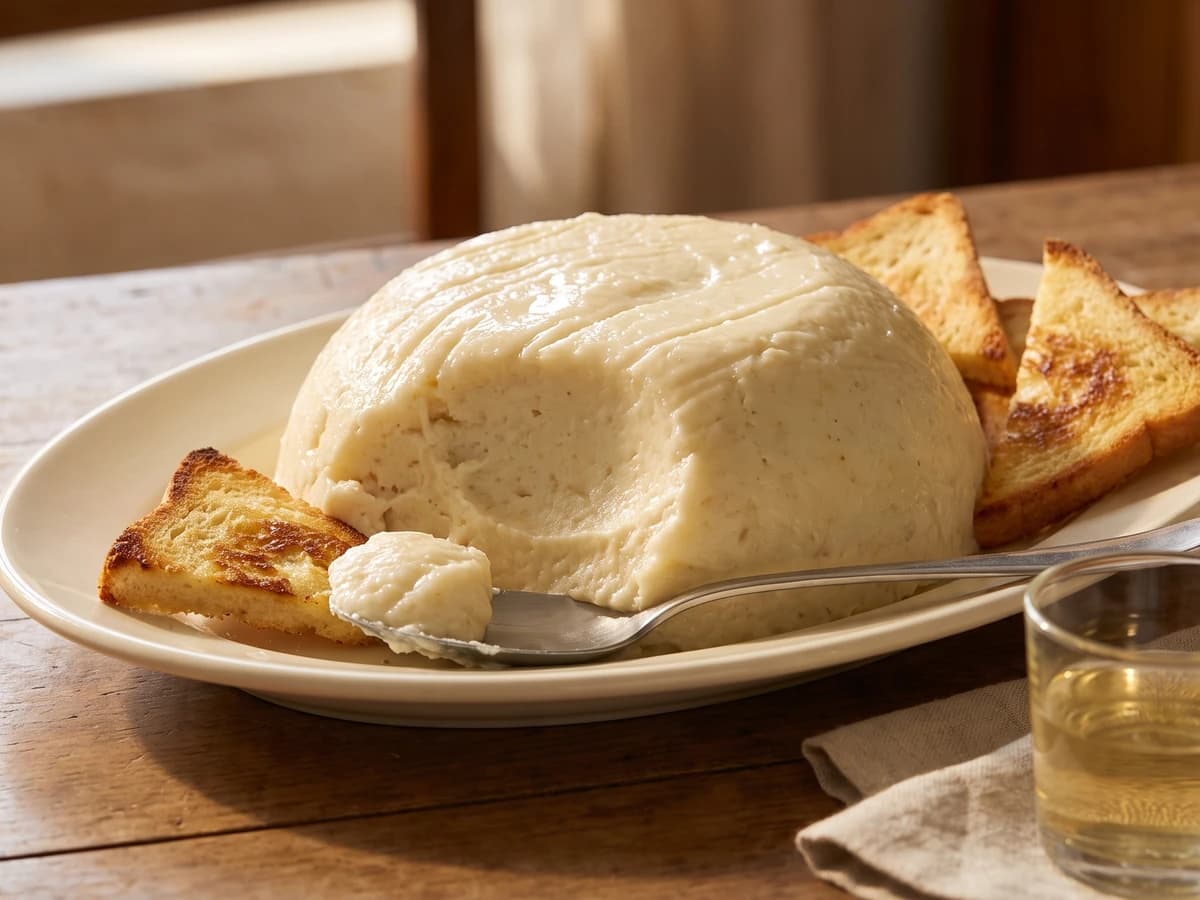
Brandade de Morue turns salt cod, warm olive oil, and milk into a pale, silky emulsion: keep everything warm and add the oil slowly, then crown the generous dome with butter-fried bread.
Chef Juliette
Salt cod worked warm with cream, one patient spoonful at a time, until the rough flakes become a glossy Nîmes paste, domed generously and ringed with butter-fried croutons for the table.

Chef Juliette
Wine-poached char packed in its earthenware crock beneath butter gold: a make-ahead first course that turns careful cooling, thorough boning, and one unbroken seal into quiet abundance.