Culinary Explorer
A cooking platform built around craft, culture, and the stories behind what we eat.
Asperges à la Flamande
Created by Chef Juliette
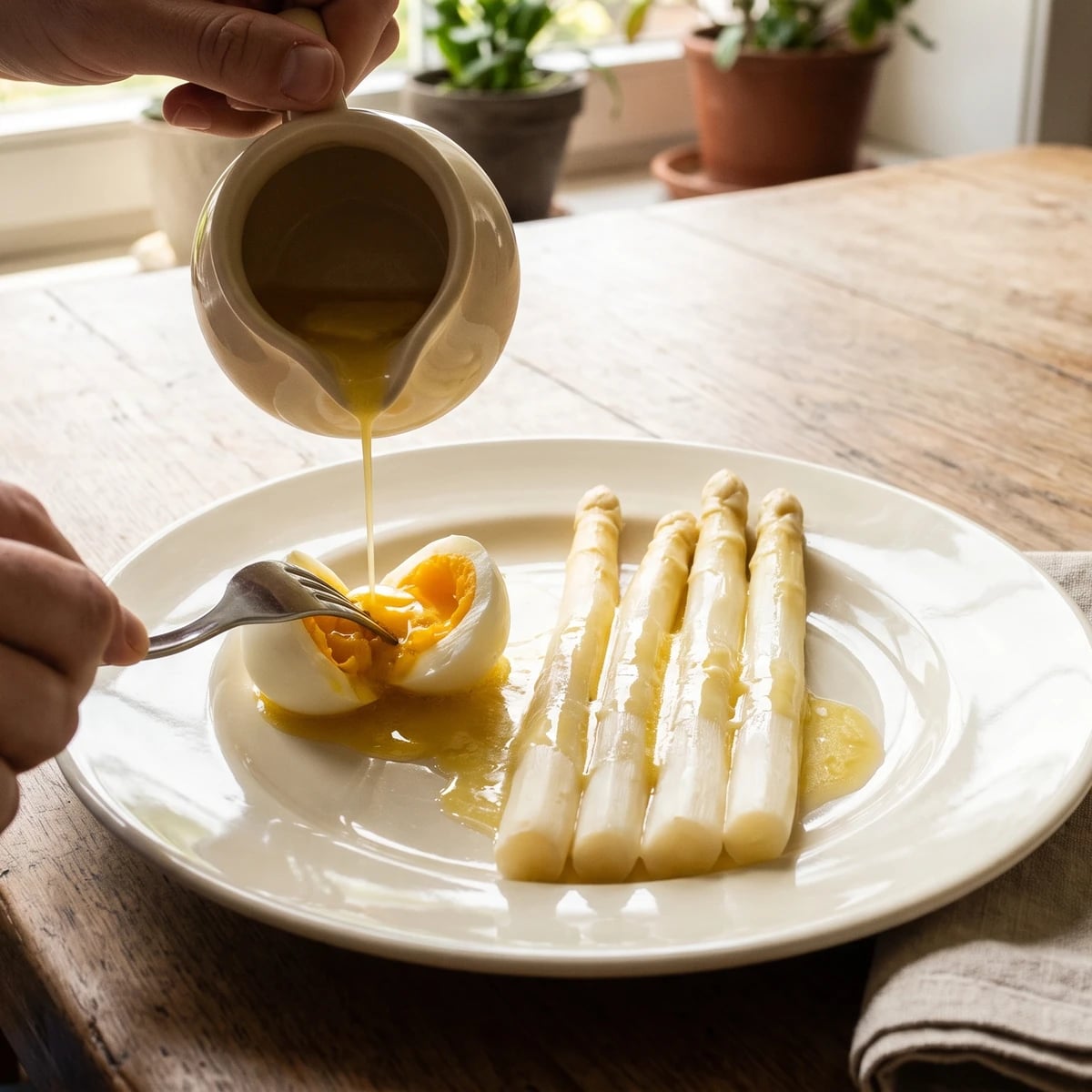
Asperges à la Flamande turns four plain elements into a table ritual: tender white asparagus, hot egg, melted butter, and the diner's fork making the sauce while the plate is still warm.
Asperges à la Flamande (asparagus in the Flemish manner) teaches one true thing: temperature is part of seasoning. The asparagus, hard-cooked egg, and melted butter must meet while all three are warm, because the yolk crushes into the butter and clings to the spears only when nothing has been allowed to loiter.
The old entry assumes a dining room able to land every portion at once. It asks for no stock, salamander, or saucier, because the diner becomes the saucier, crushing the yolk from one hot egg half, seasoning it, and working in one ounce of butter. At home, a wide pan replaces the asparagus boiler, a warmed jug replaces coordinated service, and the proportions become four portions: two eggs and four ounces of butter. The brigade scaffolding was heat management; it can go. The hot egg, the ounce of butter per person, and the diner's fork must stay. One cook, one stove, one evening.
White asparagus gives the Flemish plate its pale, tender character, and peeling it thoroughly matters more than buying the fattest spears. The step that decides the dish is the last minute: drain well, melt without browning, and serve before the heat slips away.
Ingredients
thick white asparagus
Quantity
16 to 20 spears (2 lb / 900 g)
peeled from beneath the tips and woody ends trimmed
large eggs
Quantity
2
unsalted butter
Quantity
½ cup (120 ml / 4 oz / 113 g)
| Ingredient | Quantity |
|---|---|
| thick white asparaguspeeled from beneath the tips and woody ends trimmed | 16 to 20 spears (2 lb / 900 g) |
| large eggs | 2 |
| unsalted butter | ½ cup (120 ml / 4 oz / 113 g) |
Where cooking meets culture.
Culinary guides, cultural storytelling, and the editorial depth that makes cooking meaningful.
Discover Culinary Explorer