
Chef Juliette
Smelt (Éperlans)
Tiny éperlans, lightly floured and fried until their tails stand crisp, arrive in a generous heap on a napkin with fried parsley and grooved lemon, a weeknight lesson in heat and restraint.
A cooking platform built around craft, culture, and the stories behind what we eat.

Created by Chef Juliette
Based on No. 196, Pork Forcemeat for Divers Uses, from Le Guide Culinaire (1907) by Auguste Escoffier
A cold-worked farce where pork and fresh belly become one supple paste, held by egg and scented with brandy, ready for pies, terrines, and braised stuffed joints.
Farce de porc pour usages divers teaches the first law of forcemeat: fat must be bound while cold, or it escapes when heated and leaves the filling dry. Before you touch a pan, chill the pork, belly, bowl, and blade. The finished farce should be pale rose, supple, and tacky enough to cling to a spoon without looking greasy.
The original entry assumes two pounds each of pork fillet and fresh fat bacon, a heavy mortar, and the time and arms to pound four pounds of meat into a fine paste. At home, a one-pound meat batch and a chilled food processor are the honest equivalents. The tool changes and the quantity is quartered, nothing more; the equal ratio of lean pork to fresh fat, the Spiced Salt (No. 188), egg, and brandy remain intact. The mortar is brigade scaffolding. Cold, fine pounding is the dish. One cook, one stove, one evening.
The egg has a precise job here. In pies, terrines, and joints that will be braised, it helps hold back the fat as the heat rises, keeping the farce juicy rather than crumbly. Watch the processor, not the clock: stop while the paste is cold and cohesive. If its surface turns shiny with free fat, chill it at once. Ça se rattrape.
This farce belongs to the French charcutier's workroom and the cuisine bourgeoise table rather than one province; in Lyon it sits naturally among pâtés, terrines, and pork-rich stuffed dishes, while the same formula serves pies and braised joints across France. Classical kitchens classified it plainly as sausage-meat and used the egg selectively, not as general enrichment but to keep fat from escaping an enclosed pie, terrine, or braised stuffing. Its passage from the professional mortar to the home processor changes the labor, not the grammar: equal lean pork and fresh fat, seasoned and bound cold.
Quantity
1/2 pound (8 ounces / 227 g)
silverskin and tendons removed, cut into 1-inch cubes
Quantity
1/2 pound (8 ounces / 227 g)
skin removed and cut into 1-inch cubes
Quantity
2 level teaspoons (10 ml / 12.5 g) Spiced Salt (No. 188)
Quantity
1/2 large egg (1 1/2 tablespoons / 22.5 ml / 25 g)
beaten
Quantity
1 1/2 teaspoons (7.5 ml / 7 g)
| Ingredient | Quantity |
|---|---|
| pork fillet or tenderloinsilverskin and tendons removed, cut into 1-inch cubes | 1/2 pound (8 ounces / 227 g) |
| fresh fat bacon or unsmoked, uncured fatty pork bellyskin removed and cut into 1-inch cubes | 1/2 pound (8 ounces / 227 g) |
| prepared spiced salt | 2 level teaspoons (10 ml / 12.5 g) Spiced Salt (No. 188) |
| large eggbeaten | 1/2 large egg (1 1/2 tablespoons / 22.5 ml / 25 g) |
| brandy | 1 1/2 teaspoons (7.5 ml / 7 g) |
Put the food processor bowl, metal blade, and a rimmed metal tray in the refrigerator for 20 minutes. Set the pork and belly in the freezer for about 15 minutes, just until firm at the edges but not frozen. Cold is the principle that decides this farce: it keeps the fat dispersed through the lean meat instead of smearing onto the blade.
Remove every strip of silverskin and visible tendon from the pork fillet, then cut the pork and fresh fat bacon into even 1-inch cubes. Beat one egg until uniform and measure out half, preferably 25 g on a scale. Return the cubed meats to the cold if trimming has softened their edges.
Toss the pork and belly thoroughly with the Spiced Salt (No. 188), then transfer them to the chilled processor. Pulse in one-second bursts until the cubes become an even coarse mince, stopping once to scrape the bowl. Keep the lean and fat together so every spoonful retains the source formula's equal proportion.
Continue processing in short bursts until the mince becomes fine, tacky, and cohesive, the home equivalent of pounding it in a mortar. Add the beaten half egg and brandy, then pulse only until they disappear into the paste and the farce gathers around the blade. If the surface becomes oily or the fat begins coating the bowl, stop immediately. Spread the farce one inch thick on the chilled tray, refrigerate it for 10 minutes, and finish with two or three brief pulses. Ça se rattrape. Cold restores the bind; crumbs or extra egg only change the formula.
Fry a teaspoon of farce in a dry skillet over medium heat until browned and completely cooked, about 2 minutes per side. Taste it only after cooking. The seasoning should be firm because pies and terrines mute salt when served cool; if it tastes flat, work in one small pinch of Spiced Salt (No. 188). If it is too salty, the honest correction is equal additional weights of unseasoned pork and belly, not bread or cream.
Press parchment or food wrap directly against the surface and refrigerate the farce until needed. Pack it firmly into pies and terrines to remove air pockets, or use it to stuff a joint that will be braised, leaving enough room to close the meat securely. Keep the farce at or below 40°F (4°C) before cooking, then cook the center of the finished preparation to at least 160°F (71°C). The egg slows the loss of fat, but gentle cooking must finish the work.
1 serving (about 125g)
Culinary guides, cultural storytelling, and the editorial depth that makes cooking meaningful.
Discover Culinary ExplorerChef Juliette
Tiny éperlans, lightly floured and fried until their tails stand crisp, arrive in a generous heap on a napkin with fried parsley and grooved lemon, a weeknight lesson in heat and restraint.

Chef Juliette
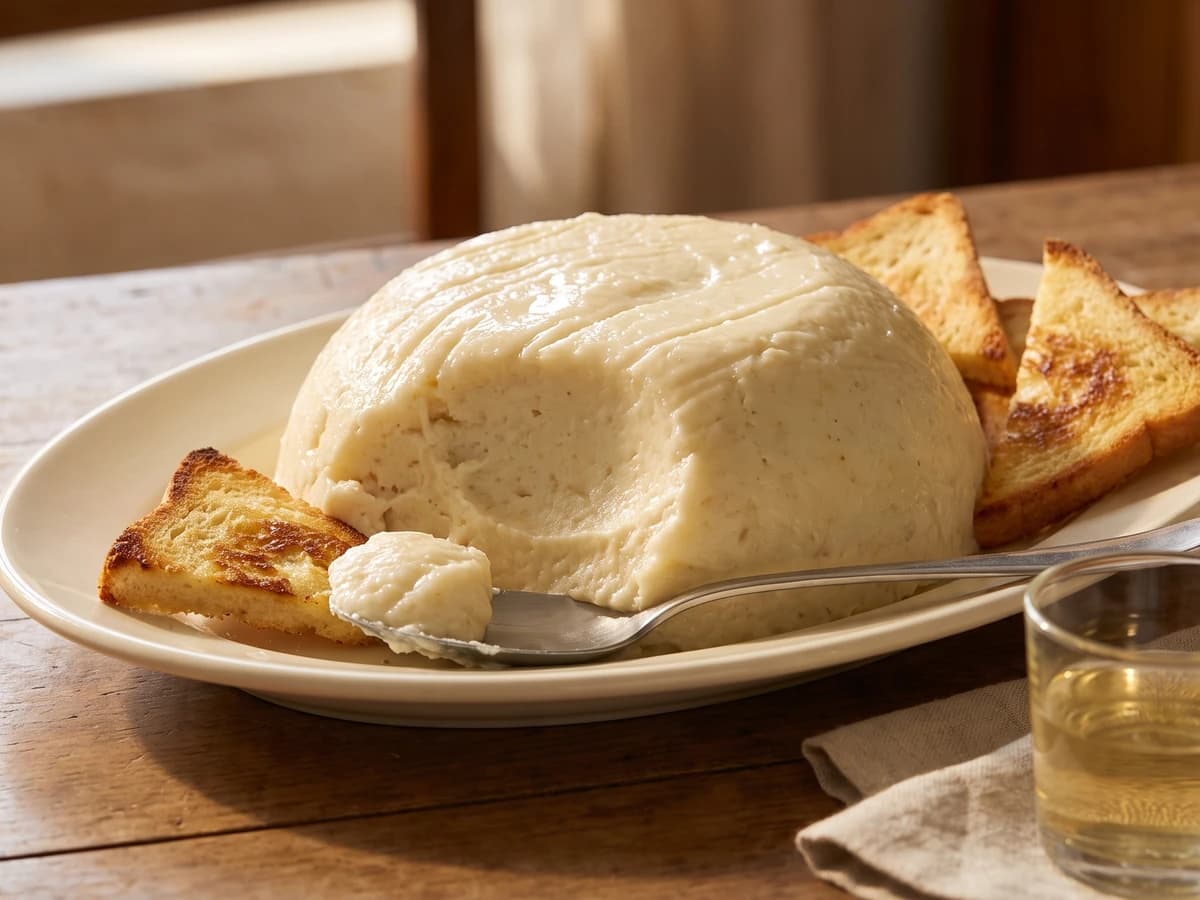
Brandade de Morue turns salt cod, warm olive oil, and milk into a pale, silky emulsion: keep everything warm and add the oil slowly, then crown the generous dome with butter-fried bread.
Chef Juliette
Salt cod worked warm with cream, one patient spoonful at a time, until the rough flakes become a glossy Nîmes paste, domed generously and ringed with butter-fried croutons for the table.

Chef Juliette
Wine-poached char packed in its earthenware crock beneath butter gold: a make-ahead first course that turns careful cooling, thorough boning, and one unbroken seal into quiet abundance.