Culinary Explorer
A cooking platform built around craft, culture, and the stories behind what we eat.
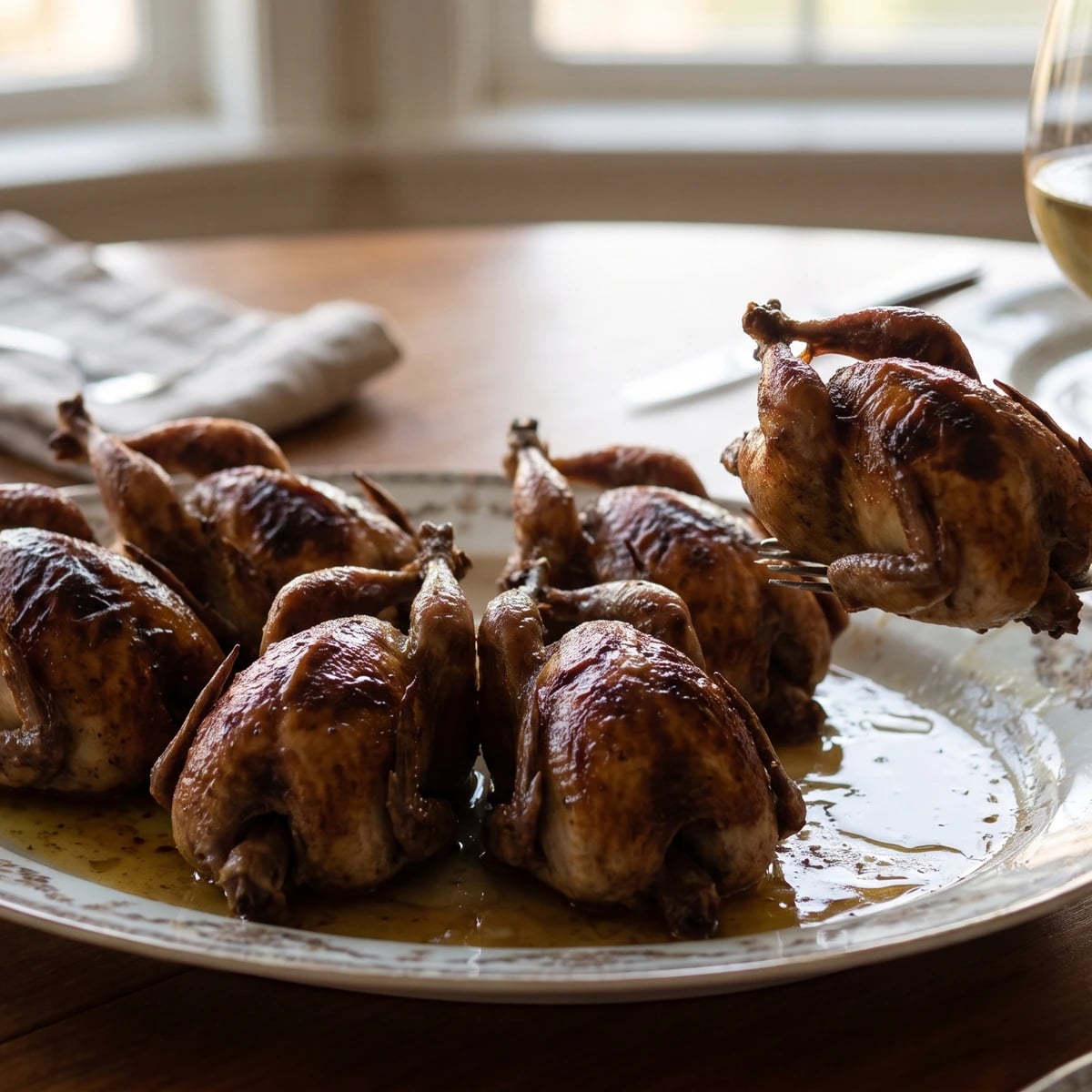
Ortolans
Created by Chef Juliette
The canon’s starkest lesson in restraint, made lawfully with farmed quail: butter, salt, fierce heat, and no sauce, roasted just until the skin bronzes and the flesh stays juicy.
Ortolans rôtis (roasted ortolans) teach restraint. The source gives one firm instruction: roast the bird and serve it as plainly as possible. Anything added for display only obscures the point. Here the flavour is built from browned skin, concentrated roasting juices, and butter, not from a sauce waiting nearby.
The book assumed legally available wild ortolan, a tiny bird fat enough to baste itself over a fierce roasting fire. That ingredient is no longer an option because ortolan buntings are protected. This version uses headless, eviscerated farmed quail, and the change is stated plainly: quail is larger and leaner, so each diner receives two birds and a little real butter supplies the basting fat it lacks.
Unlike the grand sauced preparations, this entry needs no saucier, perpetual stockpot, or salamander. Trussing and turning dozens of birds on a spit were brigade scaffolding; a rack, a hot home oven, and eight evenly sized quail do the same work for one cook, one stove, one evening. Dry every surface, then trust fierce heat for a short roast. That is the one step that decides the dish.
Ingredients
headless, eviscerated farmed quail
Quantity
8, each 5 to 6 ounces (140 to 170 g)
fully thawed, giblets removed, patted dry
unsalted butter
Quantity
4 tablespoons (60 ml / 56 g)
melted and cooled slightly
fine sea salt
Quantity
2 teaspoons (10 ml / 12 g)
| Ingredient | Quantity |
|---|---|
| headless, eviscerated farmed quailfully thawed, giblets removed, patted dry | 8, each 5 to 6 ounces (140 to 170 g) |
| unsalted buttermelted and cooled slightly | 4 tablespoons (60 ml / 56 g) |
| fine sea salt | 2 teaspoons (10 ml / 12 g) |
Where cooking meets culture.
Culinary guides, cultural storytelling, and the editorial depth that makes cooking meaningful.
Discover Culinary Explorer