
Chef Juliette
John Dory (St. Pierre)
John Dory has the delicacy of sole and the firmness of turbot. A light flouring, a quick butter sauté, and nut-brown beurre noisette show exactly why looks never mattered.
A cooking platform built around craft, culture, and the stories behind what we eat.
Created by Chef Juliette
Based on No. 1896, Rizotto de Cailles, from Le Guide Culinaire (1907) by Auguste Escoffier
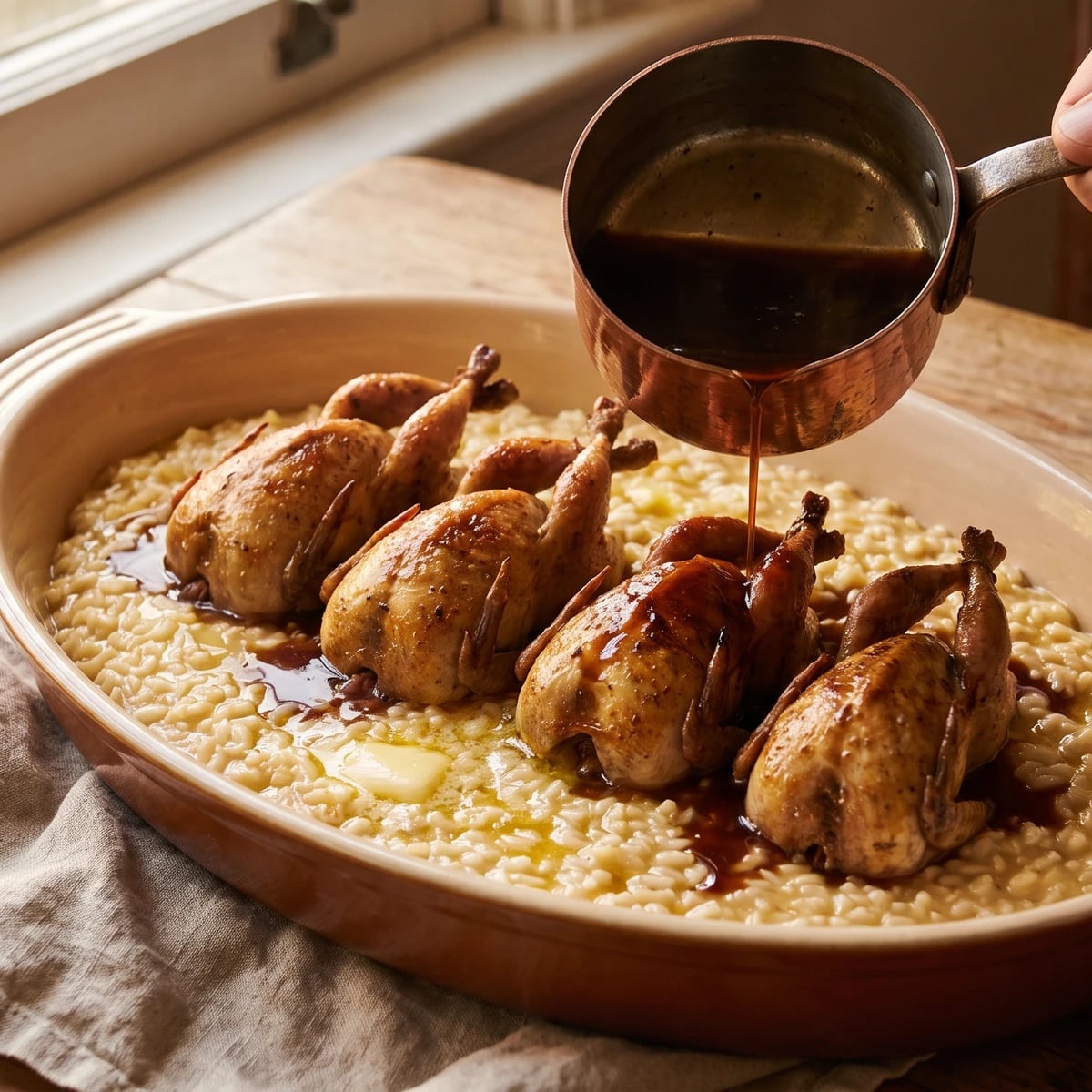
Four butter-browned quails sit in a hollow of creamy rizotto, their truffled pork fat folded through the rice and the pan's game fumet poured over at the table.
Rizotto de Cailles (quail risotto) teaches one true thing before you touch a pan: the quails' cooking fat belongs in the rice. The birds brown in butter with equal measures of pounded pork fat and white truffle tucked inside them, then their rendered richness is stirred through the rizotto. Game fumet, a concentrated game essence, lifts every browned trace from the pan and becomes the final glossy swillings poured over the birds.
The formula assumed a saucier on staff, a pan of finished rizotto held ready, game fumet never off the fire, and enough hands to land every component together. At home, four quails, three modest pans, and a warmed serving dish are enough. Separate brigade holding is scaffolding and goes; the truffled fat, the transfer of the quails' cooking fat, the timbale-shaped nest, and the fumet swillings are the dish, so they stay. Only the scale and timing have changed. One cook, one stove, one evening.
Pause the partly cooked rice while the quails brown, then finish it while the covered birds cook gently. If the rice tightens, hot stock restores its flow. Ça se rattrape. Above all, save the cooking fat before you deglaze the quail pan. That transfer is what makes this Rizotto de Cailles rather than quail set beside rice.
Rizotto de Cailles belongs to the Parisian grand-kitchen repertory, where the rice cookery of northern Italy was absorbed into French service and paired with game, truffle, and concentrated fumet. Its architecture is distinctly service-minded: the rice forms a timbale nest, the whole quails remain visible, and the pan swillings are poured over only at the last moment. It is often mistaken for quail stirred through risotto, but the classical dish depends on keeping bird, rice, and fumet distinct until they meet on the platter.
Quantity
4 (about 5 to 6 oz / 140 to 170 g each)
Quantity
1 tablespoon (15 ml / 16 g)
very finely minced and pounded
Quantity
4 teaspoons (20 ml / 16 g)
very finely minced
Quantity
1½ teaspoons (7.5 ml / 9 g)
divided
Quantity
¼ teaspoon (1.25 ml / 0.6 g)
Quantity
2 tablespoons (30 ml / 28 g)
Quantity
3 tablespoons (45 ml / 42 g)
Quantity
¼ cup (60 ml / 50 g)
very finely minced
Quantity
1½ cups (355 ml / 300 g)
Quantity
4 cups (960 ml / 960 g)
kept hot
Quantity
½ cup (120 ml / 45 g)
finely grated
Quantity
1 cup (240 ml / 240 g)
| Ingredient | Quantity |
|---|---|
| whole oven-ready quails | 4 (about 5 to 6 oz / 140 to 170 g each) |
| fresh unsalted pork fatbackvery finely minced and pounded | 1 tablespoon (15 ml / 16 g) |
| fresh white trufflevery finely minced | 4 teaspoons (20 ml / 16 g) |
| fine sea saltdivided | 1½ teaspoons (7.5 ml / 9 g) |
| ground white pepper | ¼ teaspoon (1.25 ml / 0.6 g) |
| unsalted butter for cooking the quails | 2 tablespoons (30 ml / 28 g) |
| unsalted butter for the rizotto | 3 tablespoons (45 ml / 42 g) |
| yellow onionvery finely minced | ¼ cup (60 ml / 50 g) |
| Carnaroli or Arborio rice | 1½ cups (355 ml / 300 g) |
| unsalted light poultry stockkept hot | 4 cups (960 ml / 960 g) |
| Parmesanfinely grated | ½ cup (120 ml / 45 g) |
| game fumet | 1 cup (240 ml / 240 g) |
Pound the pork fatback and white truffle together until they form a cohesive paste, keeping their weights equal as the original formula requires. Divide the paste into four hazelnut-sized portions. Pat the quails thoroughly dry, season their cavities and skins with 1 teaspoon of the salt and the white pepper, then place one portion of truffled fat inside each cavity. Tie the legs loosely together so the filling stays where it belongs.
Hold the poultry stock at a bare simmer. Melt the 3 tablespoons of butter in a heavy saucepan over medium-low heat, add the onion and a pinch of the remaining salt, and cook until translucent without allowing it to brown, about 3 minutes. Add the rice and stir for 2 minutes, until every grain is glossy and hot. Add the stock one ladle at a time, stirring regularly and waiting until each addition is nearly absorbed before adding the next. After 10 minutes, the outside of each grain should be tender while its centre remains plainly firm. Add one more ladle of stock, take the pan off the heat, and cover it loosely while you brown the birds.
Melt the 2 tablespoons of butter in a 12-inch lidded sauté pan over medium heat. Add the quails breast-side down and brown them patiently on the breasts, backs, and sides, turning with tongs until their skins are deep golden, about 6 minutes altogether. Lower the heat, cover, and cook for another 7 to 9 minutes, turning once. While they cook, return the rizotto to medium-low heat and continue adding hot stock until the rice is tender with a fine point of resistance at its centre. If the waiting rice has clumped, add two ladles of hot stock and stir gently; ça se rattrape. The quails are ready when an instant-read thermometer reaches 165°F / 74°C in the thickest part of the inner thigh.
Transfer the cooked quails to a warm plate. Tilt their pan and spoon every clear drop of butter, rendered pork fat, and quail juice into the finished rizotto, leaving the dark browned deposits in the pan for the fumet. Add the Parmesan and stir firmly for about 30 seconds, until the fat binds with the rice's starch and the rizotto flows in a slow, creamy wave. This transfer is the dish. If shiny beads of fat remain separate, the rice is too cool or too dry; beat in 1 tablespoon of hot stock at a time until it comes together.
Set the quail pan over medium-high heat and pour in the game fumet. Scrape every browned deposit from the pan floor as the fumet comes to a brisk simmer, then reduce it for 3 to 5 minutes, until about ½ cup remains and it lightly coats a spoon. These are the saucepan-swillings named by the source, concentrated but still pourable. If they become too strong or salty, stop the reduction and lengthen them with a spoonful of hot poultry stock.
Spoon the rizotto into a warmed, deep serving dish and shape it into a generous round timbale with the back of the spoon. Hollow the centre into a broad nest, keeping enough rice beneath it to hold the fumet. If the rizotto has tightened while the sauce reduced, loosen it first with 2 tablespoons of hot stock. Sit the four quails in the hollow, breasts uppermost, and pour the fumet swillings over the birds and into the nest. Carry it straight to the table. À table!
1 serving (about 370g)
Culinary guides, cultural storytelling, and the editorial depth that makes cooking meaningful.
Discover Culinary Explorer
Chef Juliette
John Dory has the delicacy of sole and the firmness of turbot. A light flouring, a quick butter sauté, and nut-brown beurre noisette show exactly why looks never mattered.

Chef Juliette
Fresh haddock proves its delicacy in the meunière pan: a fine flour crust, moist pearly flakes, and beurre noisette sharpened with lemon and parsley, ready from one skillet in half an hour.

Chef Juliette
Éperlans à l’Anglaise turns small fish into a lesson in disciplined coating: boned smelts under a close, crisp crumb, pan-fried in clarified butter and finished with bright, half-melted maître d’hôtel butter.

Chef Juliette
Tiny smelts, shallot, mushrooms, white wine, gratin sauce, and fine bread raspings meet a fierce oven, where the fish must turn tender in the same breath the buttered crust bronzes.