
Chef Juliette
John Dory (St. Pierre)
John Dory has the delicacy of sole and the firmness of turbot. A light flouring, a quick butter sauté, and nut-brown beurre noisette show exactly why looks never mattered.
A cooking platform built around craft, culture, and the stories behind what we eat.
Created by Chef Juliette
Based on No. 1794, Selle de Chevreuil aux Cerises, from Le Guide Culinaire (1907) by Auguste Escoffier
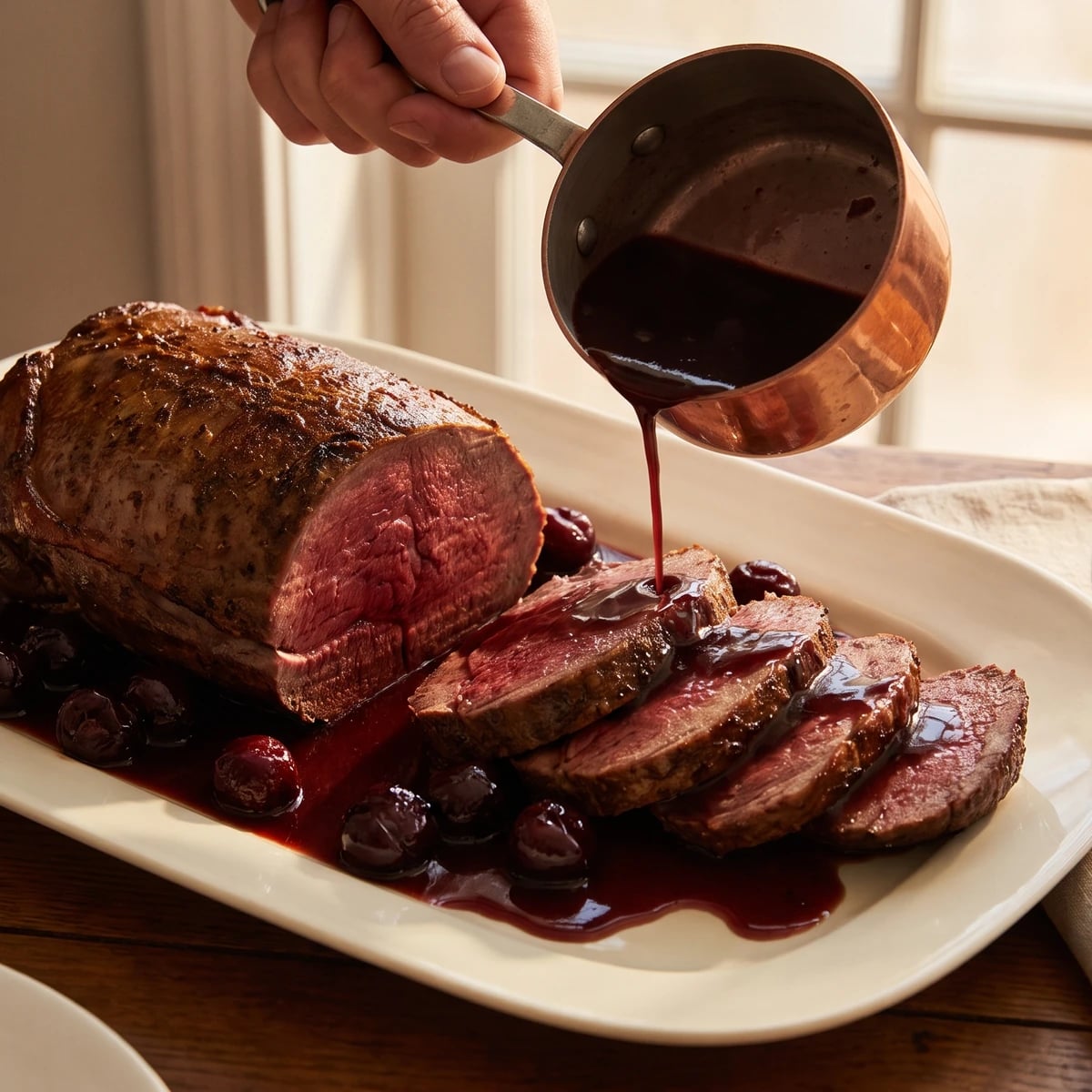
Verjuice perfumes rather than pickles this saddle, while a thermometer protects its rosy centre. Poivrade and red-currant jelly meet in strict equality, with semi-candied cherries folded through for the generous game table.
Selle de Chevreuil aux Cerises (roast saddle of venison with cherries) teaches restraint: a tender saddle asks for perfume around it and very little cooking through it. The one true thing to know before touching a pan is that the marinade isn't there to tenderize. The meat is tender already. Twelve hours of verjuice season its surface, while the thermometer protects the garnet centre.
The original recipe assumed a turning spit, a saucier on staff, poivrade within reach from a stock never off the fire, and enough hands to baste the saddle while someone else minded the sauce. A home kitchen needs an even boneless roast, a skillet for the spit’s first fierce colour, a rack in a hot oven, and a prepared home quantity of poivrade. The spit and brigade portions are scaffolding, so they can go. The twelve-hour marinade, the underdone saddle, the equal quantities of poivrade and red-currant jelly, and the soaked semi-candied cherries are the dish, so they stay.
Cook it by temperature, not bravado. Begin checking earlier than you think necessary and pull the saddle at 50°C or 122°F; the resting heat carries it farther. That timely pull is the step that decides everything.
Selle de chevreuil belongs to the French cuisine de chasse, the formal game table shaped by the forests and hunting estates of Burgundy, Alsace, and Sologne rather than by one province alone. Grand kitchens paired lean venison with poivrade for peppery depth and preserved fruits for sweetness and acidity, allowing the dish to travel beyond the brief fresh-cherry season. Despite the marinade, saddle is not a braising cut: its tenderness comes from its place on the animal, and French cooks have long served it frankly underdone.
Quantity
1 roast (2 lb / 900 g)
trimmed of silver skin and tied evenly
Quantity
about 2 cups (475 ml / about 450 g) Raw Marinade for Butcher’s Meat or Venison (No. 169)
prepared with verjuice instead of vinegar
Quantity
1¼ teaspoons (6 ml / 7 g)
Quantity
½ teaspoon (2.5 ml / 1 g)
Quantity
1 tablespoon (15 ml / 14 g)
Quantity
scant ⅔ cup (140 ml / about 140 g)
Quantity
scant ⅔ cup (140 ml / about 185 g)
Quantity
¼ cup (60 ml / 42 g)
Quantity
1 cup (240 ml / 240 g)
for soaking the cherries
| Ingredient | Quantity |
|---|---|
| boneless venison saddle roasttrimmed of silver skin and tied evenly | 1 roast (2 lb / 900 g) |
| Raw Marinade for Butcher’s Meat or Venisonprepared with verjuice instead of vinegar | about 2 cups (475 ml / about 450 g) Raw Marinade for Butcher’s Meat or Venison (No. 169) |
| fine sea salt | 1¼ teaspoons (6 ml / 7 g) |
| freshly ground black pepper | ½ teaspoon (2.5 ml / 1 g) |
| clarified butter | 1 tablespoon (15 ml / 14 g) |
| prepared poivrade sauce | scant ⅔ cup (140 ml / about 140 g) |
| red-currant jelly | scant ⅔ cup (140 ml / about 185 g) |
| semi-candied cherries | ¼ cup (60 ml / 42 g) |
| hot waterfor soaking the cherries | 1 cup (240 ml / 240 g) |
Prepare the Raw Marinade for Butcher’s Meat or Venison (No. 169) with verjuice in place of its vinegar. Before it touches the meat, reserve ½ cup (120 ml) in a clean covered container for basting and refrigerate it. Season the saddle all over with the salt and pepper, then settle it into the remaining marinade in a snug nonreactive dish, covering it with the aromatic vegetables. Refrigerate for exactly twelve hours, turning the roast three or four times. Don't extend the time: the active verjuice can make the surface mealy rather than more tender.
Take the saddle from the refrigerator forty-five minutes before roasting. Discard the used marinade and vegetables, then dry the meat thoroughly with kitchen paper. Retie it if the shape has loosened. A wet saddle steams against the pan and throws away the browning the spit once supplied; dry it until the surface feels slightly tacky.
Cover the semi-candied cherries with the hot water and leave them for thirty minutes, as the original directs. Drain them well and blot away the excess water. The soaking softens their candied exterior so they swell into the sauce rather than sitting in it like sweets.
Heat the oven to 450°F (230°C) with a rack in the upper-middle position. Heat the clarified butter in a large heavy skillet over medium-high heat. When it gleams, brown the saddle for sixty to ninety seconds on each broad face and briefly along the sides. Give it real Maillard bronze without trying to cook the centre. Transfer it to a rack set in a shallow roasting pan.
Roast for eight minutes, then baste with some of the clean reserved marinade and turn the pan. Continue roasting for six to twelve minutes, basting once more, until an instant-read thermometer pushed into the thickest part registers 50°C or 122°F. Begin checking early. Rest the saddle loosely covered for ten minutes, when it should rise toward 54°C or 129°F. If you overshoot, remove it immediately, rest only five minutes, and carve it thickly. Ça se rattrape with a generous spoonful of sauce, but no further heat.
While the saddle rests, put the poivrade sauce and red-currant jelly into a small saucepan in exactly equal volumes. Warm them over gentle heat, whisking until the jelly dissolves and the sauce becomes glossy and unified, then fold in the drained cherries and hold at the barest simmer for two minutes. If the sauce tightens into a sticky glaze, whisk in hot water one teaspoon at a time. Ça se rattrape. It should nap the back of a spoon and flow freely onto the platter.
Remove the twine and carve the saddle across the grain into thick slices, keeping every drop of its resting juices. Arrange the slices on a warm platter, spoon the juices over them, then pool some cherry sauce around the meat and pass the rest separately. The centre should remain deep rose to garnet, with a narrow browned edge. À table!
1 serving (about 250g)
Culinary guides, cultural storytelling, and the editorial depth that makes cooking meaningful.
Discover Culinary Explorer
Chef Juliette
John Dory has the delicacy of sole and the firmness of turbot. A light flouring, a quick butter sauté, and nut-brown beurre noisette show exactly why looks never mattered.

Chef Juliette
Fresh haddock proves its delicacy in the meunière pan: a fine flour crust, moist pearly flakes, and beurre noisette sharpened with lemon and parsley, ready from one skillet in half an hour.

Chef Juliette
Éperlans à l’Anglaise turns small fish into a lesson in disciplined coating: boned smelts under a close, crisp crumb, pan-fried in clarified butter and finished with bright, half-melted maître d’hôtel butter.

Chef Juliette
Tiny smelts, shallot, mushrooms, white wine, gratin sauce, and fine bread raspings meet a fierce oven, where the fish must turn tender in the same breath the buttered crust bronzes.