
Chef Juliette
Smelt (Éperlans)
Tiny éperlans, lightly floured and fried until their tails stand crisp, arrive in a generous heap on a napkin with fried parsley and grooved lemon, a weeknight lesson in heat and restraint.
A cooking platform built around craft, culture, and the stories behind what we eat.
Created by Chef Juliette
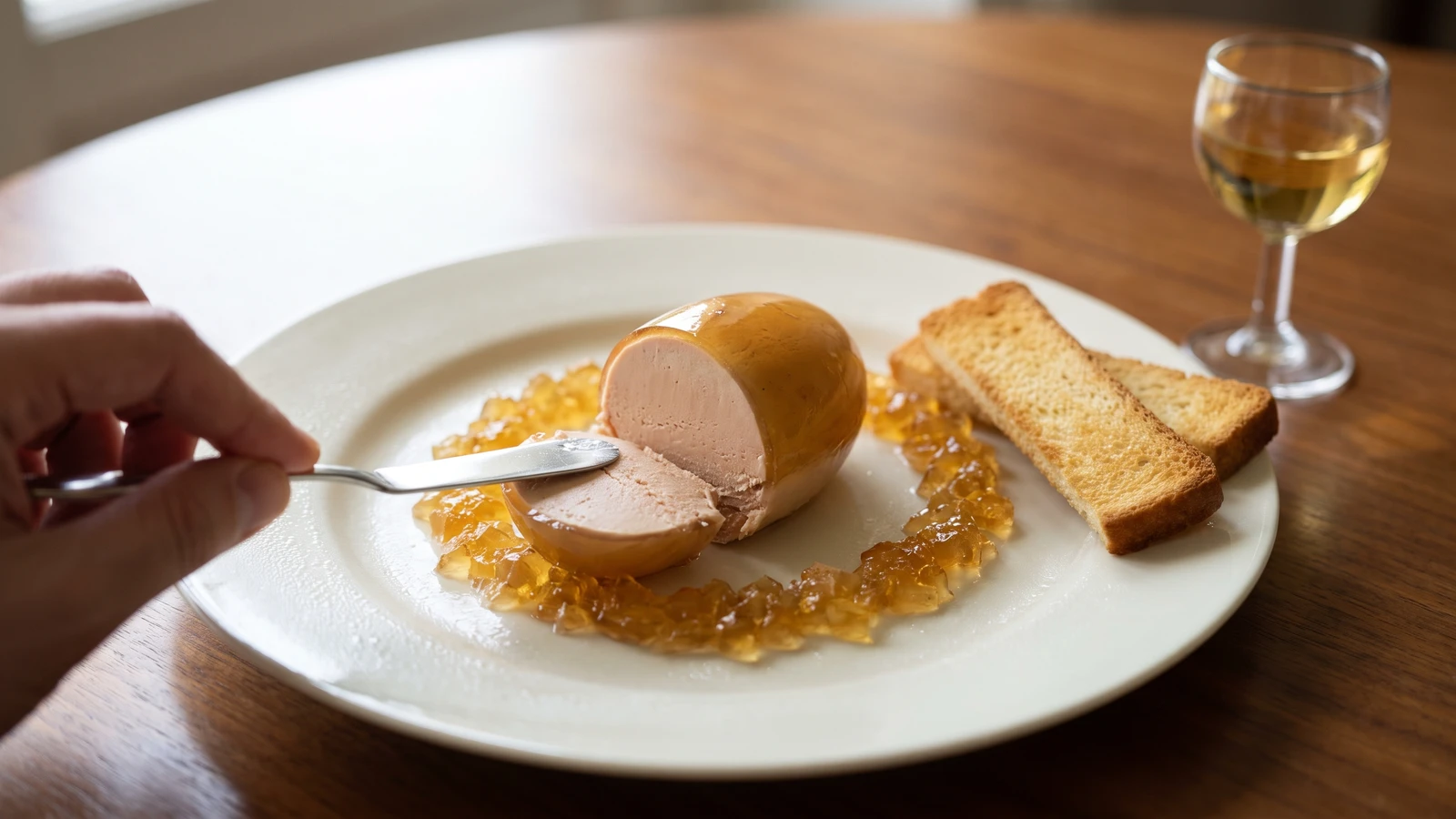
Based on No. 1740, Mousselines de Foie Gras, from Le Guide Culinaire (1907) by Auguste Escoffier
Mousselines de foie gras teach the precise difference between a mousse and a mousseline: the same silken mixture, portioned individually, chilled until tender, and glazed with aspic that catches the light.
Mousselines de Foie Gras (individual foie gras mousses) teach a precise piece of classical grammar. A mousse fills one mould for several diners; a mousseline is the same substance set one portion at a time. Scale alone changes the word. C'est la même grammaire.
The grand kitchen assumed a saucier on staff, stock never off the fire, a house-prepared foie gras base, and ranks of egg or quenelle moulds. A salamander has no part here because the finish is cold. At home, fully cooked plain foie gras supplies the liver base, strong strained stock and gelatin make a small aspic, and four silicone moulds replace the batterie of metal forms. The classical entry permits either aspic or sauce chaud-froid; this version takes the aspic route because making a separate coating sauce for four portions is brigade scaffolding. The cold emulsion, individual moulding, and final glaze are the dish, so they stay. One cook, one stove, one evening.
The one step that decides the texture is folding cold whipped cream into a foie gras base that is cool but still pliable. Too warm and the cream collapses; too cold and the gelatin catches in threads. Bring both to the right point before they meet, and the mousselines will set tender rather than rubbery.
Mousselines de foie gras belong to the formal cold service of France's grand kitchens, especially Paris, while foie gras itself carries distinct traditions in Alsace and in the southwest around Gascony and Périgord. The often-missed distinction is grammatical rather than culinary: a mousse serves several people from one mould, while a mousseline is the same preparation moulded one portion at a time. Aspic glazing or a coating of sauce chaud-froid gave those individual forms a smooth finish before they were arranged with jelly.
Quantity
1¼ cups (300 ml / 300 g)
well strained
Quantity
1 tablespoon (15 ml / 9 g)
Quantity
3 tablespoons (45 ml / 45 g)
Quantity
2 tablespoons (30 ml / 30 g)
divided
Quantity
8 oz (225 g)
cubed and rested for 20 minutes at cool room temperature
Quantity
2 tablespoons (30 ml / 28 g)
softened but not greasy
Quantity
⅓ cup (80 ml / 80 g)
very cold
Quantity
⅛ teaspoon (0.6 ml / 0.3 g)
Quantity
Up to ¼ teaspoon (1.25 ml / 1.5 g)
Quantity
8 thin slices
toasted just before serving
| Ingredient | Quantity |
|---|---|
| clear unsalted chicken stockwell strained | 1¼ cups (300 ml / 300 g) |
| unflavoured powdered gelatin | 1 tablespoon (15 ml / 9 g) |
| cold water | 3 tablespoons (45 ml / 45 g) |
| Madeiradivided | 2 tablespoons (30 ml / 30 g) |
| fully cooked plain foie gras terrine or bloccubed and rested for 20 minutes at cool room temperature | 8 oz (225 g) |
| unsalted buttersoftened but not greasy | 2 tablespoons (30 ml / 28 g) |
| heavy creamvery cold | ⅓ cup (80 ml / 80 g) |
| ground white pepper | ⅛ teaspoon (0.6 ml / 0.3 g) |
| fine sea salt (optional) | Up to ¼ teaspoon (1.25 ml / 1.5 g) |
| briochetoasted just before serving | 8 thin slices |
Sprinkle the gelatin evenly over the cold water and leave it for 5 minutes to bloom. Meanwhile, bring the chicken stock to a lively simmer in a small saucepan and reduce it to exactly 1 cup (240 ml), measuring rather than guessing. Remove the pan from the heat, add the bloomed gelatin, and stir until completely dissolved. Stir in 1 tablespoon (15 ml) of the Madeira, then pass the aspic through a fine sieve lined with damp cloth. Do not boil it after the gelatin goes in. Reserve ¼ cup (60 ml) at cool room temperature for the mousse, pour ½ cup (120 ml) into a shallow dish to set for the chopped jelly, and refrigerate the remaining ½ cup (120 ml) for glazing.
Process the foie gras and softened butter until smooth, stopping to scrape the bowl. Add the remaining 1 tablespoon (15 ml) Madeira and the white pepper, then pour in the reserved ¼ cup (60 ml) liquid aspic gradually while the machine runs. Pass the mixture through a fine sieve with a flexible scraper; this sieving is the difference between merely blended and truly silken. Taste a dab from a cold spoon and add salt only if it needs it. If oily beads appear, the mixture became too warm. Chill it for 8 minutes and beat it smooth again. If it stiffens before it is smooth, warm the outside of the bowl briefly with lukewarm water. Ça se rattrape.
Whisk the cold cream to soft peaks that bend at the tip. The foie gras base should feel cool and pliable, not warm or firmly set. Fold in one-third of the cream to loosen the base, then fold in the remainder with broad strokes until no white ribbons remain. Stop as soon as the mixture is even. If the gelatin begins catching in small threads, place the bowl over lukewarm water for 10 seconds and continue folding gently; harder beating will only knock out the lightness.
Rinse four 4-ounce (120 ml) silicone egg or quenelle moulds with cold water and shake them nearly dry. Divide the mousse among them, pressing it into the curves so no air pockets remain, then tap each mould once against a folded towel and level the tops. Cover without letting the wrapping touch the mousse and refrigerate for at least 4 hours, until the centres are completely set but still yield slightly under a fingertip.
Warm the reserved glazing aspic over the gentlest heat until fluid, then cool it until it coats a spoon in a thin, even film, about 75°F (24°C). Peel silicone moulds carefully from the cold mousselines and set each portion on a chilled plate. Brush on one thin coat of aspic, chill for 5 minutes, then apply a second coat for a clear gloss. If the aspic runs straight off, it is too warm; wait another minute. If it drags or sets on the brush, warm it briefly. Should a mousseline soften while being handled, return it to the cold before continuing.
Cut the aspic from the shallow dish into fine, irregular dice. Arrange a low ring of the jelly around each mousseline and refrigerate the finished plates for 20 minutes so the glaze settles. Take them from the cold 10 minutes before eating, just long enough for the foie gras to lose its waxy chill, and serve with the toasted brioche. À table!
1 serving (about 200g)
Culinary guides, cultural storytelling, and the editorial depth that makes cooking meaningful.
Discover Culinary ExplorerChef Juliette
Tiny éperlans, lightly floured and fried until their tails stand crisp, arrive in a generous heap on a napkin with fried parsley and grooved lemon, a weeknight lesson in heat and restraint.

Chef Juliette
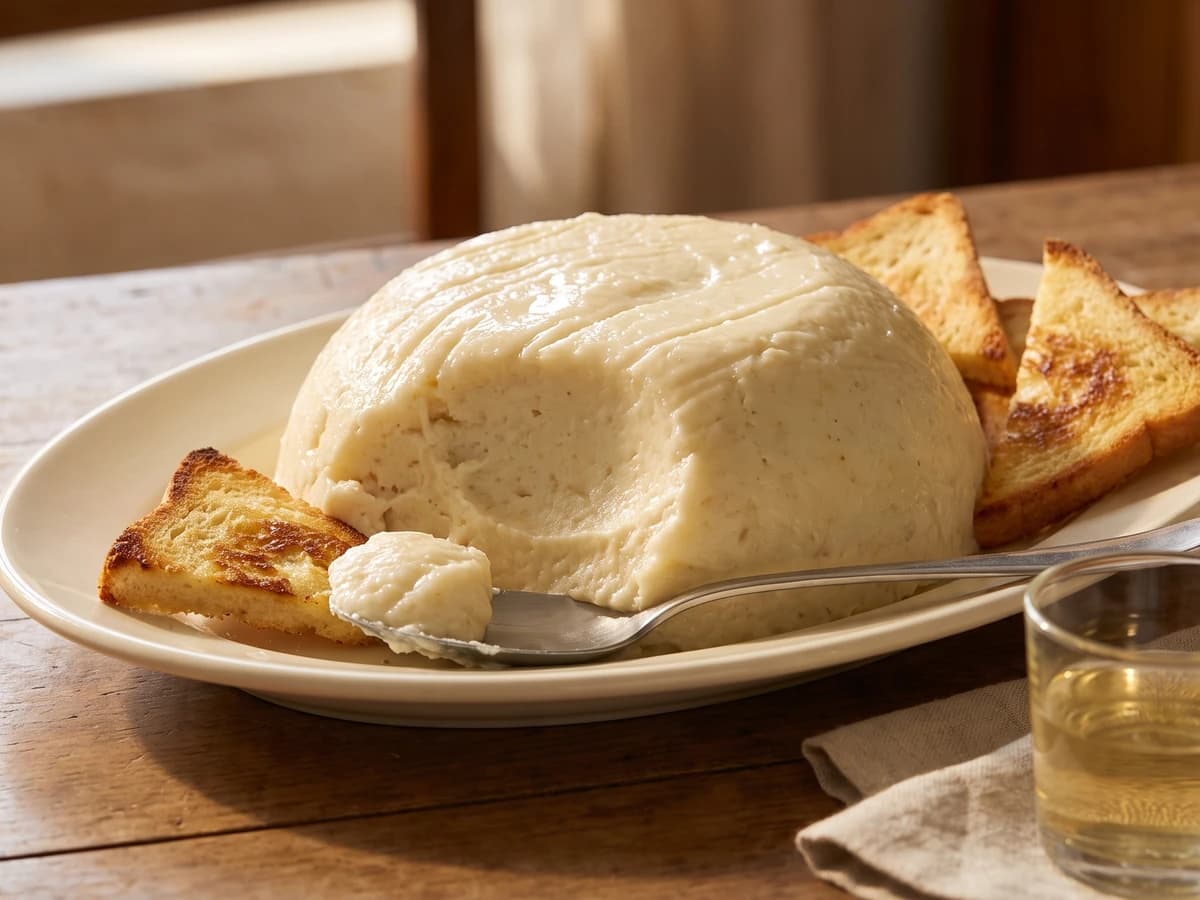
Brandade de Morue turns salt cod, warm olive oil, and milk into a pale, silky emulsion: keep everything warm and add the oil slowly, then crown the generous dome with butter-fried bread.
Chef Juliette
Salt cod worked warm with cream, one patient spoonful at a time, until the rough flakes become a glossy Nîmes paste, domed generously and ringed with butter-fried croutons for the table.

Chef Juliette
Wine-poached char packed in its earthenware crock beneath butter gold: a make-ahead first course that turns careful cooling, thorough boning, and one unbroken seal into quiet abundance.