
Chef Juliette
Smelt (Éperlans)
Tiny éperlans, lightly floured and fried until their tails stand crisp, arrive in a generous heap on a napkin with fried parsley and grooved lemon, a weeknight lesson in heat and restraint.
A cooking platform built around craft, culture, and the stories behind what we eat.

Created by Chef Juliette
Based on No. 1737, Foie Gras au Paprika, from Le Guide Culinaire (1907) by Auguste Escoffier
Whole foie gras scented with sweet paprika, Spanish onion, and bay, baked just until supple, sealed beneath its own fat and clear aspic, then served cold in generous slices.
Foie Gras au Paprika (whole foie gras baked with paprika and onion) teaches a severe little lesson: temperature is the dish. The liver must take the perfume of sweet paprika, Spanish onion, and bay while remaining supple enough to set into clean, pale slices. Let it firm completely in the oven and you've traded foie gras for a costly block of crumbs.
The original kitchen assumed a fine whole liver sized for service, an oval terrine waiting beside it, a cold larder, and gelée (clear meat aspic) always ready from a stockpot never off the fire. For one cook, the honest equivalents are one market-sized liver, a small ovenproof pan, a 4-cup terrine, and clear chicken stock set lightly with gelatin. The ready stockpot and cold room were brigade scaffolding. The thirty-minute bake, immediate transfer, onion removal, own-fat seal, and gelée finish are the dish, so they stay. One cook, one stove, one evening of work, then the cold does the rest.
Rightly made, the foie gras cuts into dense ivory-blush slices edged with paprika, protected by a veil of its own pale fat and clear amber gelée. Begin checking the center before the thirty minutes are up and trust the thermometer rather than the firmness of the liver. That is the step that matters most.
Foie gras au paprika belongs to the cosmopolitan French classical repertoire, but its paprika and recorded table custom place it in direct conversation with Vienna. The French service removes every trace of onion, transfers the liver to a clean terrine, seals it beneath its own fat, and fills the vessel with clear gelée. The Viennese service keeps the onion and cooking fat in the original vessel and brings the liver very cold with baked potatoes, a reminder that paprika here points toward Central Europe, not Provence.
Quantity
1 whole liver (1¼ to 1½ lb / 550 to 700 g)
chilled
Quantity
1¼ teaspoons (6.25 ml / 7 g)
Quantity
1 teaspoon (5 ml / 2.3 g)
not smoked or hot
Quantity
1 large (about 3 cups / 300 g)
thinly sliced
Quantity
1
Quantity
1¼ cups (300 ml / 300 g)
cold
Quantity
2 teaspoons (10 ml / 7 g)
| Ingredient | Quantity |
|---|---|
| whole fresh duck or goose foie graschilled | 1 whole liver (1¼ to 1½ lb / 550 to 700 g) |
| fine sea salt | 1¼ teaspoons (6.25 ml / 7 g) |
| sweet paprikanot smoked or hot | 1 teaspoon (5 ml / 2.3 g) |
| Spanish onionthinly sliced | 1 large (about 3 cups / 300 g) |
| bay leaf | 1 |
| clear, well-seasoned chicken stockcold | 1¼ cups (300 ml / 300 g) |
| powdered gelatin | 2 teaspoons (10 ml / 7 g) |
Pour ¼ cup (60 ml / 60 g) of the cold stock into a bowl, sprinkle the gelatin evenly over it, and leave it for 5 minutes to bloom. Bring the remaining stock just to a simmer, remove it from the heat, and stir in the bloomed gelatin until completely dissolved. Strain the gelée through a fine-mesh strainer and let it cool to room temperature. It must remain fluid but feel cool before it meets the fat seal.
Let the foie gras stand outside the refrigerator for about 20 minutes, only until it bends without cracking. Separate the lobes along their natural seam, trim away bruised or green-stained patches, and tease out the largest visible veins with the tip of a small knife. Keep the lobes as broad and intact as possible. Season every surface evenly with the salt and paprika, then reassemble the liver. If it softens enough to smear, return it to the refrigerator for 10 minutes before continuing.
Heat the oven to 325°F (165°C). Spread the sliced Spanish onion across the bottom of a snug ovenproof saucepan or small casserole, tuck in the bay leaf, and settle the seasoned liver on top. Cover and bake for about 30 minutes, beginning to check at 25 minutes, until the thickest part reaches 145°F (63°C). The surface should look relaxed and glistening, never browned or firm. If it reaches temperature early, take it out immediately; the clock serves the liver, not the other way around.
Warm the oval terrine with hot tap water, then dry it thoroughly. Lift the liver immediately from the pan with a wide spatula and place it snugly in the terrine. If a lobe fractures, fit the warm pieces back together without mashing them. Ça se rattrape: the cold and the fat will bind the cut slices. Strain the pan contents into a heatproof jug without pressing the onion, then discard every bit of onion and the bay leaf for the French service. Let the liquid stand for 2 minutes so the clear golden fat rises above the cooking juices. Spoon only that fat over the liver, tilting the terrine until it forms a complete thin veil. Use its own fat, not butter.
Refrigerate the terrine for about 20 minutes, just until the fat turns opaque and firm. Pour the cooled, still-fluid gelée slowly down the inside edge, letting it fill the spaces around the liver before covering the fat by about ¼ inch (6 mm). You may not need every drop. Chill uncovered until the gelée has set, about 1 hour, then cover the terrine tightly.
Refrigerate the covered terrine for at least 12 hours before serving. Bring it directly from the cold and cut generous slices with a thin knife dipped in hot water and wiped completely dry between cuts. Serve from the oval terrine so the clear gelée, pale fat cap, and paprika-edged liver remain visible. À table!
1 serving (about 125g)
Culinary guides, cultural storytelling, and the editorial depth that makes cooking meaningful.
Discover Culinary ExplorerChef Juliette
Tiny éperlans, lightly floured and fried until their tails stand crisp, arrive in a generous heap on a napkin with fried parsley and grooved lemon, a weeknight lesson in heat and restraint.

Chef Juliette
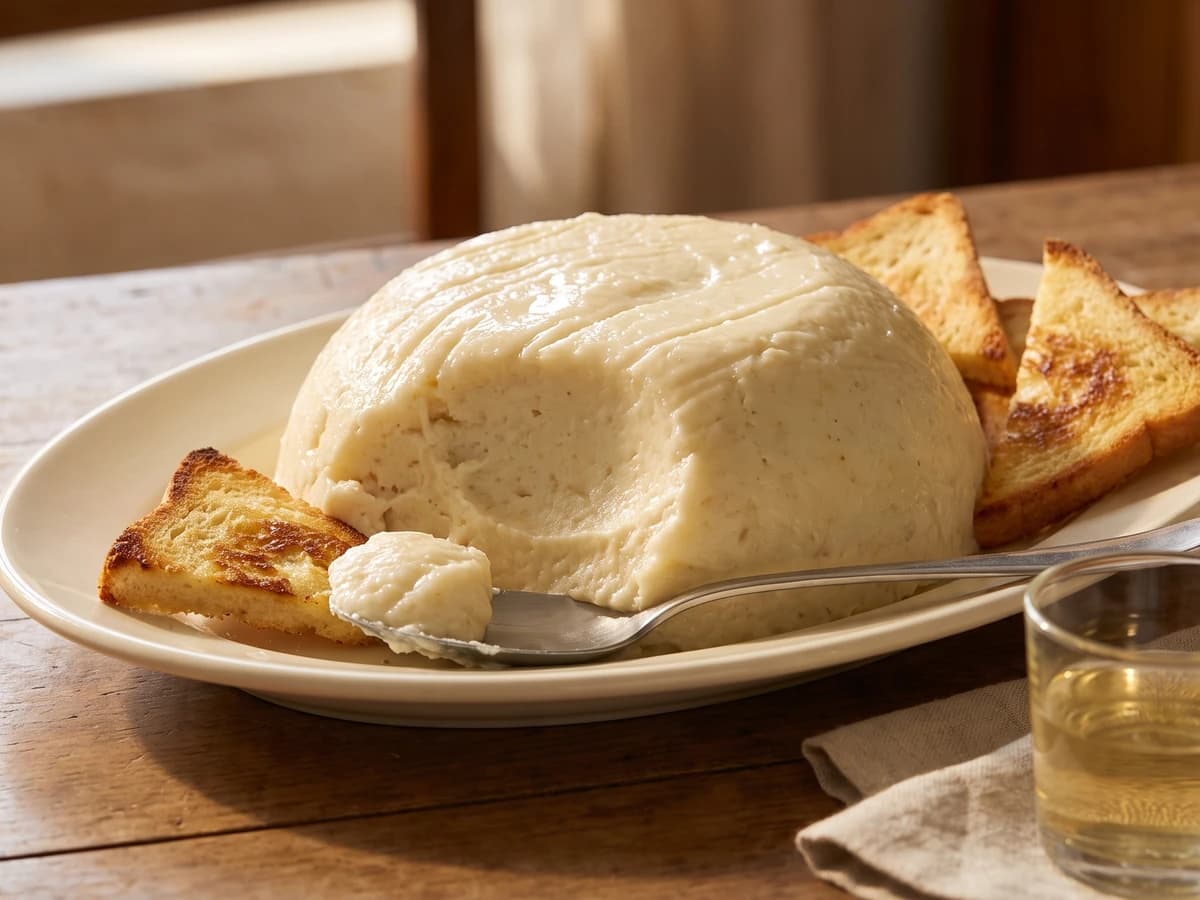
Brandade de Morue turns salt cod, warm olive oil, and milk into a pale, silky emulsion: keep everything warm and add the oil slowly, then crown the generous dome with butter-fried bread.
Chef Juliette
Salt cod worked warm with cream, one patient spoonful at a time, until the rough flakes become a glossy Nîmes paste, domed generously and ringed with butter-fried croutons for the table.

Chef Juliette
Wine-poached char packed in its earthenware crock beneath butter gold: a make-ahead first course that turns careful cooling, thorough boning, and one unbroken seal into quiet abundance.