
Chef Juliette
Ordinary or White Consommé
Beef shin, lean beef, and fowl begin in cold water and rise slowly toward a tremble. Skim before the boil, and you learn the quiet discipline that gives every clear French broth its backbone.
A cooking platform built around craft, culture, and the stories behind what we eat.
Created by Chef Juliette
Based on No. 173, Anchovies (Fillets of), from Le Guide Culinaire (1907) by Auguste Escoffier
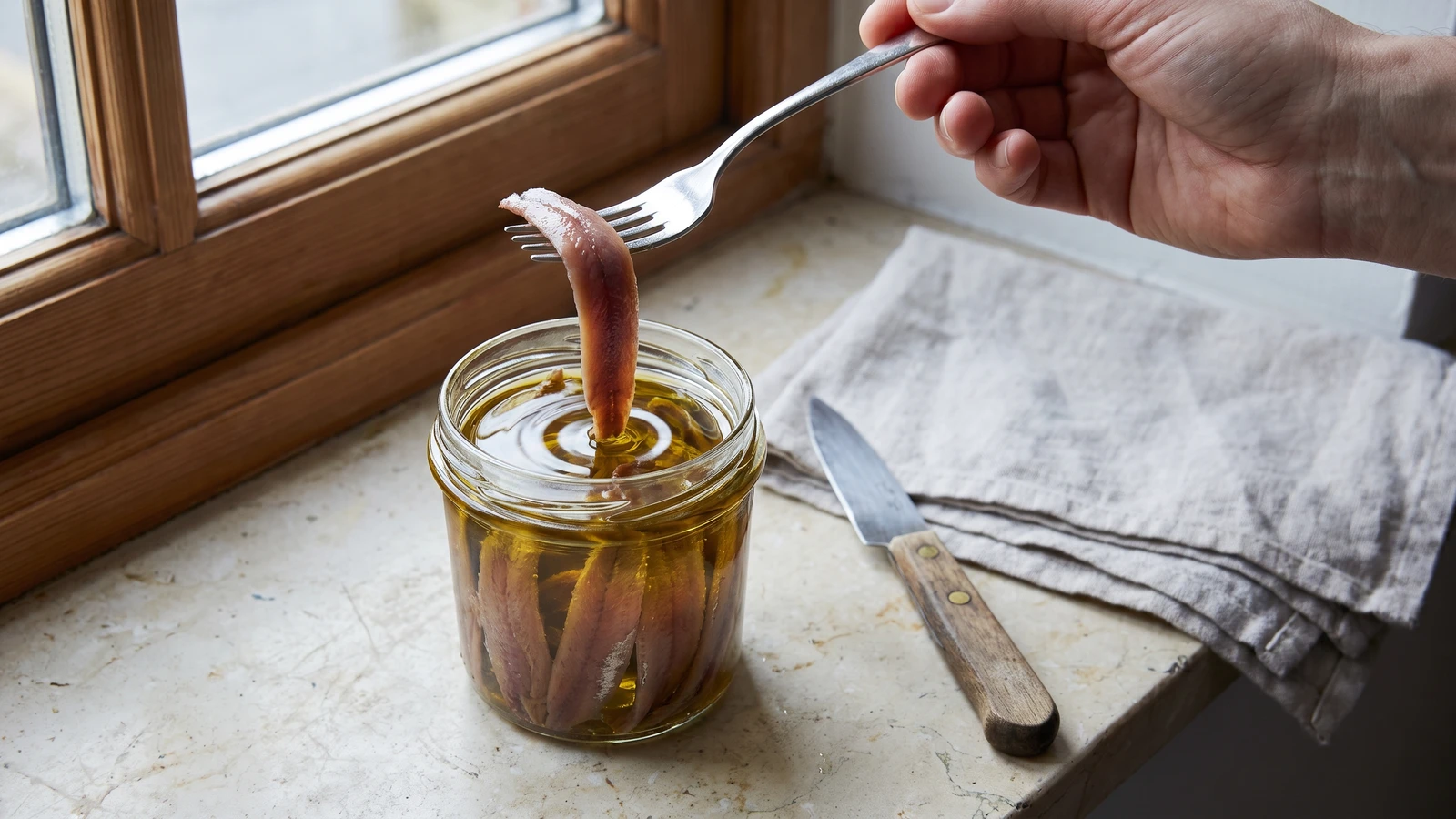
Filets d’anchois prove that pantry work is technique: remove every trace of scale-powder, dry the flesh completely, then keep the neat fillets under oil for hors d’œuvres and sauces.
Filets d’anchois à l’huile (anchovy fillets in oil) teach the quiet discipline of the garde-manger, the cold-pantry station: clean completely, dry completely, then protect completely. Before you touch a knife, know the one true thing: the chalky scale-powder must be washed and wiped away, or its metallic edge follows the anchovy into every canapé and sauce.
The original entry assumes a pantry hand cleaning a standing supply for service, with no quantity because the little dish was replenished as needed. At home, the repeated trays and daily topping-up are brigade scaffolding, so I have made the scale explicit: twelve whole salt-packed anchovies, one narrow jar, and only enough oil to cover. No special apparatus and no hot stove. What stays is the dish itself: the washing, the neat oblong trimming, the gentle pull from the bones, and the lengthwise division into three or four fine fillets.
I’ve changed the storage too, because oil is a cover, not a cure. The anchovies remain refrigerated and are used within two weeks. Drying is the step that decides the batch; if moisture remains, wipe again before packing. Ça se rattrape now, not after water has been sealed beneath the oil.
Salt-packed anchovies belong to France’s Mediterranean larder, with Collioure in Roussillon especially known for salting the catch, while Provençal ports carried the same fish into hors d’œuvres, tapenades, and sauces. The grand pantry turned this coastal household practice into uniform filets d’anchois, trimmed for quick garnishing and held ready beside the sauce bench. Oil does not cure the fish, as is often assumed; salt performs the cure, while the oil keeps the cleaned fillets supple and shields them from air.
Quantity
12 (about 140 g before cleaning)
Quantity
⅓ to ½ cup (80 to 120 ml / 73 to 110 g)
enough to cover the fillets completely
| Ingredient | Quantity |
|---|---|
| whole salt-packed anchovies | 12 (about 140 g before cleaning) |
| mild olive oil or neutral oilenough to cover the fillets completely | ⅓ to ½ cup (80 to 120 ml / 73 to 110 g) |
Wash a narrow 1-cup jar and its lid in hot soapy water, rinse them well, and dry them until not a bead of moisture remains. This preparation is kept in the refrigerator rather than heat-processed, so the vessel must begin impeccably clean and dry.
Rinse the anchovies one at a time under very cold water, rubbing each gently between your thumb and fingers to loosen the salt and white scale-powder. Do not leave them soaking; prolonged soaking washes away the seasoning that preserves and defines them. Lay each fish on a clean towel and wipe it firmly but gently. If a chalky bloom remains, rinse and wipe again. Ça se rattrape here; the oil will only trap what you leave behind.
Lay each anchovy flat. If the head or viscera remain, remove them, then trim away the belly fringe, fins, and tail tip to form a neat extended oblong. This is not decorative fuss: even edges give you long, useful fillets that lie flat on bread, roll cleanly, and disappear evenly into a sauce.
Open each anchovy along the belly seam like a little book. Grip the backbone at the head end and pull it gently toward the tail; the spine and most of the fine ribs should lift away together, leaving two fillets. Remove any stubborn bones with tweezers. If a fillet tears, don’t discard it. Ça se rattrape: reserve the broken pieces for sauces and keep the unbroken fillets for hors d’œuvres.
For culinary use, lay each fillet skin-side down and divide it lengthwise into three or four slender fillets with a sharp knife. Pull the blade in one clean stroke rather than sawing through the soft flesh. If you intend to make anchovy rings, leave the fillets whole and roll them only when serving.
Pack the fillets snugly into the narrow jar or a small lidded bowl and pour over enough oil to cover them by about ¼ inch (6 mm). Slide a clean knife around the edge and tap the vessel gently to release hidden air pockets. If any fillet rises above the surface, press it down and add more oil; exposed fish dries, darkens, and spoils first. Cover and refrigerate at once. Lift out portions with a clean fork, return the jar promptly to the cold, and use within two weeks. À table!
1 serving (about 15g)
Culinary guides, cultural storytelling, and the editorial depth that makes cooking meaningful.
Discover Culinary ExplorerChef Juliette
Beef shin, lean beef, and fowl begin in cold water and rise slowly toward a tremble. Skim before the boil, and you learn the quiet discipline that gives every clear French broth its backbone.

Chef Juliette
Break the veal bones small, then give them eight hours at a bare tremble. This pale, gelatinous fond becomes the quiet foundation beneath velouté, blanquette, and every sauce that must stay light.

Chef Juliette
Sauce Orientale concentrates lobster-rich American Sauce with curry, then folds in cream away from the fire: a glossy, gently spiced derivative made for lobster, crayfish, and firm fish.

Chef Juliette
An old lesson in sauce families: Sauce Allemande takes mushroom liquor, then butter, lemon, and parsley, becoming a glossy Poulette for sheep's trotters, leeks, cauliflower, and anything needing gentle richness with a bright edge.