
Chef Juliette
John Dory (St. Pierre)
John Dory has the delicacy of sole and the firmness of turbot. A light flouring, a quick butter sauté, and nut-brown beurre noisette show exactly why looks never mattered.
A cooking platform built around craft, culture, and the stories behind what we eat.
Created by Chef Juliette
Based on No. 1633, Poulet de Grains en Casserole, from Le Guide Culinaire (1907) by Auguste Escoffier
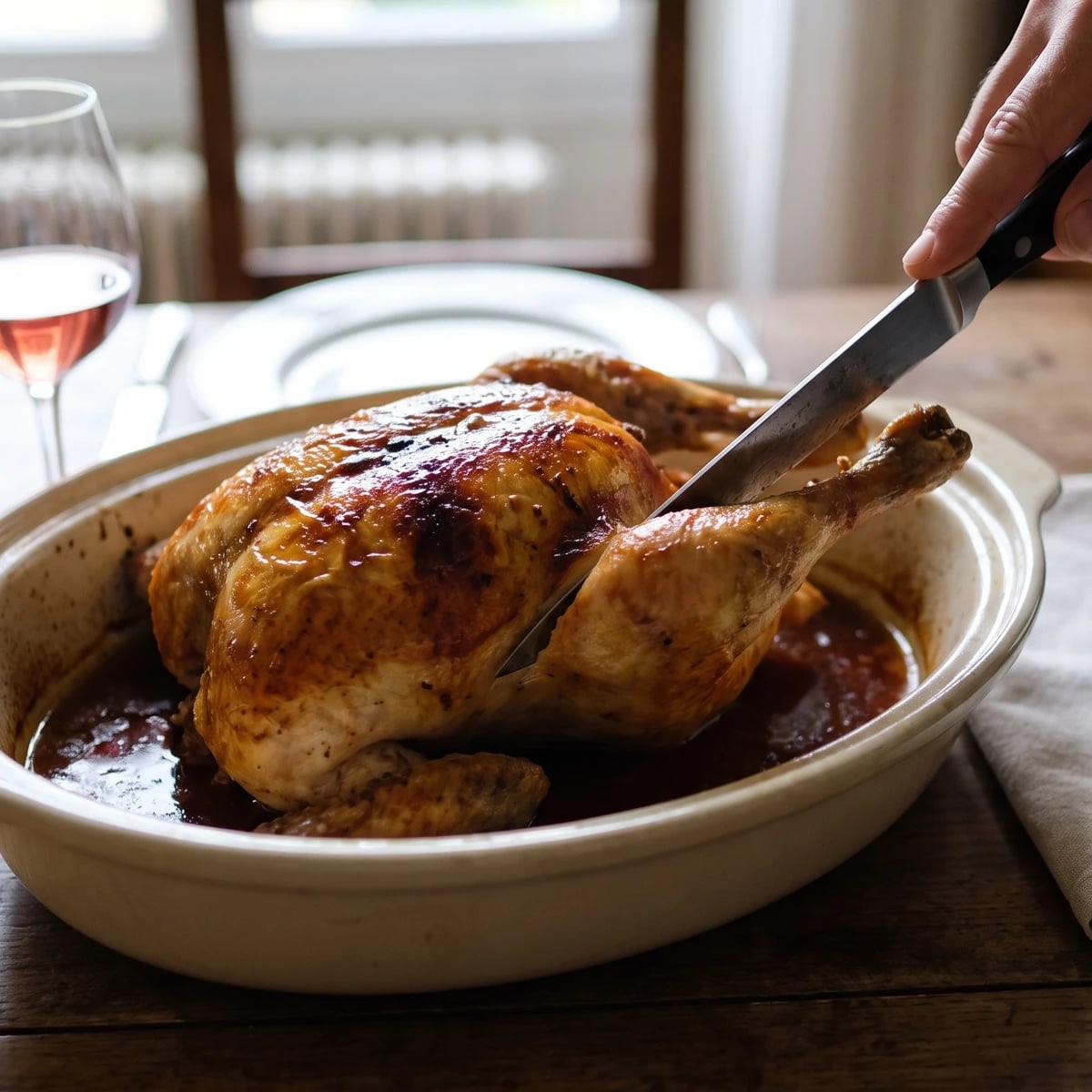
Poulet de grains en casserole teaches poêlage: a whole bird cooked in butter, basted to bronze, then degreased and touched with veal gravy. Nothing hides a dry chicken, so attention is the seasoning.
Poulet de Grains en Casserole (grain-fed chicken cooked in butter in a covered pot) teaches the cleanest lesson in poultry cookery: poêlage, gentle covered cooking in butter with frequent basting, is neither braising nor an ordinary roast. The bird cooks without wine, water, vegetables, or herbs between your hand and the chicken. The one true thing to know before touching the pan is this: keep the heat gentle and keep the butter moving over the bird, because nothing hides dry meat here.
The original assumed an earthenware casserole seasoned by long use, a saucier at hand, and veal gravy drawn from stock never off the fire. At home, a snug enameled cocotte, an instant-read thermometer, and one tablespoon of properly reduced veal gravy do the work honestly. The fuller Matignon, pork fat, and buttered paper belong to another form of poêlage; this en casserole entry deliberately strips them away. Leaving them out is fidelity, not convenience. One cook, one stove, one evening.
Done properly, the chicken reaches the table bare and confident, its skin deep butter-gold, its breast juicy, and only a few glossy spoonfuls of veal-darkened jus beneath it. No garnish arrives to distract or rescue. Baste often and stop cooking the moment the meat is ready; that attention is the step that decides the dish.
Poulet de grains en casserole belongs to the French cuisine bourgeoise table and the grand-kitchen canon rather than to one province, celebrating a tender grain-fed market bird by withholding garnish and forceful seasoning. En casserole grew from the fuller poêlage method, which surrounded large poultry with Matignon, pork fat, buttered paper, and richly perfumed stock; the casserole form reduced that construction to butter, earthenware, and a spoonful of veal gravy. It is often mistaken for a roast or braise, but the distinction is practical: the chicken cooks unmoistened, bathed repeatedly in butter, and meets its gravy only after the cooking fat has been cleared.
Quantity
1, 3½ to 4 pounds (1.6 to 1.8 kg), prepared according to Poëlings (No. 250)
giblets removed and skin dried thoroughly
Quantity
6 tablespoons (90 ml / 85 g)
Quantity
2 teaspoons (10 ml / 12 g)
Quantity
½ teaspoon (2.5 ml / 1 g)
Quantity
1 tablespoon (15 ml / 15 g)
preferably unsalted
| Ingredient | Quantity |
|---|---|
| whole grain-fed chickengiblets removed and skin dried thoroughly | 1, 3½ to 4 pounds (1.6 to 1.8 kg), prepared according to Poëlings (No. 250) |
| unsalted butter | 6 tablespoons (90 ml / 85 g) |
| fine sea salt | 2 teaspoons (10 ml / 12 g) |
| freshly ground black pepper | ½ teaspoon (2.5 ml / 1 g) |
| rich veal gravypreferably unsalted | 1 tablespoon (15 ml / 15 g) |
Heat the oven to 325°F (165°C) with a rack in the lower middle. Dry the chicken thoroughly inside and out, then season the cavity and skin with the salt and pepper. Tuck the wing tips underneath and tie the legs loosely so the bird cooks compactly without sealing the cavity shut. Melt 4 tablespoons (60 ml / 57 g) of the butter over gentle heat in a heavy lidded casserole just large enough to hold the chicken; keep the remaining butter ready beside the stove.
Set the chicken breast-side up in the melted butter and spoon the butter generously over every exposed surface. Cover the casserole and place it in the oven. This is the application of Poëlings (No. 250): cook the bird without wine, water, stock, vegetables, or herbs, opening the pot every 12 minutes to baste it with the butter and juices gathered below. Add the reserved butter a little at a time if the pot looks dry. If the butter becomes hazelnut brown, carry on; if its milk solids turn black or smell bitter, lower the oven by 25°F (15°C), lift out the bird briefly, wipe away only the burned solids, and continue with fresh butter. Ça se rattrape. Never add water, because that would turn the poêlage into a braise.
After 45 minutes, uncover the casserole, baste again, and rotate the pot. Continue cooking uncovered for 20 to 30 minutes, basting every 8 to 10 minutes, until the skin is evenly butter-gold and the thickest part of the breast registers 160 to 162°F (71 to 72°C), while the inner thigh reaches at least 170°F (77°C). The breast must rise to 165°F (74°C) during its rest. If the meat is ready but the skin remains pale, give the bird 45 to 90 seconds under a closely watched household broiler; that is the honest home equivalent of a salamander, used only for colour and never as extra cooking.
Lift the chicken onto a warm platter and cover it loosely for 15 minutes. Carefully pour or spoon every layer of free butter and poultry fat from the casserole, leaving the sticky amber fond and dark meat juices behind. This is degreasing, not wiping the pot clean. If some juices leave with the fat, let the mixture stand in a cup until it separates, then return the darker juices from beneath. The butter has completed its work, and now it goes. We don't apologize for butter, but neither do we serve a greasy jus.
Set the casserole over medium-low heat and add the veal gravy. Scrape the fond gently with a wooden spoon and let the gravy simmer for 1 to 2 minutes, just until it gathers the roasting deposits into a scant, glossy jus. Add any juices collected beneath the resting chicken. If the jus tightens into a sticky glaze, pull it from the heat and loosen it with another spoonful of resting juices; if fat beads reappear, skim them away. This is meant to be a concentrated spoonful, not a moat of sauce.
Return the chicken to the casserole and spoon the finished jus over its breast and legs. Hold it over the lowest heat for no more than a minute, without allowing the jus to boil, then carry the casserole directly to the table. Serve the bird bare, with no vegetable garnish, herb shower, or decorative fuss. Carve it at the table and give each portion a little of the concentrated jus. À table!
1 serving (about 230g)
Culinary guides, cultural storytelling, and the editorial depth that makes cooking meaningful.
Discover Culinary Explorer
Chef Juliette
John Dory has the delicacy of sole and the firmness of turbot. A light flouring, a quick butter sauté, and nut-brown beurre noisette show exactly why looks never mattered.

Chef Juliette
Fresh haddock proves its delicacy in the meunière pan: a fine flour crust, moist pearly flakes, and beurre noisette sharpened with lemon and parsley, ready from one skillet in half an hour.

Chef Juliette
Éperlans à l’Anglaise turns small fish into a lesson in disciplined coating: boned smelts under a close, crisp crumb, pan-fried in clarified butter and finished with bright, half-melted maître d’hôtel butter.

Chef Juliette
Tiny smelts, shallot, mushrooms, white wine, gratin sauce, and fine bread raspings meet a fierce oven, where the fish must turn tender in the same breath the buttered crust bronzes.