Culinary Explorer
A cooking platform built around craft, culture, and the stories behind what we eat.
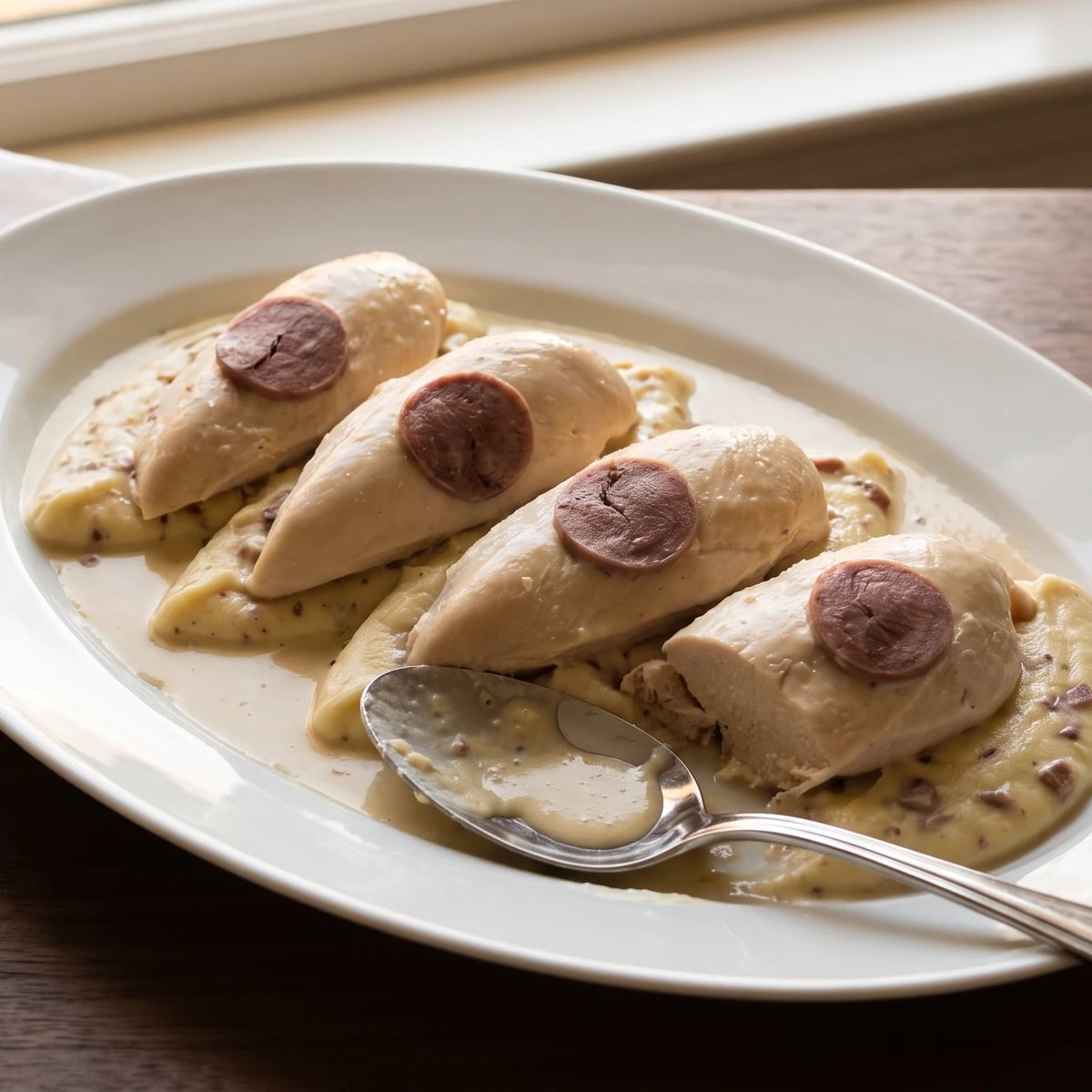
Suprêmes de Volaille Écarlate
Created by Chef Juliette
Scarlet tongue roundels glow through a finely strained sauce suprême, while each tender breast rests on its own tongue-flecked mousseline quenelle: disciplined contrast made possible for one attentive home cook.
Suprêmes de Volaille Écarlate (scarlet-garnished chicken breasts) teaches a severe and useful lesson: delicacy needs control, not timidity. Cured tongue must remain clean scarlet against tender white poultry, pale mousselines, and a clear sauce suprême. Clear here means finely strained and luminous, not transparent. Before you touch a pan, know the one true thing: the sauce is a veil, never a blanket.
The original entry assumed a saucier at the elbow, chicken stock never off the fire, trained hands understanding the instruction “incise as above,” and a salamander waiting above the range, though this dish must never go beneath it. At home, a food processor replaces repeated pounding, one fine sieve supplies the polish, a low covered oven gives the dry poach, and an instant-read thermometer guards the chicken. The brigade choreography is scaffolding and can go. The cold mousseline, scarlet tongue, colorless cooking, and carefully strained sauce are the dish, so they stay. One cook, one stove, one evening.
The mousseline may look more formidable than it is. Keep everything cold, add the cream gradually, and poach a teaspoon to test before shaping the four flat quenelles. The step that decides the finished plate comes last: loosen the sauce until it coats in a thin gloss through which every tongue roundel remains plainly visible.
Ingredients
boneless, skinless chicken breast suprêmes
Quantity
4 (about 1½ lb / 680 g total)
evenly sized
boneless, skinless chicken breast for the mousseline
Quantity
1½ cups diced (350 ml / 225 g)
very cold
cooked cured red beef tongue
Quantity
1 cup (240 ml / 170 g)
cut in ⅛-inch slices with trimmings reserved
| Ingredient | Quantity |
|---|---|
| boneless, skinless chicken breast suprêmesevenly sized | 4 (about 1½ lb / 680 g total) |
| boneless, skinless chicken breast for the mousselinevery cold | 1½ cups diced (350 ml / 225 g) |
| cooked cured red beef tonguecut in ⅛-inch slices with trimmings reserved | 1 cup (240 ml / 170 g) |
Where cooking meets culture.
Culinary guides, cultural storytelling, and the editorial depth that makes cooking meaningful.
Discover Culinary Explorer