Culinary Explorer
A cooking platform built around craft, culture, and the stories behind what we eat.
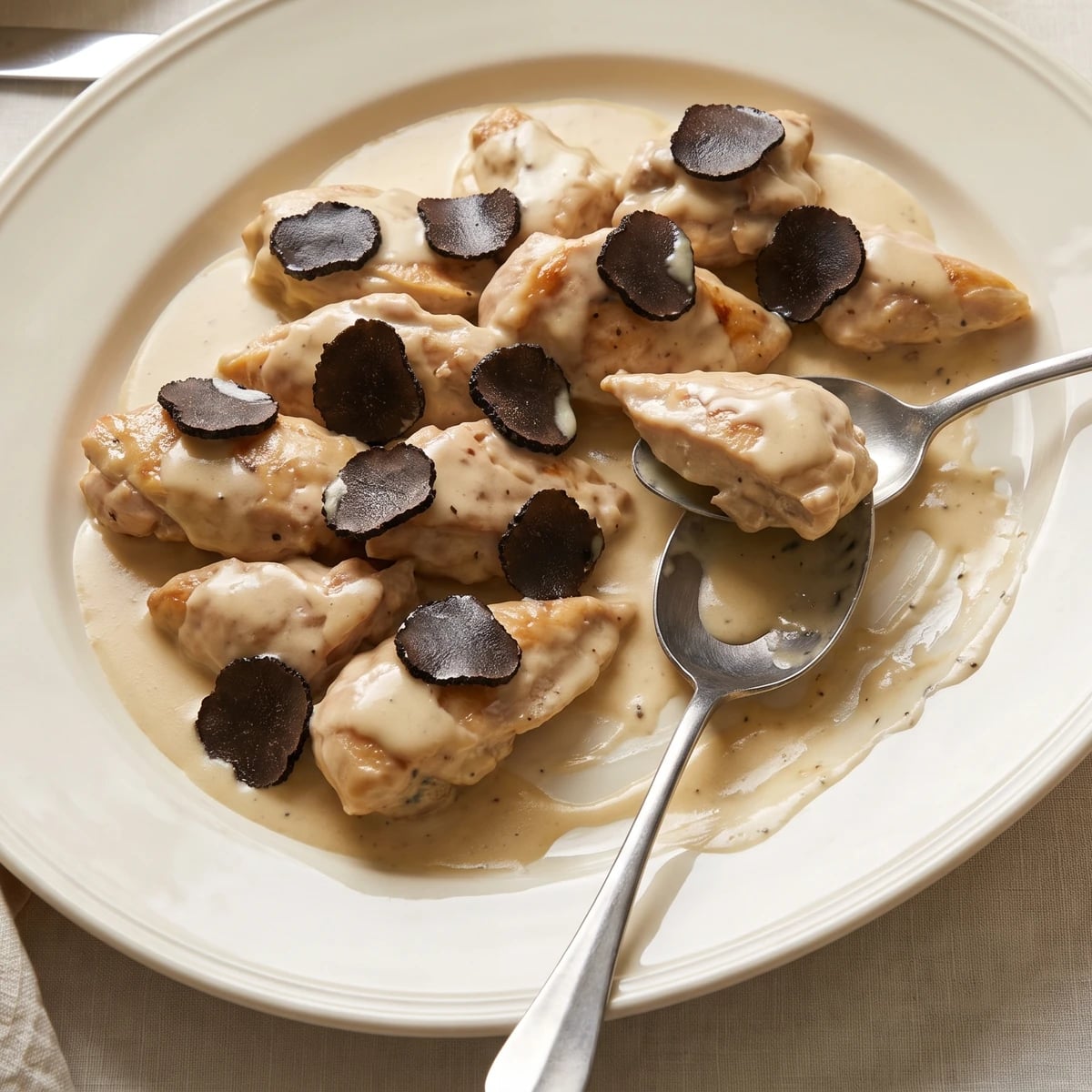
Poulet Sauté Archiduc
Created by Chef Juliette
A lesson in restraint: chicken gently stiffened in butter without browning, then cloaked in an ivory onion, brandy, cream, and velouté sauce sharpened with lemon, Madeira, and black truffle.
Poulet Sauté Archiduc (pale-sautéed chicken with brandy, cream, Madeira, and truffle) teaches restraint over reflex. The one true thing is this: colour is the enemy. You are not building a brown fond. You are using faire raidir, stiffening the chicken gently in butter until its surface firms and turns opaque, while the pan stays pale enough to protect an ivory sauce.
The entry was written for a kitchen with a saucier on staff, chicken velouté and stock never far from the fire, a tammy for rubbing sauces smooth, and a hot cupboard to hold the bird. At home, you need prepared velouté, a fine-mesh strainer, and a very low oven. No salamander belongs here, because this is neither a browned nor a gratinéed finish. The fowl and sauce are scaled to four servings while the book's proportions remain intact: equal measures of cream and velouté, the full butter finish, lemon, Madeira, and ten slices of truffle. One cook, one stove, one evening.
The brigade's separate sauce station and long hot holding are scaffolding, so they go. Cooking the onion in butter without colour, reducing the brandy, passing the sauce, and mounting it with butter off the heat are the dish, so they stay. Watch the pan during the first ten minutes. The sauce can be rescued, but colour on the chicken cannot. Keep the pan pale. Everything depends on it.
Ingredients
whole chicken
Quantity
1 chicken (about 3½ lb / 1.6 kg)
cut into 8 serving pieces
fine salt
Quantity
1½ teaspoons (7.5 ml / 9 g)
divided
ground white pepper
Quantity
¼ teaspoon (1.25 ml / 0.5 g)
divided
| Ingredient | Quantity |
|---|---|
| whole chickencut into 8 serving pieces | 1 chicken (about 3½ lb / 1.6 kg) |
| fine saltdivided | 1½ teaspoons (7.5 ml / 9 g) |
| ground white pepperdivided | ¼ teaspoon (1.25 ml / 0.5 g) |
Where cooking meets culture.
Culinary guides, cultural storytelling, and the editorial depth that makes cooking meaningful.
Discover Culinary Explorer