
Chef Juliette
Smelt (Éperlans)
Tiny éperlans, lightly floured and fried until their tails stand crisp, arrive in a generous heap on a napkin with fried parsley and grooved lemon, a weeknight lesson in heat and restraint.
A cooking platform built around craft, culture, and the stories behind what we eat.

Created by Chef Juliette
Based on No. 1400, Zampino Froid, from Le Guide Culinaire (1907) by Auguste Escoffier
Zampino froid proves that charcuterie service is a knife skill: set the Modenese stuffed trotter firm in the cold, then cut it nearly translucent for a spare, generous hors-d'œuvre.
Zampino froid (cold sliced Modenese stuffed trotter) teaches the discipline of charcuterie service: temperature governs the knife. The one true thing is to chill the meat until its fat and natural gelatin are firm all the way through; cut it warm and the thinnest possible slice, which is the point of the entry, collapses into a ragged mouthful.
The source assumes a cooked zampino waiting in the cold larder and a practiced hand ready to carve it for a full hors-d'œuvre display. At home, use a 10½-ounce piece of fully cooked, ready-to-eat zampino and a long sharp knife. The brigade-sized display is scaffolding and can go; the cold, almost translucent slicing is the dish and must stay. No saucier, stockpot, or salamander has a role here. One cook, one stove, one evening, and the stove stays quiet.
When it is right, each slice shows a compact mosaic of rose pork and ivory fat within the trotter skin, supple rather than greasy, rich enough to stand alone. Don't decorate what the charcutier has already finished. Chill it thoroughly, dry the surface, and make the first cut slowly; that is the step that decides the plate.
Zampino belongs to Modena in Emilia-Romagna, where the boned skin of a pig's foreleg holds a seasoned pork filling, the preparation more commonly sold as zampone di Modena. At the Modenese table it is commonly served hot with lentils or beans, while French cold-pantry practice took the cooked sausage into the hors-d'œuvre repertoire and valued the thinnest possible slice. The French word froid describes the service, not the origin: the charcuterie remains Modenese.
Quantity
1 unsliced piece (about 10½ oz / 300 g)
thoroughly chilled
| Ingredient | Quantity |
|---|---|
| fully cooked, ready-to-eat zampino (zampone di Modena)thoroughly chilled | 1 unsliced piece (about 10½ oz / 300 g) |
Keep the wrapped zampino on a level refrigerator shelf for at least 4 hours, preferably overnight, until its center is thoroughly cold and firm. Do not freeze it; frozen fat crumbles instead of yielding a clean slice. Place the serving platter in the refrigerator for the final 20 minutes so the first slices remain firm while you finish.
Remove the outer packaging and any casing the producer marks as inedible, leaving the natural trotter skin intact. Blot the zampino thoroughly with a clean towel. A damp or greasy exterior slides beneath the knife, and control matters more here than speed.
Set the zampino securely on the cutting board and cut it crosswise into slices about 1 to 2 mm thick, using the full length of a sharp blade in smooth drawing strokes. Do not chop downward, which compresses the filling and tears the skin. If the pork smears or the skin drags, stop. Ça se rattrape: wrap the unsliced portion, return it to the refrigerator for 20 minutes, wipe and sharpen the blade, then begin again.
Arrange the slices on the chilled platter in one loose, overlapping fan, covering no more than one-third of each slice so guests can lift them cleanly. If the zampino is joining other meats, give it a distinct row rather than burying its delicate slices beneath heavier charcuterie. Cover without pressing film against the pork and refrigerate for up to 2 hours.
Bring the platter directly from the refrigerator and uncover it about 5 minutes before serving, enough time for the aroma to open without softening the fat. Serve the zampino alone, as a proper hors-d'œuvre, or among other thinly sliced meats. It needs no sauce, dressing, or decorative herbs; the book asks for the slice, and the slice is sufficient. À table!
1 serving (about 75g)
Culinary guides, cultural storytelling, and the editorial depth that makes cooking meaningful.
Discover Culinary ExplorerChef Juliette
Tiny éperlans, lightly floured and fried until their tails stand crisp, arrive in a generous heap on a napkin with fried parsley and grooved lemon, a weeknight lesson in heat and restraint.

Chef Juliette
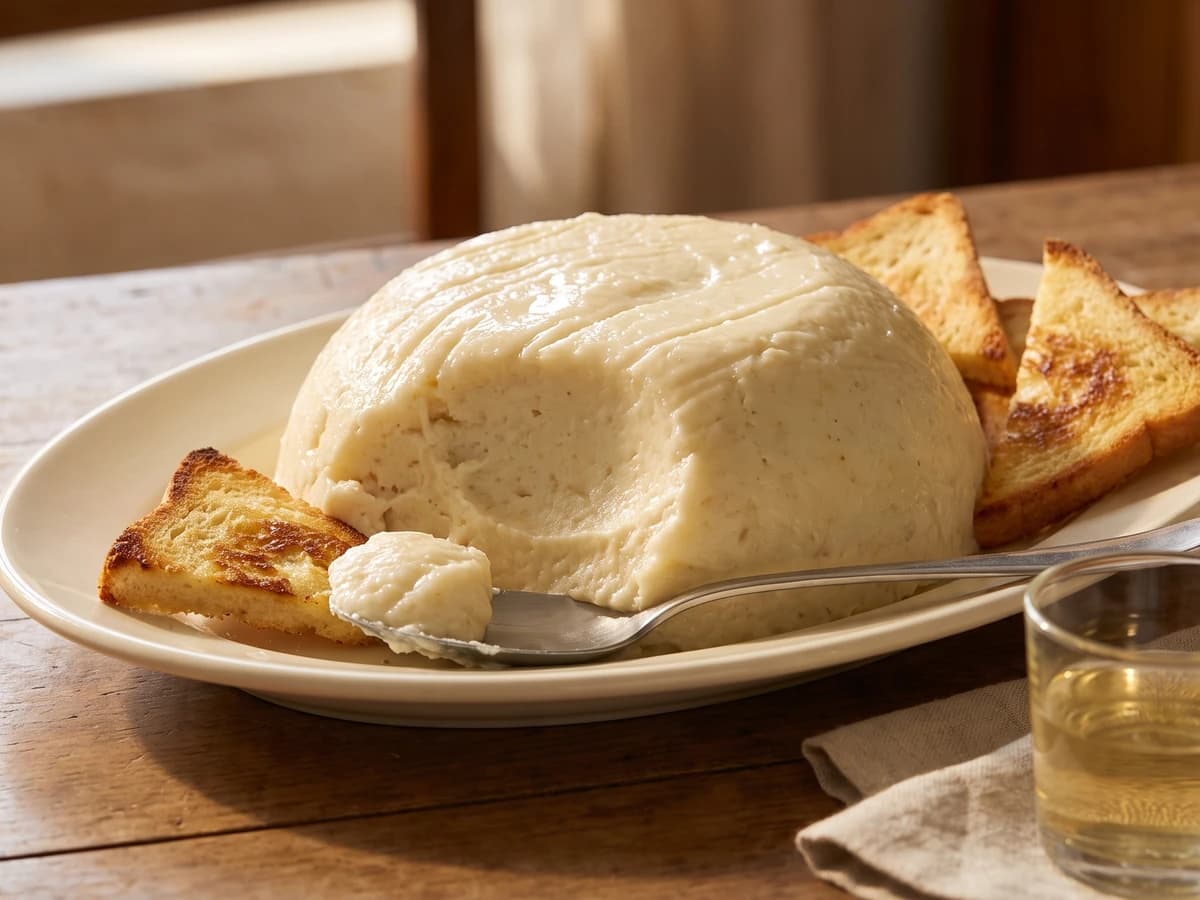
Brandade de Morue turns salt cod, warm olive oil, and milk into a pale, silky emulsion: keep everything warm and add the oil slowly, then crown the generous dome with butter-fried bread.
Chef Juliette
Salt cod worked warm with cream, one patient spoonful at a time, until the rough flakes become a glossy Nîmes paste, domed generously and ringed with butter-fried croutons for the table.

Chef Juliette
Wine-poached char packed in its earthenware crock beneath butter gold: a make-ahead first course that turns careful cooling, thorough boning, and one unbroken seal into quiet abundance.