Culinary Explorer
A cooking platform built around craft, culture, and the stories behind what we eat.
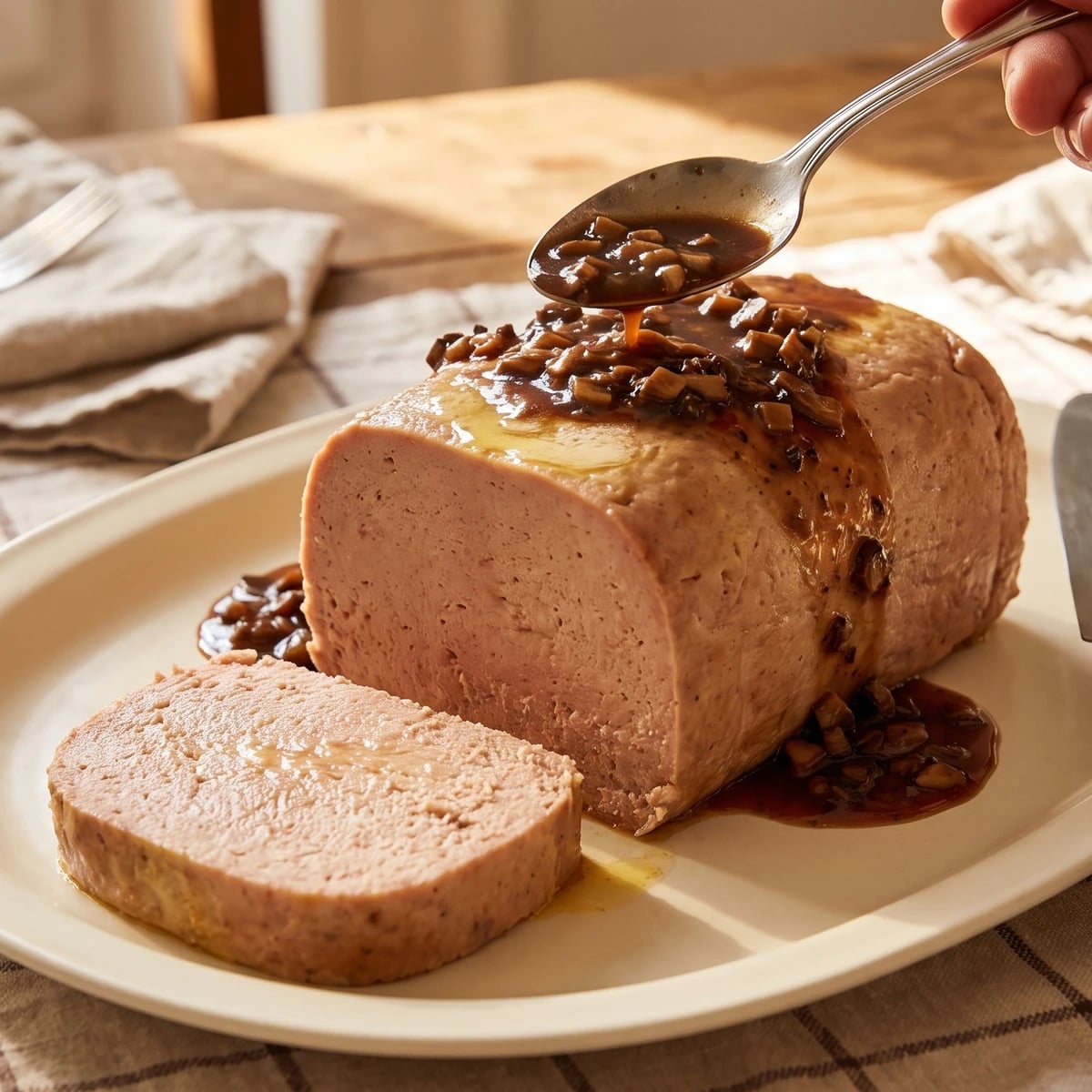
Pain de Foie de Veau
Created by Chef Juliette
Pain de Foie de Veau, enriched with cold panada, egg, and cream, then gently poached and turned out under Duxelles: the forcemeat that teaches temperature, patience, and the value of a fine sieve.
Pain de Foie de Veau (calf's-liver loaf) teaches the central rule of a fine forcemeat: temperature decides texture. Keep the liver, panada, eggs, and cream cold and they bind into a smooth emulsion that poaches as tender as a warm mousse; let the mixture warm and it turns grainy, greasy, and heavy. This is not meatloaf in a French hat. It is liver made delicate by discipline.
The old entry assumes a mortar and strong arms for pounding, an ice station, a quart Charlotte mould, and a saucier ready with Duxelles, Italienne, Bordelaise, or brown caper sauce from a stock never off the fire. At home, a food processor does the pounding, a fine sieve keeps the finish, a bowl of ice holds the emulsion, and a one-quart metal mould set in a roasting pan becomes the bain-marie. The sauce station is brigade scaffolding, so prepare one named sauce separately; the sieve, the cold emulsion, and the gentle poach are the dish and must stay. A salamander has no work here because the loaf is poached, never browned.
The source already fills one quart mould, exactly four generous main-dish portions, so its liver, panada, egg, and cream ratios stay intact. Only the labor and equipment change. One cook, one stove, one evening. Add the cream by degrees over ice, and don't hurry it: keeping the forcemeat truly cold at that moment is the step that decides the loaf.
Ingredients
all-purpose flour for the frangipane panada
Quantity
¼ cup (60 ml / 30 g)
whole milk for the frangipane panada
Quantity
¼ cup plus 1 tablespoon (75 ml / 77 g)
large egg for the frangipane panada
Quantity
1
| Ingredient | Quantity |
|---|---|
| all-purpose flour for the frangipane panada | ¼ cup (60 ml / 30 g) |
| whole milk for the frangipane panada | ¼ cup plus 1 tablespoon (75 ml / 77 g) |
| large egg for the frangipane panada | 1 |
Where cooking meets culture.
Culinary guides, cultural storytelling, and the editorial depth that makes cooking meaningful.
Discover Culinary Explorer