Culinary Explorer
A cooking platform built around craft, culture, and the stories behind what we eat.
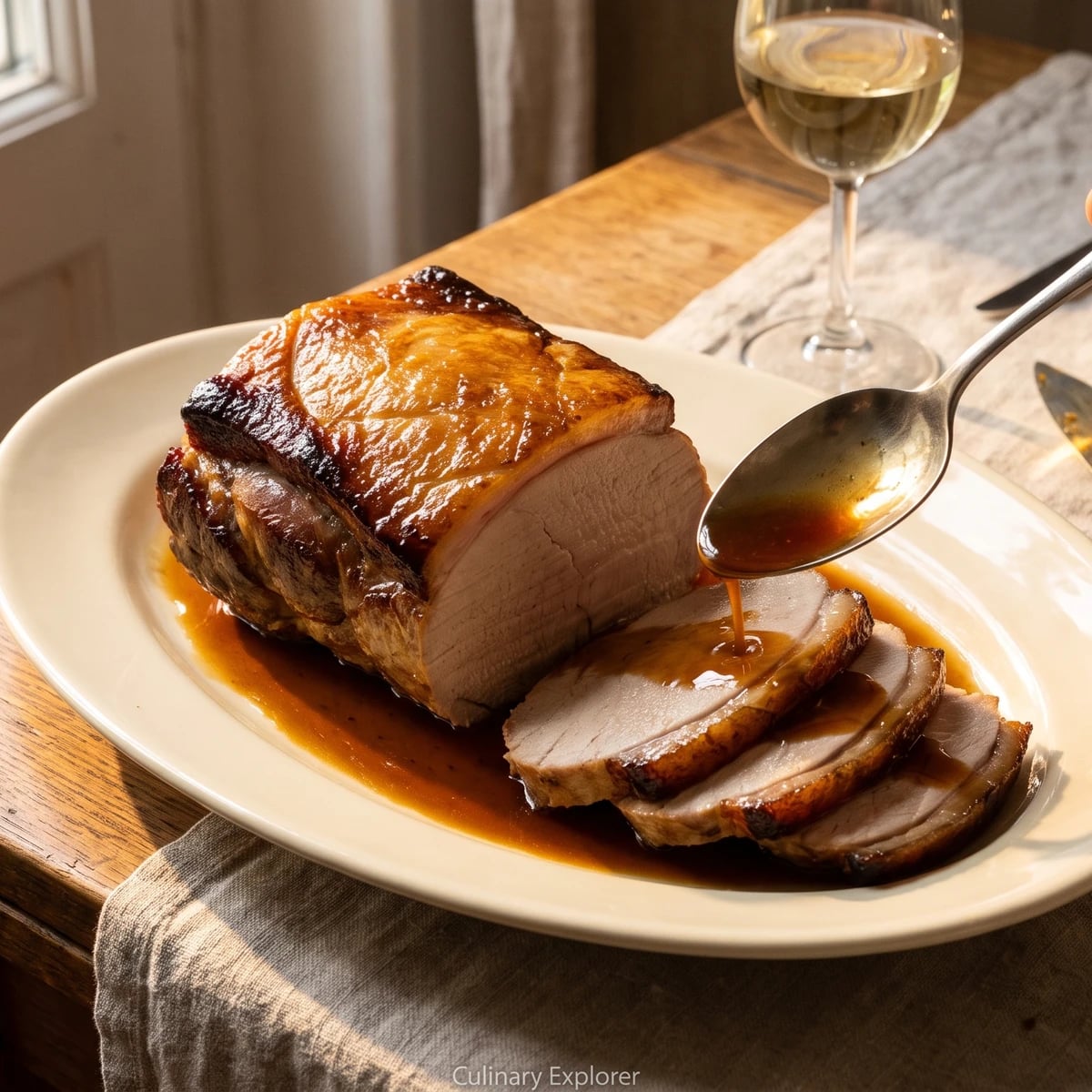
Chump of Veal or Quasi
Created by Chef Juliette
The quasi teaches the quiet discipline of a white-meat braise: gentle browning, patient basting, and a final reduction that turns humble stock and pan fond into a butter-glossed jus.
Quasi de veau braisé (braised chump of veal) teaches the one true thing about a large veal joint: basting is not decoration. The quasi is lean enough to dry at its exposed surface and rich enough in connective tissue to reward a slow braise, so the cooking liquor must barely tremble below while you repeatedly carry its butter and juices over the meat. That rhythm is the dish.
The source entry assumed a whole pelvis-and-haunch joint for a large table, a stockpot never off the fire, a saucier to reduce the gravy, and a salamander to set the final glaze. Here the whole joint becomes a tied 3¼-pound boneless section, good unsalted stock gains body from gelatin only when it needs it, and a close-fitting cocotte and home broiler do the remaining work. Larding, formal carving service, and a separate garnish crew are brigade scaffolding and can go. The retained fat cap, aromatic fond, shallow braise, constant basting, strained reduction, and glossy glaze must stay. One cook, one stove, one evening.
Done properly, the quasi arrives butter-gold and burnished, still neat enough to carve, with an amber jus that tastes more deeply of veal than the modest ingredient list suggests. Keep the heat gentle and the liquor alive beneath the joint. The step that decides everything is the basting: return to the pot every twenty minutes and wet every exposed surface.
Ingredients
boneless veal quasi or chump-end rump
Quantity
1 roast, 3¼ pounds (1.5 kg)
tied into an even roast with the fat cap retained
fine sea salt
Quantity
2½ teaspoons (12.5 ml / 15 g)
divided
finely ground white pepper
Quantity
¾ teaspoon (3.75 ml / 1.5 g)
| Ingredient | Quantity |
|---|---|
| boneless veal quasi or chump-end rumptied into an even roast with the fat cap retained | 1 roast, 3¼ pounds (1.5 kg) |
| fine sea saltdivided | 2½ teaspoons (12.5 ml / 15 g) |
| finely ground white pepper | ¾ teaspoon (3.75 ml / 1.5 g) |
Where cooking meets culture.
Culinary guides, cultural storytelling, and the editorial depth that makes cooking meaningful.
Discover Culinary Explorer