Culinary Explorer
A cooking platform built around craft, culture, and the stories behind what we eat.
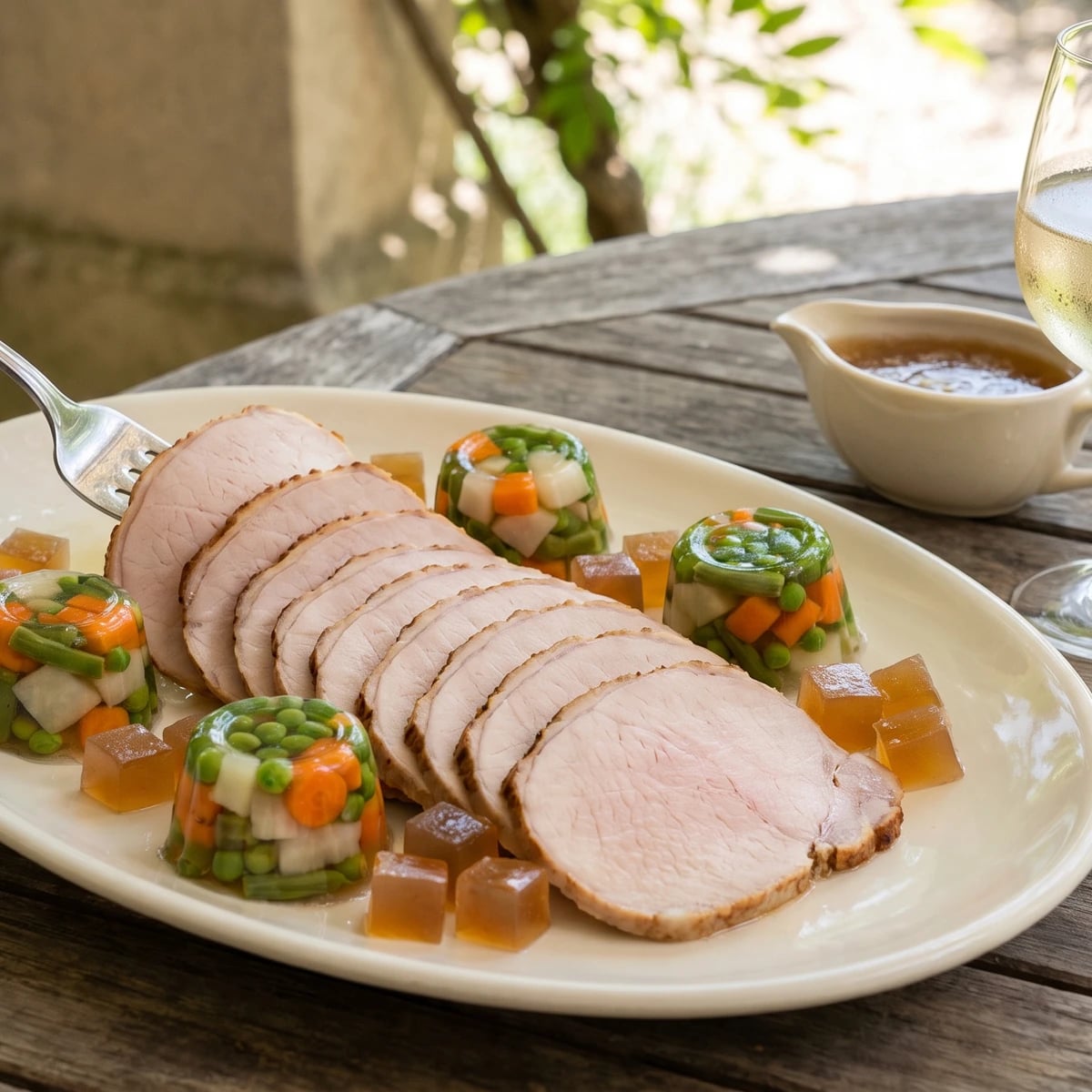
Selle de Veau Froide
Created by Chef Juliette
Selle de Veau Froide turns one careful braise into an entire cold supper: tender veal, bright vegetable macédoine, precise jelly dice, and the reduced, degreased cooking liquor served as its own sauce.
Selle de Veau Froide (cold braised saddle of veal) teaches the discipline of cold cookery: flavor must be built hot with enough depth to survive the chill. The one true thing to know before touching the pan is that the braising liquor is not left behind. It becomes the sauce, so careless browning, weak reduction, and a film of grease will all announce themselves once cold.
The original preparation assumed a whole saddle large enough for a relevé, a stockpot never off the fire, a saucier to tend the liquor, and larder hands to mold the garnish. For four, I use a boned, rolled saddle or center-cut veal loin in a snug cocotte, then add a precisely weighed little measure of gelatin because young veal and modern stock do not always set reliably. The imposing whole joint and separate clarified aspic were brigade scaffolding, so they can go. The gentle braise, the Macédoine (a mixture of small-cut vegetables), the regular jelly dice, and the veal's own unclarified, thoroughly degreased liquor are the dish and must stay. One cook, one stove, one evening of work, then the cold does its patient share.
On the platter, the veal should be pale, moist, and cleanly sliced, with bright vegetable molds and amber jelly catching the light around it. Reduce the liquor until it tastes complete before adding gelatin. Gelatin can make weak stock stand upright, but it cannot make it taste of veal. That reduction is the step that decides the dish.
Ingredients
boned and rolled veal saddle or center-cut veal loin roast
Quantity
1 roast (2¼ lb / 1 kg)
fine sea salt
Quantity
2 teaspoons (10 ml / 12 g)
divided
freshly ground white pepper
Quantity
1 teaspoon (5 ml / 2 g)
| Ingredient | Quantity |
|---|---|
| boned and rolled veal saddle or center-cut veal loin roast | 1 roast (2¼ lb / 1 kg) |
| fine sea saltdivided | 2 teaspoons (10 ml / 12 g) |
| freshly ground white pepper | 1 teaspoon (5 ml / 2 g) |
Where cooking meets culture.
Culinary guides, cultural storytelling, and the editorial depth that makes cooking meaningful.
Discover Culinary Explorer