
Chef Juliette
Smelt (Éperlans)
Tiny éperlans, lightly floured and fried until their tails stand crisp, arrive in a generous heap on a napkin with fried parsley and grooved lemon, a weeknight lesson in heat and restraint.
A cooking platform built around craft, culture, and the stories behind what we eat.
Created by Chef Juliette
Based on No. 1168, Pressed Beef, from Le Guide Culinaire (1907) by Auguste Escoffier
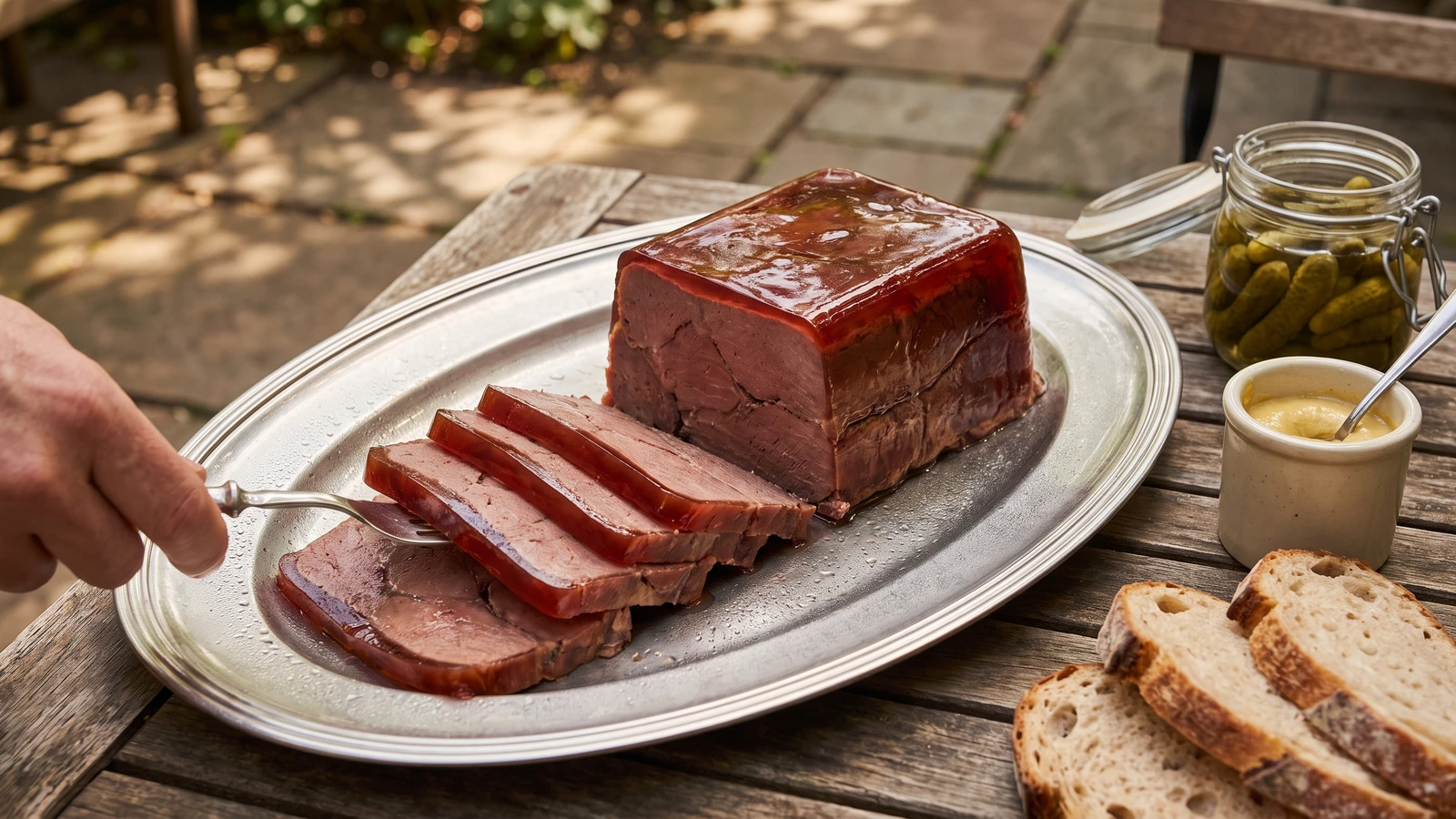
Bœuf pressé sets salt-cured breast into clean, generous slices under honest pressure, then seals it beneath a clear red-brown gelée, proving that a loaf tin and pantry weights can do a cold larder's work.
Bœuf pressé (pressed beef) teaches a cold-kitchen truth: pressure applied while the meat is still warm turns yielding salt beef into a clean buffet slice. The one true thing is this: the pressing is the dish. Wait until the beef is cold, or set too timid a weight on it, and the layers will part beneath the knife.
The classical entry begins with the salt beef already cooked, then assumes a square mould, a fitted board, a strong press, and a saucier able to hand over clarified gelatine from a stockpot never off the fire. At home, the breast end of a salt-cured brisket goes into one pot, a loaf tin becomes the mould, pantry cans provide the pressure, and measured powdered gelatine firms the beef's own clarified cooking liquor into a gelée (firm aspic glaze). The dedicated press and ready-made gelatine are brigade scaffolding and can go. Gentle cooking, warm stacking, full pressure, cold setting, square trimming, and the red-brown glaze must stay. One cook, one stove, one evening of work, then the refrigerator finishes the set.
The finished block should be compact and rosy-brown, with visible seams of meat beneath a transparent mahogany gloss. Fit your pressing board and choose your weights before the beef touches the water. Warm meat waits for no rummaging, and that preparation decides whether the first slice stands proudly or falls apart.
Pressed beef belongs to the English cold buffet and picnic table, not to any French region; the classical French repertory adopted it as a charcuterie preparation and gave its finish the discipline of the garde-manger, the cold pantry. Its thrift is the point: salt-cured breast, a hardworking and comparatively modest cut, is simmered soft, consolidated under pressure, then protected and polished with firm gelée. The carmine-and-caramel glaze is not a Lyonnais or Burgundian signature, but the formal red-brown finish through which this English cut entered the wider canon.
Quantity
1 piece, about 3 lb (1.35 kg)
Quantity
about 3 qt (2.8 L / 2.8 kg), plus more if needed
Quantity
1½ cups (360 ml / 360 g)
chilled and thoroughly defatted, to yield 1 cup after clarification
Quantity
1
Quantity
¼ cup (60 ml / 60 g)
Quantity
1 tablespoon plus 2 teaspoons (25 ml / 15 g)
Quantity
1 drop
Quantity
3 to 4 drops
| Ingredient | Quantity |
|---|---|
| raw salt-cured beef breast or brisket flat | 1 piece, about 3 lb (1.35 kg) |
| cold water | about 3 qt (2.8 L / 2.8 kg), plus more if needed |
| reserved cooking liquorchilled and thoroughly defatted, to yield 1 cup after clarification | 1½ cups (360 ml / 360 g) |
| large egg white | 1 |
| cold water for blooming | ¼ cup (60 ml / 60 g) |
| unflavoured powdered gelatine | 1 tablespoon plus 2 teaspoons (25 ml / 15 g) |
| food-grade liquid carmine colouring | 1 drop |
| food-grade liquid caramel colouring | 3 to 4 drops |
Rinse the beef thoroughly under cold water, then set it in a snug 5 to 6 quart pot and add enough cold water to cover it by about 2 inches. Bring the water up slowly, skim away the grey froth, and lower the heat until the surface barely trembles. After 20 minutes, taste a teaspoon of the liquor. It should be distinctly salted but not punishing; if it tastes fiercely briny, drain the pot, cover the beef with fresh hot water, and return it to the same gentle tremble. Correcting the salt now rescues the whole dish.
Cover the pot partly and cook the beef at the barest simmer for 2½ to 3½ hours, turning it once and adding hot water whenever the surface threatens to emerge. It is ready when a thin skewer enters the thickest part with very little resistance, yet the meat still holds together when lifted. Tender, not shredding. Reserve 1½ cups (360 ml) of the cooking liquor in a shallow container, cool it promptly, then cover and refrigerate it for the glaze.
Lift the beef out and let it drain for 10 minutes, only until it can be handled comfortably. Line an 8½ by 4½ inch loaf tin with a wide parchment sling. While the beef remains warm, cut it into two or three large rectangles matching the inside of the tin, keeping the grain running in the same direction, then stack them snugly one upon another. Place any substantial offcut in a central gap, but don't crumble or shred the meat. Cover the surface with parchment and set the fitted pressing board directly on top.
Load the board evenly with 5½ to 6½ lb (2½ to 3 kg) of pantry cans or other stable weights. Set the weighted tin in a shallow roasting dish and pour ice water around it, keeping the water safely below the rim. Cool under pressure for 30 minutes, changing the ice water if it grows warm, then transfer the entire weighted setup to the refrigerator for at least 8 hours. Check the stack after the first 10 minutes; if it has slipped, lift the weight, square the pieces while they are still pliable, and press again. Ça se rattrape. The fitted board spreads the force, while the cold fixes the compressed fibres into a sliceable block.
When the beef is fully cold, remove every trace of solid fat from the reserved liquor. Loosen the egg white with a whisk, stir it into the completely cold liquor, and place the mixture over medium-low heat. Stir gently as it warms; once the white gathers into a floating raft, stop stirring and hold the liquor at a bare simmer for 5 minutes. Pass it carefully through a damp cheesecloth-lined sieve without pressing the raft, which would cloud it again. Measure 1 cup (240 ml) of clear liquor, topping it up with water if necessary. Taste it cold; if the salt remains harsh, replace a little more with water.
Sprinkle the powdered gelatine evenly over the ¼ cup (60 ml) cold water and leave it for 5 minutes to swell. Warm the clarified liquor until hot but not boiling, remove it from the heat, and stir in the bloomed gelatine until completely dissolved. Add the carmine and caramel colouring drop by drop, stopping when the liquid is transparent red-brown, like pale mahogany rather than opaque gravy. Set the bowl over ice water and stir occasionally until the gelée thickens enough to coat a cold spoon. If it sets into threads or lumps before you are ready, warm it very gently until fluid again. Nothing is lost.
Lift the pressed beef from the tin by its parchment sling and trim every side with a long sharp knife, making a neat square or rectangle as the source requires. Set the cold block on a rack over a tray. Spoon or brush over a thin coat of syrupy gelée, chill it for 10 minutes, then repeat until the top and sides hold three clear, even coats. Turn the block carefully onto fresh parchment and coat the base once so the meat is covered entirely. If the gelée slides off, either the beef is not cold enough or the glaze is still too warm. Chill the block for 15 minutes, cool the gelée until it coats the spoon, and begin again. Ça se rattrape.
Chill the finished block for at least 30 minutes after its final coat. Dip a long slicing knife into hot water, wipe it dry, and cut the bœuf pressé across the grain into ¼ inch (6 mm) slices, cleaning and warming the blade between cuts. Arrange the slices generously rather than fussily, with mustard, cornichons, and good bread at the table. Keep the remaining block cold and slice more as people ask. À table!
1 serving (about 155g)
Culinary guides, cultural storytelling, and the editorial depth that makes cooking meaningful.
Discover Culinary ExplorerChef Juliette
Tiny éperlans, lightly floured and fried until their tails stand crisp, arrive in a generous heap on a napkin with fried parsley and grooved lemon, a weeknight lesson in heat and restraint.

Chef Juliette
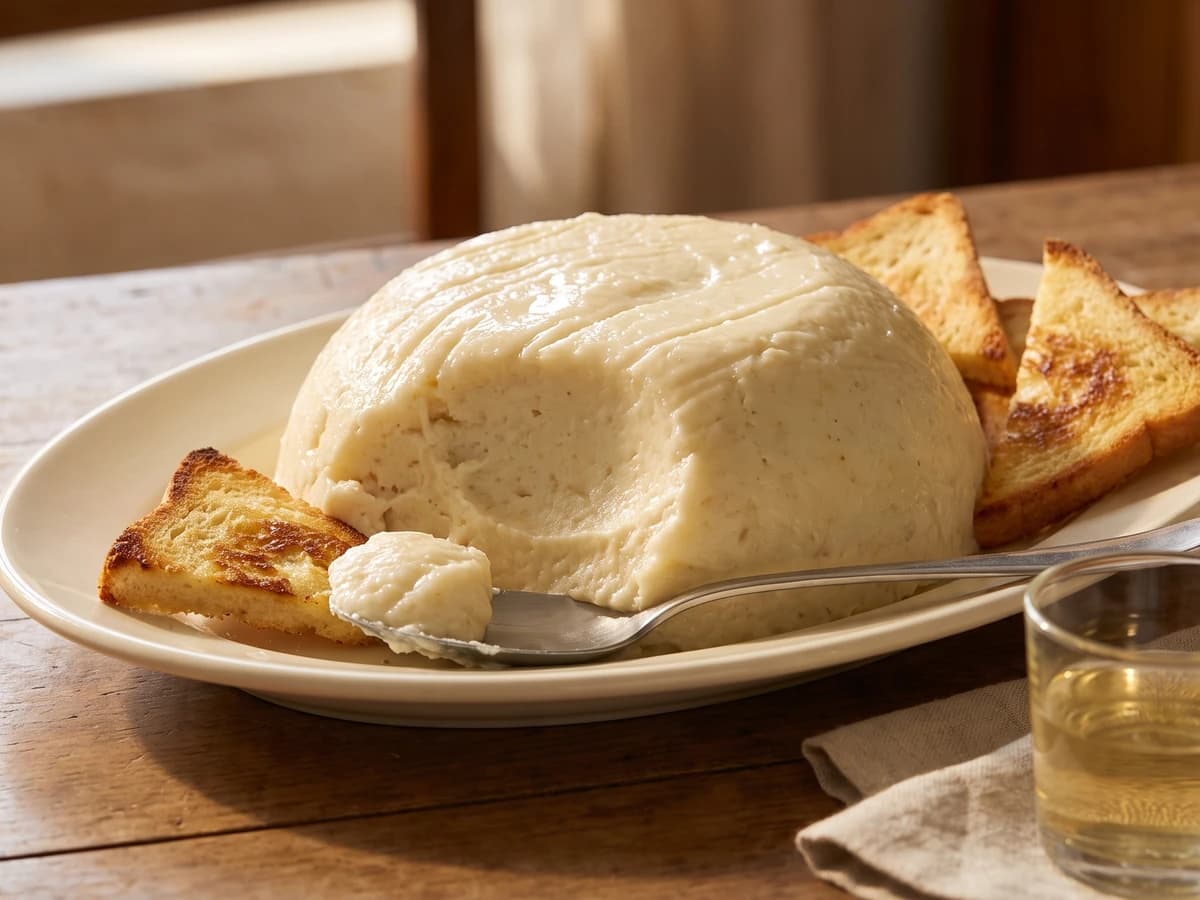
Brandade de Morue turns salt cod, warm olive oil, and milk into a pale, silky emulsion: keep everything warm and add the oil slowly, then crown the generous dome with butter-fried bread.
Chef Juliette
Salt cod worked warm with cream, one patient spoonful at a time, until the rough flakes become a glossy Nîmes paste, domed generously and ringed with butter-fried croutons for the table.

Chef Juliette
Wine-poached char packed in its earthenware crock beneath butter gold: a make-ahead first course that turns careful cooling, thorough boning, and one unbroken seal into quiet abundance.