Culinary Explorer
A cooking platform built around craft, culture, and the stories behind what we eat.
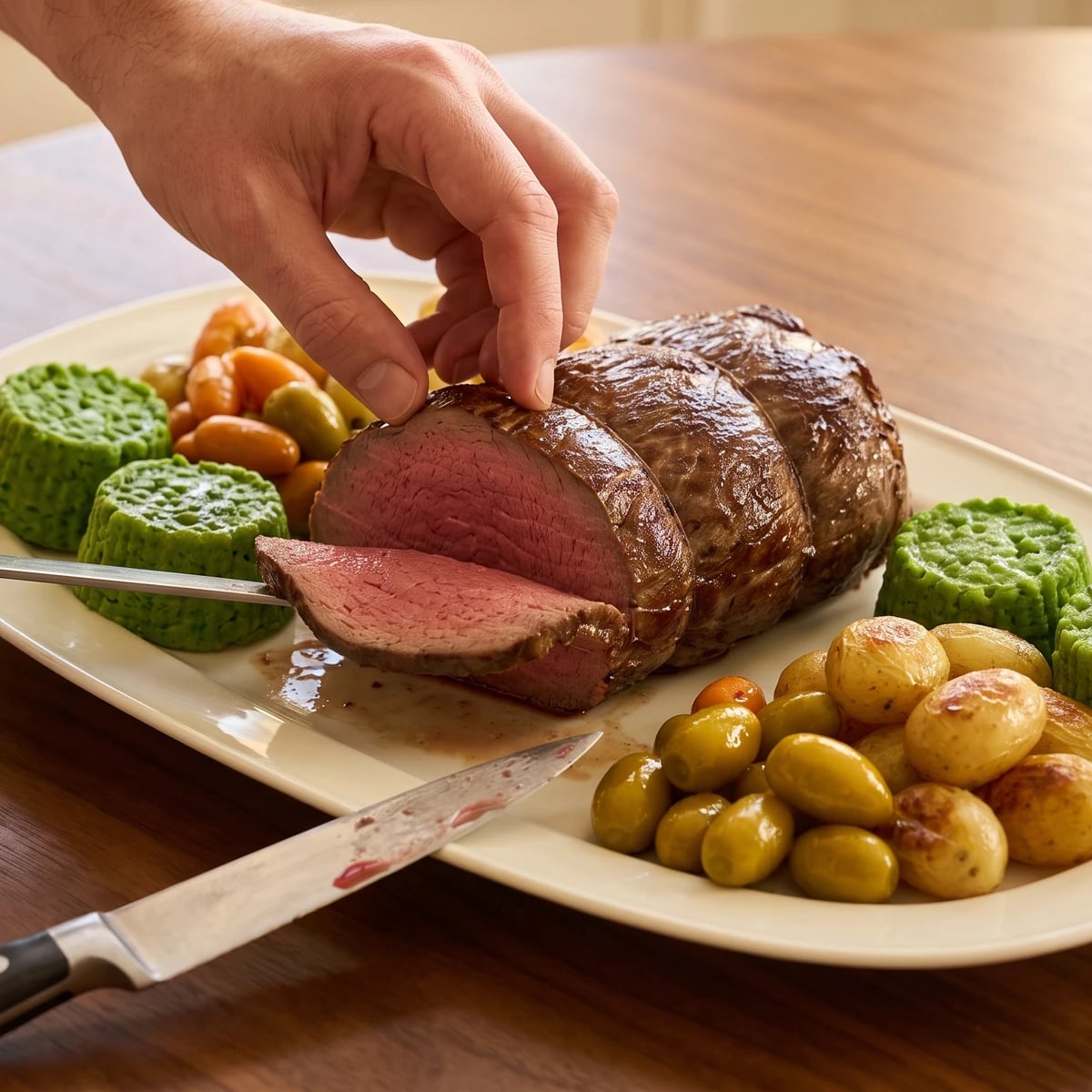
Filet de Bœuf Saint-Germain
Created by Chef Juliette
Filet de Bœuf Saint-Germain sets a rosy roast among bright pea timbales, glazed carrots, and buttered potatoes, a lesson in timing three garnishes so each reaches the platter at its best.
Filet de Bœuf Saint-Germain (roasted beef fillet with pea timbales) teaches coordination. The fillet can rest, but a bright pea timbale cannot wait under heat. Before touching a pan, know the order: bring the roast out first, then use its resting time to finish the glazed carrots, brown the potatoes, and unmould the timbales.
The original kitchen assumed a larding needle, dariole moulds, a long platter, and separate hands for the roast and its three garnishes. Unlike many neighboring dishes in the canon, it calls for no saucier, perpetual stockpot, or salamander, so we don't invent them. A narrow skewer replaces the larding needle, small ramekins replace the dariole moulds, and a thermometer gives one cook the margin once supplied by several. The brigade portion becomes a 2-pound center-cut fillet for four. Multiple hands were scaffolding; larding the beef, keeping the pea purée green, and preserving the composed garnish are the dish.
The finished platter should be generous and unmistakable: rosy beef and Maillard bronze at the center, lacquered carrots at the ends, butter-gold potatoes, then two clean rows of green timbales. One cook, one stove, one evening. Time the timbales last, because once they leave their moulds, the dish goes straight to the table.
Ingredients
center-cut beef fillet roast
Quantity
1 roast (2 lb / 900 g)
trimmed
unsmoked pork fatback
Quantity
1/3 cup (80 ml / 60 g)
cut into 8 narrow batons and thoroughly chilled
unsalted butter
Quantity
8 tablespoons (120 ml / 113 g)
divided
| Ingredient | Quantity |
|---|---|
| center-cut beef fillet roasttrimmed | 1 roast (2 lb / 900 g) |
| unsmoked pork fatbackcut into 8 narrow batons and thoroughly chilled | 1/3 cup (80 ml / 60 g) |
| unsalted butterdivided | 8 tablespoons (120 ml / 113 g) |
Where cooking meets culture.
Culinary guides, cultural storytelling, and the editorial depth that makes cooking meaningful.
Discover Culinary Explorer